

Yushui Village Lijiang: A Peaceful Retreat Beneath Jade Dragon Snow Mountain
2026-07-09
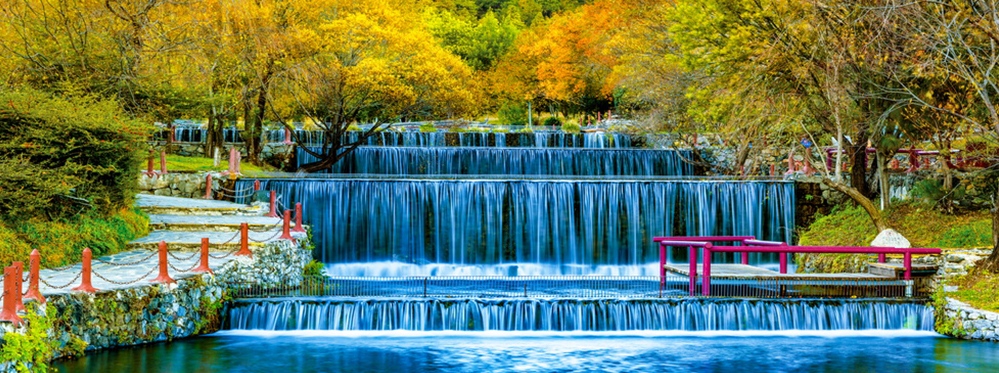
Tucked away at the foot of the majestic Jade Dragon Snow Mountain lies Lijiang's best-kept secret — a place where time slows to the rhythm of babbling springs and whispering pines. Here, Jade Water Village offers more than just a scenic escape; it's a tranquil sanctuary that captures the soul of Yunnan. Forget the crowds and discover why this hidden gem feels like stepping into a living watercolor painting.
Morning Mist Over Ancient Stone Paths
The first light of day barely touches the worn cobblestones, still slick with dew. A soft, rolling mist clings to the curves of the ancient path, blurring the line between earth and air. Every step forward feels like drifting through a half-remembered dream, where the only sounds are the distant murmur of waking birds and the gentle whisper of damp leaves underfoot. The stones themselves seem to hold centuries of silence, their edges rounded by countless journeys now lost to time.
Here, the mist plays tricks on the eye, making the path ahead appear to vanish and reappear like a teasing secret. Ancient oaks lean inward, their gnarled branches draped in veils of fog that catch the rising sun’s pale gold. It’s easy to imagine the footsteps of monks, traders, and wanderers who once trod these very stones, their figures emerging from the mist only to dissolve back into the unknown. The chill in the air carries a faint scent of moss and wet stone, something both fresh and deeply old.
There’s a peculiar stillness here, a hush that feels almost sacred. The mist doesn’t just hide the path; it transforms it into a realm of quiet contemplation. Each bend invites you to leave behind the noise of modern life and simply follow the grey ribbon of stone as it winds deeper into the unknown. For a few precious moments, you are not a tourist but a participant in a timeless ritual—a solitary figure moving through the veil between what is seen and what is only felt.
The Echo of Hoofbeats on Cobblestone
There’s a rhythm tucked inside the old city, one that most people miss. It isn’t the hum of traffic or the chatter of café-goers—it’s the steady, deliberate clip-clop of hooves on stone. When a carriage rolls past, the sound doesn’t just bounce off the walls; it seems to soak into them, a reminder that these streets were built for a slower pace. The cobblestones themselves, worn smooth and uneven by centuries of passage, carry the memory of every horse that ever walked them. Listen closely, and you can almost feel the weight of history in each step.
The hoofbeats come in waves, sometimes solitary, sometimes joined by the creak of leather and the jingle of harness brass. It’s a sound that pulls you back before you even realize it, dissolving the line between now and a hundred years ago. On quiet mornings, it’s the only noise that feels completely natural here—no engine growl, no synthetic hum. Just the hollow knock of iron against stone, echoing off old brick and timber, making the narrow lanes feel like a living museum. It’s a sensory anchor, proof that not everything has been overrun by the modern hurry.
What stays with you is how the echo lingers long after the horse has passed. The sound fades into the alleyways, swallowed by the curve of the street, but it leaves a quiet imprint—like an old tune you can’t shake. For a split second, the city holds its breath, and you’re no longer a spectator; you’re part of the continuum. The hoofbeats aren’t just noise. They’re a conversation between the past and the present, and the cobblestones are still talking.
Tea with a View of the Jade Dragon
Sipping tea while gazing at the Jade Dragon Snow Mountain is not just a break during your journey—it's the kind of moment that quietly rearranges your thoughts. The air is thinner up here, crisp and tinged with the faint scent of pine and distant snowmelt. You settle into a simple wooden chair on a terrace that seems to float above the valley, the mountain's jagged peaks piercing a sky so blue it almost hums. The tea, likely a local Yunnan black or a raw pu-erh, arrives in a modest clay pot, its earthy aroma curling upward like an offering. There's no rush, no agenda—just the slow ritual of pouring, the warmth of the cup in your hands, and the mountain watching silently, as if it knows something you're only beginning to sense.
What makes this experience linger isn't just the view, but how it pulls you into the rhythm of the place itself. Clouds drift lazily, sometimes veiling the summit, then retreating to reveal glaciers that gleam like scattered quartz. The tea's flavor seems to shift with the light—smoky and bold in the shade, brighter and almost fruity under the sun. You might notice small details: a hawk circling high above, the distant tinkle of yak bells, the low murmur of fellow travelers who, like you, have forgotten to check their phones. It's a reminder that some of the best things don't need to be recorded or shared immediately; they can simply be absorbed, like the warmth spreading through your chest with each sip.
Later, long after you've descended back into the bustle of Lijiang or Shuhe, the memory of that tea with a view stays with you. It becomes a kind of anchor—the clarity of that mountain light, the way the silence wasn't empty but full of the land's own breath. It might even change how you brew your tea at home: a little more patience, a little more attention to the steam rising from the cup. You realize that the Jade Dragon isn't just a backdrop for a photograph; it's a presence that invites you to slow down and taste the moment, one leaf at a time.
Hidden Courtyards and Naxi Legends
Lijiang's old town unravels like a maze of cobbled lanes, but its true soul hides behind unassuming wooden gates. Slip through one and you'll find a hidden courtyard—stone-paved, draped in ivy, and centered around a tank of drowsy koi. These are not just architectural relics; they are living chambers where Naxi matriarchs still air their embroidered jackets under eaves carved with mythical beasts. The silence here is thick, broken only by the creak of floorboards that remember the footsteps of traders who once followed the Tea Horse Road.
Every courtyard seems to cradle its own legend. In one, an old man might tell you—if you listen with enough patience—about the guardian spirit said to dwell in the well. In another, frescoes on the rooftop shrine recount the story of two lovers turned into snow-capped peaks, a tale that echoes the Naxi creation epic. These stories aren't recited for applause; they're woven into the grain of daily life, passed down through generations who believe the mountains themselves watch over their woven fables.
The Dongba script, a pictographic language still used by Naxi priests, often appears on weathered plaques above doorways, blessing the home with prosperity. If you linger into evening, you might witness a courtyard come alive with a subdued torchlight ceremony, its smoke curling into a sky that has seen empires rise and fade. Here, history doesn't feel distant—it breathes in the cracked flagstones and the quiet pride of those who keep the old tales warm.
When the Snow Mountain Turns Gold at Dusk
As the sun begins its slow descent behind the jagged peaks, the snow-covered slopes undergo a breathtaking transformation. The crisp white that dominated the day gradually yields to a soft, honeyed glow, as if the mountain itself is catching fire from within. It's not a sudden change, but a gentle shift that rewards those who pause and watch. The first hints of warmth touch the highest ridges, painting them in shades of pale apricot and rose, while the valleys below remain cloaked in cool blue shadows. This fleeting moment feels almost secret, a quiet spectacle reserved for the patient observer who understands that the mountain’s true magic reveals itself only when the light begins to fade.
What makes this golden hour so compelling is the way it reshapes the landscape, turning familiar contours into something ethereal. The snow, no longer just a blanket of white, becomes a canvas for the sky’s shifting palette—ochre, amber, and a blush that deepens to crimson near the summit. Each minute brings a new nuance, and the mountain seems to breathe with the changing light. The cold air grows still, and for a brief interlude, the world feels suspended between day and night. It’s a reminder that beauty often lies in transition, in the impermanence that urges us to be fully present before the gold fades back into twilight’s monochrome.
Locals who live in the shadow of such peaks often speak of this hour with a reverence that borders on the spiritual. They know that the golden snow is not just a visual treat but an anchor to the rhythms of nature—a moment that marks the end of the day’s labors and the beginning of evening’s quiet. For those who travel great distances to witness it, the experience can be unexpectedly moving, a silent communion with something vast and ancient. As the last gleam slips away and the first stars prick the indigo sky, you walk away carrying a warmth that has little to do with the departing sun, a quiet reminder that the world is still full of wonders for those who seek them with an open heart.
Stars Above a Village Lost in Time
The village had no streetlights, no glowing screens left on through the night. After sunset, the only light came from above—a slow revelation of stars so dense they seemed to breathe. Time here was measured not by clocks but by the arc of the Milky Way, its dusty spine arching over stone cottages. You could stand in a lane and feel small, not in a diminishing way, but as if you’d been gently reminded of your place in a much older story.
Generations had looked up at this same sky, mapping their lives by the same constellations. There was a quiet reassurance in that continuity, a thread that held the village together even as the world beyond changed beyond recognition. On clear nights, the stars reflected in the village pond, doubling the heavens. It was easy to imagine that the water held a mirror to another time, one where the village was still full and the laughter of children mingled with the rustle of leaves.
Come morning, the stars faded, but the feeling lingered—a sense that the village wasn’t lost at all. It was simply waiting, tucked under an indifferent sky, for someone to notice its quiet magic. The stars above were both guardians and storytellers, and if you listened carefully, they told tales not of a place forgotten, but of a place that had learned to hold its own eternity.
FAQ
It’s the sense of stillness. While Lijiang Old Town buzzes with crowds, Yushui feels almost forgotten — just stone lanes, rustic wooden homes, and the snow-capped peak of Jade Dragon rising above, with barely a tourist in sight.
It’s about ten kilometers north of Lijiang. A local minibus from the old town will drop you near the entrance in half an hour, or you can hire a taxi. The road winds through farmland, so the journey itself is part of the calm.
This isn’t a show village. The Naxi families who live here still follow age-old rhythms — you might see an elder weaving in a courtyard or smell simmering yak-bone broth. They’re not performing; they’re just living.
Wander the ancient water canals that thread through the village, stop by the small Dongba culture museum handwritten by a local shaman, or follow a footpath up into the pine woods for a clear view of the glacier without any ticket gates.
Autumn, when the persimmon trees blaze orange against dark tiled roofs, and the air is crisp enough to make the snow peak look impossibly close. Mornings in any season bring a low mist that unravels slowly over the terraced fields.
There’s no restaurant row, but a couple of family kitchens serve what they grow. Try the claypot chicken with medicinal herbs, or buckwheat flatbread fresh off the griddle. It’s simple, honest, and tastes of the highland soil.
A few farmhouses offer a bed for the night. Sleeping here, under a duvet in a timber-framed room, with only the rush of the stream outside — that’s when you truly unplug. No TVs, no minibars, just the mountain’s breath.
Conclusion
In the quiet hush of early morning, Yushui Village emerges from beneath a soft veil of mist that drifts lazily over ancient stone paths worn smooth by centuries of footsteps. The only sound to break the silence is the rhythmic echo of hoofbeats on cobblestone, as a lone horse slowly makes its way through the narrow lanes—a sound that feels like a living heartbeat of the village. Leaning back with a cup of fragrant local tea, your gaze is drawn upward to the magnificent Jade Dragon Snow Mountain, its stark white peaks piercing the clear sky, a sight so serene it almost steals your breath. Hidden behind weathered wooden gates, small courtyards reveal fragments of Naxi legends quietly carried on through generations, their stories etched into every carved lintel and sun-warmed wall.
As afternoon gives way to dusk, the mountain transforms—its snow turns first gold, then a blushing rose, as if catching fire from the departing sun. The whole village seems to pause, wrapped in a calm that feels like a secret whispered by the wind. When darkness finally settles, the sky above Yushui becomes a canopy of brilliant stars, so startlingly clear they almost mirror the cobblestones below. In these moments, the village feels suspended in time, a peaceful retreat far removed from the rush of the modern world, where every night is a quiet lullaby and every dawn a gentle promise.
Contact Us
Contact Person: Changhong He
Email: [email protected]
Tel/WhatsApp: 086-0888-5190152
Website: https://vip.e-baixing.com/ysh