

VoWiFi & VoLTE Deployment Platform: Mastering Seamless Voice Services Integration
2026-05-19
Imagine a world where crystal-clear voice calls follow you from LTE to Wi-Fi without a hitch. That’s not a distant dream but a tangible reality for operators who deploy the right integration platform. Yet, blending VoLTE and VoWiFi into a seamless service remains a complex puzzle—one that demands more than just standard solutions. Enter IPLOOK, where voice service convergence is not just supported but mastered. In this blog, we dissect the essentials of a deployment platform that turns the complexities of voice-over technologies into a unified, effortless experience. Ready to see how seamless truly feels?
Unifying Voice Across Access Networks
Modern communication thrives on flexibility, yet voice services often stumble when moving between different network types. A call initiated on a cellular network should transition seamlessly to Wi-Fi without a single dropped syllable, and the user shouldn’t have to think about the underlying technology. This vision demands a cohesive layer that binds disparate access methods—LTE, 5G, Wi-Fi, and even satellite—into one consistent voice experience, treating them not as separate islands but as a single fabric of connectivity.
Achieving this unity means reshaping how networks handle session continuity and quality. Protocols like VoLTE and VoNR have set the stage, but true unification requires deeper integration at the core, enabling dynamic selection of the best available path without manual intervention. It’s about making intelligent trade-offs: prioritising voice clarity over bandwidth-constrained links, maintaining call context as users roam, and ensuring that features like HD voice and emergency calling work identically regardless of the access medium. The network itself must fade into the background.
For operators and enterprises, the payoff goes beyond convenience. A unified voice framework slashes complexity in infrastructure management and opens doors to innovative service bundles that blend private networks, public cellular, and enterprise Wi-Fi into one coherent offering. It reduces dependency on any single radio technology, enhancing resilience and user trust. By decoupling the voice service from the access, we move toward a future where conversations are fluid, uninterrupted, and truly ubiquitous.
Building Blocks for Carrier-Grade Telephony
Carrier-grade telephony rests on a foundation of hardened hardware and software components that rarely draw attention from end users, yet they form the unshakeable core of global voice networks. Media gateways and session border controllers translate between legacy circuit-switched signals and modern IP packets, often in real time, while tolerating hardware failures without blinking. These platforms are engineered for five-nines availability, relying on redundant power supplies, hot-swappable line cards, and passive backplane architectures that have been refined over decades of field deployment.
Behind the scenes, signaling stacks like SS7, SIGTRAN, and SIP-I interwork across disparate nodes, preserving call context as sessions hop through multiple service boundaries. Intelligent routing engines balance cost, latency, and regulatory constraints by pulling real-time metrics from distributed probes—decisions that happen so quickly they feel instantaneous, even when a single call traverses three continents. Open-source projects and proprietary stacks alike now ship with built-in traceability hooks, giving operators the forensic depth they need without resorting to bolt-on monitoring solutions that can introduce single points of fragility.
The whole construct is held together by orchestration layers that manage scaling and healing functions across bare-metal switches and virtual network functions. Automation tools handle routine expansions—spinning up new trunks during holiday traffic surges, for example—while telemetry agents feed back into capacity planning models. It’s not glamorous, but this interlocking assembly of time-tested protocols, ruggedized hardware, and self-correcting software ensures that when someone picks up a phone on the other side of the world, the connection feels as solid as if they were next door.
Navigating the IMS Core Evolution
The shift from legacy circuit‑switched architectures to an all‑IP IMS core didn’t happen overnight—it was a messy, multi‑vendor puzzle that required operators to rethink everything from session control to subscriber data handling. Early movers learned that simply virtualising existing nodes rarely delivered the promised agility; instead, a ground‑up re‑evaluation of call flows, media handling, and service exposure layers became essential to avoid hidden latency bottlenecks.
What’s often glossed over is how the IMS core becomes a genuine service innovation platform once the initial migration dust settles. By decoupling the control plane from rigid hardware and embracing cloud‑native design patterns, teams can start composing voice, video, and messaging features as micro‑services rather than monoliths. This shift doesn’t just shrink time‑to‑market—it fundamentally alters how engineering teams collaborate, shifting conversations from box‑management to API‑driven orchestration and real‑time policy control.
Looking ahead, the real navigation challenge lies in weaving evolved IMS with emerging 5G standalone cores without stranding existing VoLTE investments. Forward‑leaning operators are already treating the IMS as a unified multimedia telephony layer that can serve both 4G and 5G radio, while quietly injecting AIOps into their session border controllers and call session control functions. It’s this delicate, incremental rewiring—not a flashy rip‑and‑replace—that separates sustainable IMS evolutions from costly detours.
Handover Harmony Between Cellular and Wi-Fi
Moving between a cellular network and a familiar Wi-Fi hotspot sounds simple, but for years it meant dropped calls, frozen video, and the frustration of watching a loading spinner. The underlying reason is that these networks operate like separate islands—your device often clings to a fading signal until it breaks completely, only then scrambling to reconnect elsewhere.
Today, devices actively juggle both connections using smarter handover logic. Instead of a hard break, your phone measures signal strength, data throughput, and even your motion patterns to decide when to pre-authenticate with a nearby Wi-Fi network and quietly shift the data stream. Techniques like multipath protocols can duplicate critical packets across both links for an instant, cushioning the transition so voice calls and live streams don’t stutter.
The payoff is a kind of ambient connectivity where you stop noticing which network you’re on. When done well, the handover feels like a seamless continuation rather than a disruption—background apps sync without pause, video conferences stay locked, and navigation apps never miss a turn because the map tiles loaded just in time. It turns a technical negotiation into an invisible convenience.
Overcoming Real-World Deployment Hurdles
Shifting from a controlled lab environment to a live production setting often reveals a cascade of unexpected issues. Data pipelines that worked flawlessly on sanitized test sets can crack under the pressure of noisy, real-time inputs. We've seen models stumble when faced with edge cases that were never captured in training, simply because the real world is messier than any curated dataset. Early on, we learned that rigorous monitoring and logging are not optional extras but the backbone of any successful deployment. Without them, diagnosing failures becomes a guessing game, and trust in the system erodes quickly.
Scalability presents another layer of complexity. A model that responds in milliseconds on a single machine might buckle when serving thousands of concurrent requests. We had to rethink architecture choices, moving from synchronous calls to asynchronous processing and introducing intelligent caching layers. It wasn't just about throwing more hardware at the problem; it was about designing for resilience from the ground up. The team spent countless hours stress-testing with production-like traffic patterns, uncovering bottlenecks that only appeared under specific load conditions.
Perhaps the most persistent challenge is maintaining model accuracy over time. Concept drift silently erodes performance as user behavior or environmental factors shift. We established automated triggers that compare prediction distributions against baselines, flagging potential degradation before it impacts the business. Regular retraining cycles, combined with a human-in-the-loop feedback system, help keep the model aligned with reality. The key insight was accepting that deployment isn't a one-time event—it's a continuous cycle of monitoring, adaptation, and improvement.
Future-Proofing Your Voice Service Architecture
Building a voice service that stands the test of time starts with putting modularity at the core of your design. Instead of locking yourself into a single vendor's ecosystem, slice your architecture into independent, swappable components — voice recognition, natural language understanding, text-to-speech, and orchestration. This way, when a new speech engine or a breakthrough language model hits the market, you can plug it in without rewriting your entire stack. Treat each piece as a replaceable building block, and you'll sidestep the trap of technical debt that so often paralyzes legacy systems.
Equally vital is designing for data fluidity. Voice services feast on data, and the formats, protocols, and storage choices you make today can either accelerate or stifle tomorrow's innovations. Embrace open standards and avoid proprietary data silos; structure your conversation logs, user feedback, and performance metrics so they're easily queryable and reusable. When you treat data as a first-class citizen — clean, well-documented, and portable — you enable continuous model retraining, richer analytics, and the kind of personalization that users now expect. The goal isn't just to collect data, but to create a living data layer that grows smarter with every interaction.
Finally, bake adaptability into your operational rhythm. Future-proofing isn't a one-and-done project; it's an ongoing practice. Run regular architecture reviews that question your assumptions, track emerging industry patterns, and actively experiment with new tools in isolated sandboxes. Encourage your team to treat the voice service as a product that evolves, not a static deployment. By fostering a culture of incremental improvement and staying loosely coupled to any one technology, you'll keep your voice architecture resilient, scalable, and ready for whatever comes next.
FAQ
It's essentially an orchestration layer that automates and streamlines bringing voice-over-Wi-Fi and voice-over-LTE to life. Instead of manually configuring network elements one by one, the platform handles provisioning, policy enforcement, and testing across cores, IMS nodes, and access points. Think of it as a central cockpit that lets engineers push out configurations, validate stability, and monitor performance without juggling a dozen disjointed tools.
Subscribers don't care which radio technology carries their call—they just expect it to stay connected when they walk from a living room with weak cellular coverage to a Wi-Fi zone. Without truly seamless handover, calls drop, audio clips, and people complain. Seamless integration keeps session continuity intact, preserves quality-of-service markers, and prevents those annoying dead spots that erode trust in the operator.
Most platforms treat VoLTE and VoWiFi as separate projects, which forces teams to duplicate effort and introduces timing mismatches. This one was built from day one to unify them. It uses a single policy framework for both, so you define a subscriber's voice experience once and it applies whether they're on licensed spectrum or a home router. The testing module also mimics real user paths—not just signaling compliance—so problems surface before launch.
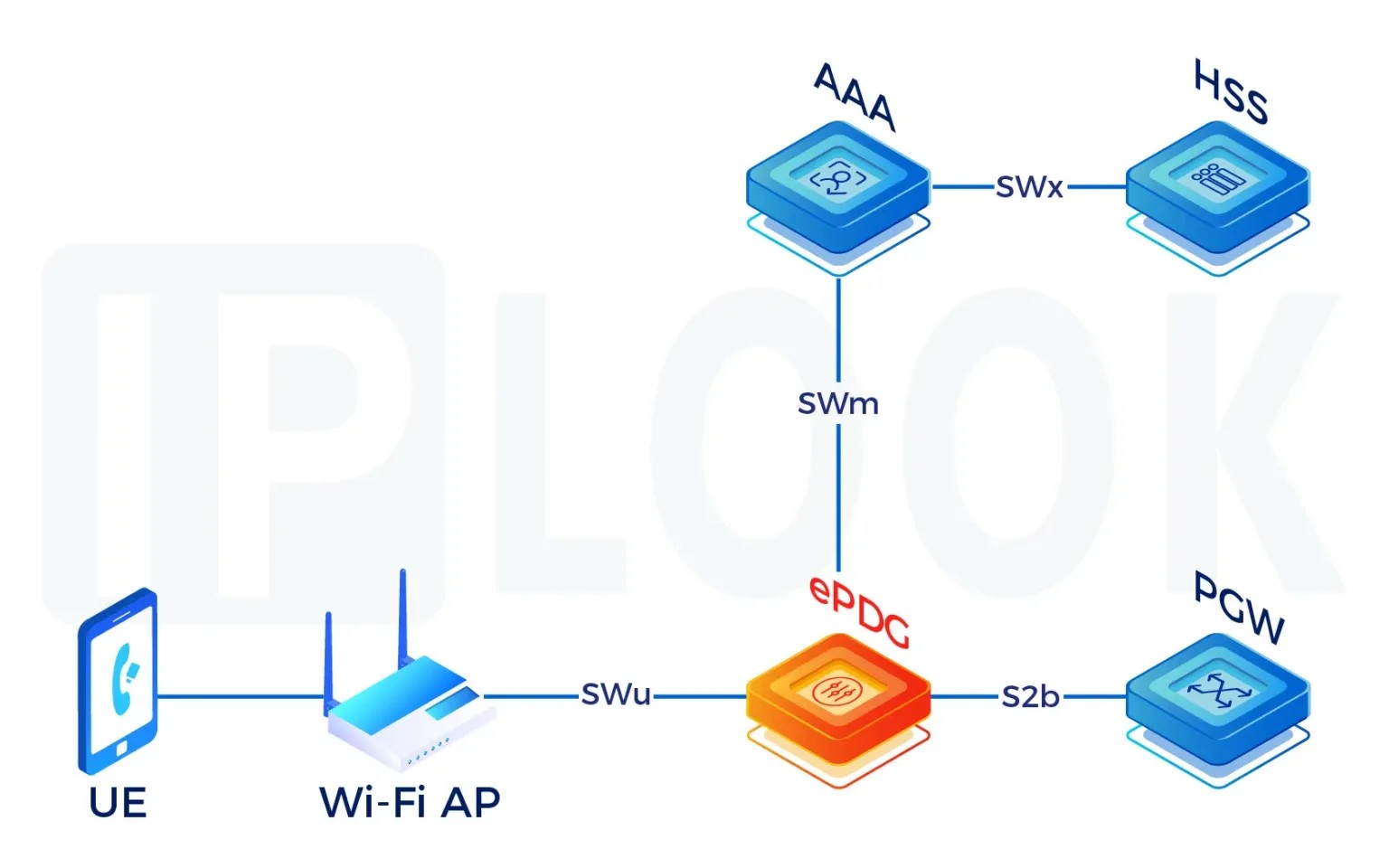
It pre-stages the necessary SIP and SDP context in both domains using a shared session border controller abstraction. Instead of waiting for the client to renegotiate mid-call, the platform proactively anchors the session in a way that the transfer looks like a simple update to the core. It also validates ePDG and P-GW configurations automatically, catching mismatched codecs or QoS mappings that usually cause one-way audio or handover rejection.
Usually it starts with a network readiness assessment—the platform pulls configs from existing MMEs, PCRFs, and AAA servers to spot gaps. Then engineers define a rollout template: which APN settings, which IMS APN, codec priorities. The platform pushes that to a lab cluster first, runs regression tests with simulated UE behavior, and highlights anomalies. Once green, it stages the update region by region, with live KPIs displayed so the team can cut over and back out quickly if something looks off.
You need an IMS core that's at least 3GPP Release 12 compliant—most modern cores qualify. For Wi-Fi calling specifically, an ePDG or N3IWF is required depending on whether you're on EPC or 5GC. The radio side should support QCI=1 for VoLTE and the necessary roaming agreements if you plan to offer VoWiFi abroad. The platform can integrate with older PCRFs via diameter adapters, so a full-blown virtualization upgrade isn't mandatory upfront.
First, call setup time drops noticeably because the platform optimizes the invite/200 OK flow across the path. Second, trouble tickets related to voice quality and handover failures decrease—often by 30% or more within the first quarter. Third, engineering teams spend less time firefighting and more time evolving the service, because rollbacks and updates become scripted rather than manual. Eventually, operators see higher NPS scores and reduced churn among voice-heavy users.
Conclusion
Deploying VoWiFi and VoLTE isn’t just about adding a feature—it’s about weaving voice into the fabric of a multi-access world without the user ever noticing the seams. The challenge begins with the IMS core, which must evolve from a rigid legacy box into a software-driven, cloud-native foundation capable of anchoring both cellular and Wi-Fi-originated calls under a single identity. Handover harmony becomes the true test: a call transferring between LTE and Wi-Fi mid-sentence demands split-second precision in signaling and media anchoring, while operators wrestle with radio-level complexities like signal fading and IPsec tunnel re-establishment. On top of that, building blocks like load-balanced session border controllers, geo-redundant HSS/SLF pairs, and QoS-aware packet gateways form the bedrock of carrier-grade telephony, ensuring every syllable retains its clarity regardless of access path.
Yet the real-world throws curveballs that lab tests never capture. Home Wi-Fi routers with double NAT, unpredictable jitter, and inconsistent DSCP marking can mangle voice packets, forcing platforms to adopt adaptive jitter buffering and voice quality monitoring that detects degradation before subscribers complain. Security isn't an afterthought either, with VoWiFi demanding hardware-backed SIM authentication over untrusted links, while lawful intercept and emergency caller location must flawlessly span hybrid topologies. Looking ahead, the architecture must absorb upcoming shifts—whether it’s 5G voice over NR, voice over non-3GPP access like satellite, or integration with WebRTC enterprise systems—without a forklift upgrade. Those who treat this platform not as a one-off integration but as a programmable voice orchestration layer will find themselves ready for whatever access technology comes next, turning potential disruption into a smooth evolution of the subscriber experience.
Contact Us
Contact Person: Shimmy
Email: [email protected]
Tel/WhatsApp: 85253392231
Website: https://www.iplook.com