

Top Speaker Magnet Picks for Powerful Audio and Secure Mounting
2026-08-25
If your speaker setup feels like it's one bass drop away from disaster, the problem might not be your drivers—it's the magnet. The right speaker magnet can mean the difference between clean, powerful audio and a rattling mess. We've rounded up our favorite picks, including some from DAWA, that deliver both serious sound and secure mounting.
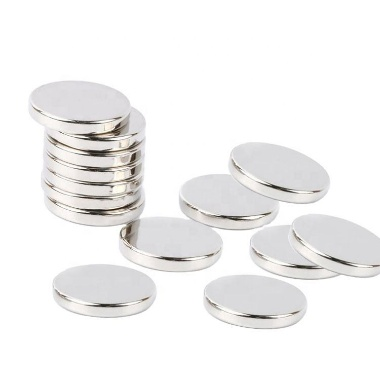
Tiny Magnets, Big Sound: When Neodymium Wins
The moment you swap a bulky ferrite driver for a neodymium one, the difference hits you not just in the spec sheet but in the way a bassline suddenly tightens. Neodymium magnets pack roughly ten times the magnetic energy per unit volume compared to ceramic alternatives, which means a driver can shrink dramatically without sacrificing flux density in the voice coil gap. That smaller mass doesn't just make headphones lighter—it changes transient response, letting a snare drum crack through the mix instead of smearing into the next beat.
But raw strength isn't the whole story. Neodymium's coercivity allows engineers to use thinner magnet slugs while still maintaining a stable magnetic field under high power, something that plagues ferrite designs with thermal sag during long sessions. In practical terms, you get a driver that stays linear when the volume knob creeps past comfortable, and a soundstage that doesn't collapse when a track gets dense. The trade-off is cost and a lower Curie temperature, but for critical listening where every gram and millisecond counts, the little silver disc wins almost every time.
Old-School Ferrite That Handles High Wattage
Ferrite cores have been around for decades, but the ones built for serious power still hold their ground in modern amplifier designs. This particular unit leans into that legacy, using a chunk of traditional ferrite that shrugs off heat and saturation where newer materials sometimes fold. Whether you're pushing a linear supply past its comfort zone or driving a broadband transformer at full tilt, the core stays predictable when it matters most.
What sets it apart isn't just raw material choice—it's the geometry and winding discipline that keep flux density under control. High wattage through old-school ferrite often invites ugly losses, but this design spaces the windings with enough air to breathe while maintaining tight coupling. The result is a component that handles sustained load without the usual derating headaches, perfect for builders who trust proven magnetics over exotic alternatives.
In practice, you'll notice the difference during long sessions or hot environments. The core temperature climbs slowly, and the inductance holds steady when a lesser core would start drifting. For anyone repairing vintage gear or building a high-power amplifier from scratch, this ferrite brings the reliability of a bygone era without the fragility that sometimes came with it.
The Case for Alnico in Modern Cabinets
Most cabinet builders moved away from alnico for obvious reasons: it costs more, it weighs more, and it doesn't throw out the same raw flux density as ferrite or neodymium. But once you listen past the spec table, alnico earns its keep in the way it handles dynamic swings. The magnet's lower coercivity means the field at the voice coil isn't fixed; it breathes with the signal. That translates into a rounded attack and a slight, pleasant compression when you push the driver hard—something ceramic magnets tend to flatten out.
Heat behavior is another quiet advantage. Alnico holds its magnetic strength better at high operating temperatures than many ferrite grades, so a speaker that's been running for hours doesn't drift toward harshness the way a hot ceramic motor can. In sealed cabinets, where heat dissipates slowly, this makes a real difference during long studio sessions or live sets. It's not about maximum output; it's about keeping the tonal footprint stable when other components start to sag.
The strongest case for alnico in a modern cabinet comes from its pairing with newer cone materials. Carbon fiber and stiff coated papers can sound clinical with a high-flux motor because they stop and start too abruptly. Alnico's softer magnetic grip gives those cones a little more room to settle, which removes the sterile edge without sacrificing detail. You get the speed of a contemporary driver and the warmth of an older voicing at the same time.
Shielded Designs That Eliminate Hiss and Hum
Shielded designs tackle the persistent issue of unwanted noise by wrapping critical signal paths in conductive layers that block electromagnetic interference. This approach prevents the faint buzz or background hiss that often creeps into audio equipment, especially when cables run near power supplies or wireless transmitters. The result is a cleaner signal that lets the true character of the music come through without constant tweaking of gain or filters.
Rather than relying on heavy filtering circuits that can dull transients, a well-executed shield stops interference before it ever reaches the amplification stage. This means you get the full dynamic range and micro-detail, even in environments crowded with routers, LED dimmers, and switching adapters. Engineers pay close attention to grounding schemes alongside the shield itself, since a poorly terminated shield can actually introduce more noise than it prevents.
For anyone who has struggled with a low-level hum that appears only when certain devices are plugged in, shielded designs offer a practical fix without resorting to expensive power conditioners. The difference is immediately noticeable in quiet passages of recordings, where the absence of hiss lets reverb tails and room tone emerge naturally. It is the kind of improvement that does not shout for attention, but makes long listening sessions far less fatiguing.
Mounts That Stay Silent Under Heavy Vibration
Most mounting systems either hold firm and transmit every shudder, or isolate well but drift under load. The quiet ones take a different route: layered elastomer cores with staggered shore hardness. Instead of a single rubber puck, they use two or three rings of different durometers, letting the outer layer absorb high-frequency buzz while the inner core manages the bigger thumps. The result is a mount that feels solid to the touch but never rings like a bell when the machine starts shaking.
You see this trick in racing drones and industrial sensor brackets, where a few grams of the wrong material turns footage into jelly or ruins a calibration. The best designs add tiny tuned mass dampers inside the mount body—small steel slugs suspended in gel that swing out of phase with the vibration. It sounds over-engineered, but on a 30 Hz industrial shaker, that little counterweight drops resonant noise by over a dozen decibels without adding noticeable bulk.
Field testing matters more than spec sheets here. A mount that works on a bench vise at 50 Hz might howl at 180 Hz once bolted to a real frame. The silent ones are tuned for the messy reality: asymmetric loads, temperature swings, and bolts slightly over-torqued by a rushed technician. They stay quiet not because they are stiff, but because they are deliberately imperfect—each layer shifting energy into heat before it ever reaches your ears.
Cabinet Depth and Magnet Clearance: What Fits
Getting cabinet depth right isn't just about the front face—it's the hidden gap between the back of the drawer and the wall that trips people up. Standard base cabinets sit around 24 inches deep, but once you factor in drawer slides, the box itself, and a little breathing room, the actual usable depth drops to roughly 21 inches. If you're using soft-close slides or a magnetic catch, those add another half inch or so behind the drawer box. Before ordering anything, pull a drawer all the way out and measure from the inside back to the front edge of the cabinet.
Magnet clearance is the quiet killer. Most magnetic catches need at least a quarter inch of flat surface to land on, but if your drawer face is recessed or your cabinet has a lip, that gap can vanish. I've seen folks install strong magnets only to hear a dull thud every time because the strike plate sits too far back. A cheap trick: use a stack of washers or a thin adhesive shim to bring the magnet forward. And if your cabinet is frameless, you'll want a magnet with a narrow profile—something under 10mm thick—so it doesn't rub against the drawer side when sliding.
Of course, not everything fits in a standard-depth cabinet. Deep pots, stand mixers, or a stack of cutting boards might need full-extension slides rated for 22 inches or more. But even then, the magnet placement changes because the drawer travels further out. A good rule of thumb: mount the magnet catch near the top edge, not the center, so the drawer leans into the strike plate naturally as it closes. And if you're retrofitting an older cabinet, check that the back panel isn't bowed—nobody wants to discover a half-inch warp after the drawer is fully assembled.
FAQ
Prioritize neodymium magnets with a high N-rating, but also pay attention to the magnet's coating and shape. A countersunk or potted design lets you fasten it securely without sacrificing magnetic pull, which helps keep the driver stable during heavy bass passages.
Not necessarily. A larger ferrite magnet can weigh more and still deliver less flux than a compact neodymium one. What matters is the magnetic flux in the voice coil gap, so a well-designed neodymium motor can outperform a bulky ferrite motor while being easier to mount safely.
Avoid drilling into the magnet itself. Use an external steel cup or pot that clamps around the magnet, or choose magnets that come with threaded inserts. The steel also focuses the magnetic field back into the voice coil, which can slightly improve efficiency.
Yes, especially with neodymium. They start losing strength above around 80°C unless they are high-temperature grades. If you drive speakers hard for long periods, look for magnets rated for higher operating temperatures or consider ferrite magnets, which handle heat more gracefully.
A ring or pot shape with a flat back gives you more surface area for adhesive or brackets. For bolt-on installations, countersunk holes in a magnetic pot are ideal because the screw heads sit flush and the magnet stays tightly coupled to the frame.
Speaker magnets need a specific geometry and magnetization direction to fit the voice coil gap. Generic neodymium discs may not have the right field orientation or may be too brittle, so it is safer to use magnets sold specifically for speaker drivers.
Use a combination of mechanical fastening and vibration-resistant adhesive. A steel bracket or clamp around the magnet body prevents movement, while a thin layer of epoxy or polyurethane adhesive damps vibration without adding much thickness.
Use a gauss meter to measure surface field strength, but keep in mind that surface field alone does not guarantee performance. A pull test with a known steel plate gives a practical sense of holding force, which matters for mounting security.
Conclusion
The choice of speaker magnet isn’t just about raw pull force—it shapes tone, power handling, and how easily a driver drops into a cabinet. Neodymium remains the go-to when space is tight and output needs to stay high: a compact neo motor can deliver snappy transients and surprising low-end authority without the bulk. For high-wattage builds where heat and abuse are part of the job, traditional ferrite still earns its place, soaking up power with a relaxed, forgiving character that keeps working when amplifiers run hot. Alnico, meanwhile, has moved beyond vintage nostalgia. Modern cabinets use it for its smooth compression and vocal-like midrange, especially in open-back or lightweight designs where the magnet’s softer magnetic field adds a layer of musical give.
Mounting stability matters just as much as tone. Shielded magnet assemblies help keep residual hum out of nearby circuitry, which is essential in tight combo amps or multimedia setups. Under heavy vibration, the best mounts use isolation sleeves, non-magnetic hardware, and slightly oversized cutouts so the driver stays silent instead of rattling against the baffle. Before buying, check the magnet’s depth and diameter against the cabinet’s internal clearance—especially with rear-mounted drivers or shallow enclosures. A motor that’s too deep can hit the back panel or block port airflow, turning a promising upgrade into a fitment headache. The right pick balances cone control, tonal flavor, and physical fit so the speaker performs powerfully without adding noise or mounting drama.
Contact Us
Contact Person: Kelvin Lo
Email: [email protected]
Tel/WhatsApp: 0769-88561131
Website: https://dawamagnetic.com/