
Top Serrated Gaskets Factory from China: Precision Manufacturing for Global Industries
2026-10-31
When high-pressure systems demand a seal that won't quietly fail, serrated gaskets become the unsung heroes. But not all factories cut those serrations the same way. Kaxite, a top serrated gaskets factory in China, has built its reputation on precision manufacturing that serves industries from petrochemicals to power generation. What makes their gaskets stand out in a crowded global market? The answer lies in metallurgy, machining tolerances, and a quality control process that borders on obsessive. In this post, we'll pull back the curtain on how Kaxite turns raw metal into leak-proof reliability for clients worldwide—and why your next project might just depend on it.
The Serrated Edge: How Tiny Grooves Create a Stronger Seal
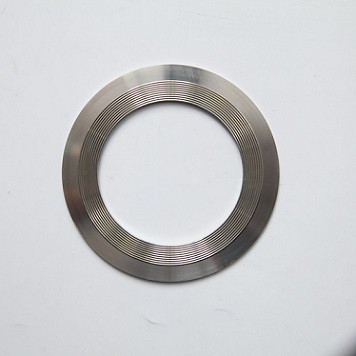
The serrated edge looks deceptively simple, but those microscopic grooves do the heavy lifting. Instead of relying on a perfectly flat surface to stop leaks, the ridges dig into the mating material. This mechanical interlock creates dozens of tiny barriers, each one forcing fluid to change direction. The result is a seal that works even when the flange faces aren't polished or the bolt load isn't perfectly even.
Under a microscope, the valleys between the ridges act like a series of small O-rings. When you torque the bolts, the peaks compress and fill those valleys, trapping the gasket material. That trapped material can't flow sideways, so it stays put under pressure. The grooves also break up any creep or thermal expansion that would normally flatten a smooth seal over time.
In practice, a serrated finish gives you two seals in one. You get the initial bite at the metal-to-metal contact, plus a secondary backstop as the gasket cold-flows into the recesses. That's why you see serrated faces on everything from exhaust manifolds to high-pressure steam flanges—they tolerate vibration, temperature swings, and rough handling far better than a mirror-smooth surface ever could.
Inside a Precision Workshop Where Every Gasket Is Measured Twice
The first measurement happens before the material is even cut. A technician sets a sheet of compressed fiber on the granite surface plate and runs a calibrated micrometer across three points, recording each value in a spiral-bound notebook. The numbers almost never match exactly, and that is the point. If they do match, someone usually checks the micrometer against a gauge block just to be sure the tool has not gone dull in its habits.
After the gasket is cut—whether by hand on a leather bench or by a CNC waterjet—the part rests for a few hours so internal stresses can settle. Then comes the second measurement. This time the edge is checked at six positions, not three, and the thickness is mapped with a dial indicator. A difference of a few thousandths of an inch might mean the gasket seals perfectly or leaks under thermal cycling, so no one rushes this step.
New hires learn quickly that “close enough” is not a phrase used here. The older machinists will quietly re-measure a gasket after a trainee has already signed off on it, not to catch mistakes but to teach a habit. In this workshop, the second measurement is not about doubt; it is about knowing that a gasket behaves differently under pressure than it does on the bench.
Chinese Metalworking Craft Meets Global Industrial Standards
The lost-wax casting traditions of Shanxi and the hand-forged blade steels of Longquan now share factory floors with five-axis machining centers and laser interferometers. Older craftsmen who can judge a casting's grain structure by the ring of a hammer tap are helping quality engineers set tighter process windows. The result is a production culture where tactile knowledge is translated into coordinate measuring machine data, not replaced by it.
This convergence shows up in aerospace titanium brackets, high-pressure valve bodies, and electric vehicle motor housings. Suppliers no longer treat ISO 9001 or ASME Section IX as paperwork to be passed; they use them as baselines for continuous improvement. For example, a family-run foundry in Hebei pairs traditional sand-molding skills with spectrographic melt analysis, cutting porosity defects to levels demanded by European pump manufacturers.
Outside buyers often arrive expecting cheap capacity and leave discussing how a workshop's accumulated metal intuition feeds into statistical process control charts. The craft is not erased by global standards; it becomes traceable, repeatable, and ready for export without losing its regional character.
What Happens When a Gasket Faces Extreme Heat and Pressure
Most gasket materials are chosen based on a narrow window of operating conditions, but real-world systems rarely stay polite. Once temperature climbs past the rating, the binder or elastomer in the gasket begins to soften, oxidize, or even char. The gasket loses its ability to recover after compression, and micro-leaks start where the flange faces are slightly less than perfect. Thermal cycling makes it worse: expansion and contraction work the material like a fatigue test, eventually cracking the body or breaking the seal at the edges.
Pressure adds another layer of failure. High internal pressure tries to push the gasket out of the joint, especially if the flange bolts have lost preload from heat creep. Blowout is rare but catastrophic, while more common is the slow extrusion of softer gasket compounds into the gap between flanges. Once extruded, the material hardens and cannot spring back, leaving a permanent leak path. Combined with heat, pressure can also cause chemical breakdown of the gasket's filler, turning what was once a compliant seal into a brittle, cracked ring.
A gasket under extreme heat and pressure doesn't just fail by leaking; it can bond to the flange surfaces, making disassembly a chisel-and-scrape job. Or it can decompose and release gases that contaminate the process fluid. The most reliable approach is not to push a gasket beyond its limits but to select a material with a tested safety margin, then monitor bolt load and surface finish over time. Because once the gasket enters that thermal-pressure danger zone, the visible damage is only a small part of the story underneath.
Custom Sizing Without the Wait: How Flexible Production Works
Traditional manufacturing often forces a choice between custom fit and quick delivery, but flexible production changes that equation. By using modular patterns, on-demand cutting, and adaptive assembly lines, we can adjust dimensions for each order without slowing down the overall process. A garment that would normally require weeks of back-and-forth tailoring is now produced in days, because the system is built to handle variation from the start.
The key lies in separating the stable parts of a design from the variable ones. Core elements like collars, cuffs, and structural seams remain consistent across sizes, while the fit-critical areas—such as torso length, sleeve width, or inseam—are generated dynamically from the customer's measurements. This means the production team isn't starting from scratch each time; they're simply swapping in a different set of parameters, much like adjusting a recipe rather than inventing a new dish.
Because the workflow is digital and interconnected, changes made at the order stage flow directly to the cutting table and sewing stations without manual re-entry. That eliminates the usual delays caused by communication gaps or pattern revisions. The result is a made-to-measure product that arrives with the speed of ready-to-wear, without compromising on the individual fit that customers actually need.
Traceability From Steel Coil to Shipping Crate
Every coil that arrives at our facility carries a unique heat number, and that identifier stays with the material through slitting, blanking, and forming. Rather than relying on batch-level paperwork, we log each transformation step against that original coil ID, so a finished crate component can be traced back to the exact steel batch and even the mill's production date.
Once parts are welded and assembled into a shipping crate, the crate itself receives a permanent QR code. Scanning it reveals the full lineage: which coils fed into which panels, the date each stamping ran, and the operator sign-off for every weld station. If a material question ever arises downstream, you don't have to hunt through filing cabinets or guess which supplier shipment was involved.
This end-to-end visibility matters most when crates carry high-value or regulated goods. A recall, a corrosion complaint, or a customer audit can be resolved in minutes instead of weeks because the data chain is unbroken from steel coil to shipping crate. We treat traceability not as an add-on report, but as the default way the shop floor records work.
FAQ
The factory combines CNC serration profiling with tight control over tooth geometry, so the finished gaskets grip flange faces reliably even under thermal cycling and pressure swings.
Each production batch passes through in-process checks and a final inspection that verifies tooth depth, surface finish, and material certification before packing for shipment.
The factory works with stainless steels, duplex alloys, nickel-based grades like Inconel and Monel, and specialty alloys, often with graphite or PTFE facing layers.
Yes, drawings and CAD files are accepted for custom serrated profiles, and the engineering team advises on tolerances, facing options, and gasket thickness to match the flange class.
Oil and gas, chemical processing, power generation, and marine engineering are common users, especially where raised-face or RTJ flanges require dependable sealing.
Standard sizes are kept in semi-finished stock, while made-to-order serrated gaskets are scheduled based on material availability and order volume, with clear lead times provided upfront.
Yes, sample batches can be arranged so buyers can verify tooth profile, finish, and fit on their own flange assemblies before placing a larger order.
The factory operates under ISO 9001 quality management and can supply material test reports, dimensional inspection records, and other documentation required by global clients.
Conclusion
The serrated edge on each gasket may look like a minor detail, but those small concentric grooves do the heavy lifting when two flange faces need to stay leak-free. In the factory, this pattern is cut with a level of consistency that comes from operators who treat a difference of a few microns as a problem worth pausing the line for. Every ring is measured at least twice before it leaves the workshop, and the numbers are logged, not just shouted across the floor. That habit of double-checking carries over into how the team handles material selection. Chinese metalworking has deep roots in patient, hands-on precision, and here it gets paired with the same tolerances and test protocols expected in Europe, North America, and the Middle East. When a gasket is pushed into a service environment with sudden temperature swings or pressures that climb past design limits, the difference shows. A rushed cut, a skipped measurement, or a batch of steel that was not verified can turn into a flange leak within hours. This factory has learned that a strong seal starts long before the first cut.
Custom sizing is where the factory really separates itself from catalog-only suppliers. Instead of asking global clients to adjust their piping layouts to fit a stock gasket, the production team takes drawings, scans, or even a worn-out sample and turns it into a finished ring without adding weeks to the schedule. Small batches get the same attention as full container orders, and the tooling is flexible enough to switch from a standard 4-inch 150# ring to a one-off oval shape in a single shift. That flexibility does not come at the cost of knowing what went into each piece. Every coil of steel is tagged on arrival, linked to its heat number, and that thread follows the blank through cutting, serrating, testing, and packing. When a crate leaves the loading dock, a buyer can pull up the full path from raw material to shipping label. For maintenance teams or OEM buyers, this kind of traceability matters when a gasket will sit between critical flanges on a refinery or a power plant.
Contact Us
Contact Person: Kaxite
Email: [email protected]
Tel/WhatsApp: 0086-574-87527771
Website: https://www.seal-china.com