
Top Non Woven Geotextile Fabric for Long Lasting Soil Stabilization and Drainage
2026-09-15
Beneath every durable road, embankment, or drainage system lies a layer that quietly controls soil movement and water flow. Non woven geotextile fabrics are that unseen workhorse, but choosing the wrong one can lead to premature failure. In this post, we cut through the noise to highlight the top non woven geotextile options for long-lasting soil stabilization and drainage—including proven solutions from JInseed Geosynthetics Solution. Whether you're tackling a highway project or a simple retaining wall, you'll learn what makes these fabrics stand apart and how to match them to your site conditions.
What Keeps Non Woven Geotextile Fabric Stable for Decades
The long-term stability of non woven geotextile fabric rests largely on polymer choice and the way the fibers are produced. Polypropylene and polyester resist most soil chemicals, including acids, alkalis, and biological activity, while UV stabilizers blended into the raw material prevent quick breakdown during storage and installation. Once buried, the fabric is no longer exposed to sunlight, so the chemical inertness of these polymers takes over as the primary longevity driver.
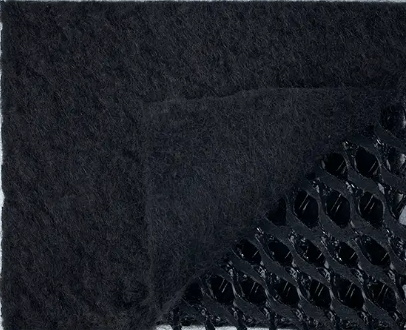
Needle-punched construction adds another layer of reliability. Thousands of randomly entangled fibers create a material without a single weak point; if one fiber is severed, the surrounding network holds the load instead of unraveling. This structure also preserves drainage and filtration performance under changing soil pressure, which helps avoid clogging and internal stress that could shorten service life.
What many overlook is the importance of placement. Covering the fabric promptly with clean, well-graded fill and avoiding wrinkles or exposed edges keeps oxygen penetration low and moderates temperature fluctuations around the polymer. Under these conditions, non woven geotextiles in road bases, retaining walls, and drainage trenches have remained functional for 30 to 50 years without significant tensile loss.
The Drainage Layer That Stops Water Pressure Before It Builds
Buried foundations and retaining walls face a silent enemy: groundwater. As soil becomes saturated, hydrostatic pressure pushes against below-grade structures, leading to cracks, leaks, and eventual failure. A drainage layer changes the game by giving water an easier path. Instead of pressing inward, moisture flows downward through a permeable zone—usually gravel, drainage mats, or composite boards—and into a collection pipe. This simple redirection keeps the structural wall dry and relieves the load that would otherwise accumulate behind it.
The key is not just providing space for water, but interrupting the pressure cycle early. Traditional waterproofing alone often acts as a barrier, but it can trap water against the wall. A properly installed drainage layer works with gravity, channeling water away before it ever has a chance to build force. The material choice matters: some systems combine a dimpled core with geotextile fabric to filter fine soil while allowing free water movement. This prevents clogging and maintains long-term performance, even in clay-heavy soils.
What separates a good drainage layer from an average one is integration. It must connect seamlessly to the footing drain, extend above the expected high-water mark, and be protected from backfill damage. When done right, the system becomes nearly invisible—no pumps, no ongoing maintenance, just a passive defense that quietly keeps basements dry and walls intact for decades.
Matching Fabric Weight and Permeability to Your Soil Type
Soil texture dictates how quickly water moves away from the surface, which in turn sets the bar for fabric permeability. If you're working with heavy clay that holds moisture and drains slowly, a lightweight fabric with a high flow-through rate lets puddles disappear instead of lingering on top. Sandy or gravelly soils already shed water fast, so the priority shifts toward a sturdier fabric that keeps fine particles from washing down while still allowing air exchange.
Weight is not just about durability; it affects how the fabric behaves under mulch or gravel. A heavier woven or nonwoven fabric resists tearing during installation and stays put on slopes, but it can also restrict water movement if the pore structure is too tight. Check the fabric's permittivity or flow rate rather than relying on thickness alone. For clay, aim for a flow rate above 100 gallons per minute per square foot if possible. For sandy loam, a mid-range flow rate paired with a slightly heavier fabric gives you erosion control without turning the bed into a swamp.
When in doubt, test a small section with a bucket of water. Pour it over the installed fabric and watch how fast it drains. If water pools for more than a few seconds, the fabric is too restrictive for that soil. Match the fabric's pore size to the finest soil particle you need to block—fine silt needs a tighter weave, while coarse sand can handle a more open structure. Adjusting both weight and permeability together keeps the soil stable and the root zone breathable.
Slopes Driveways and Retaining Walls Where This Fabric Works Hardest
On a steep slope, loose soil shifts after every rain, slowly pulling apart whatever you plant. A tough woven geotextile laid beneath the surface changes that. It grips the ground, spreads the load, and keeps gravel or mulch from sliding downhill. For slopes that see real weather, this is the layer that stops small erosion scars before they turn into washouts.
Driveways are another place where the fabric earns its keep. Without it, stone gets pushed into soft subsoil and ruts appear after a few heavy vehicles. Put this material down first, and the aggregate stays separate, the base stays firmer, and the whole surface lasts years longer. It is not a luxury on a dirt or gravel drive; it is the difference between a path you maintain every season and one that just holds.
Retaining walls push back against a lot of lateral pressure, and water trapped behind them makes it worse. Fabric placed between the wall and the backfill lets moisture escape while keeping soil in place, reducing the weight that builds up after storms. That means fewer cracks, less bowing, and a wall that stays straight instead of slowly leaning into the yard.
Installation Mistakes That Shorten Geotextile Life
Geotextile failures rarely start with the fabric itself—they begin with rushed or careless installation. One of the most common mistakes is skimping on overlap. When adjacent rolls aren't lapped by at least 30–60 cm (depending on site conditions), soil can migrate through the gaps, weakening the separation or filtration layer almost immediately. Even a small opening, left unchecked, turns into a channel for fines to escape and for water to bypass the intended drainage path.
Another quiet killer is excessive tension during placement. Crews sometimes stretch the geotextile tight, thinking it looks neater or saves material. But fabric that's pulled taut has no slack to accommodate subgrade settlement, wheel loads, or thermal movement. The result is tearing or puncturing under stress that a properly laid, slightly relaxed sheet would have absorbed without damage. Wrinkles and gentle undulations aren't sloppy—they're a form of built-in tolerance.
Backfilling too aggressively over unprotected geotextile is equally destructive. Dropping heavy rocks or angular fill directly onto the fabric from too great a height can cause punctures, cuts, and abrasions that are invisible once buried. Those small defects grow under repeated loading, eventually compromising the entire system. A layer of sand or fine-grained material placed first, or the use of a heavier nonwoven grade in high-risk areas, can mean the difference between a geotextile that lasts decades and one that fails in a single season.
A Field Test to Confirm Quality Before You Bury It
The moment a trench gets backfilled, every hidden defect locks into place. Running a quick load test or pressure check right then is not a formality—it's the only chance to catch a weak joint, a pinched conduit, or insufficient compaction before the soil hides it for good.
Contractors who skip this step often end up digging the same line twice. Simple checks like a hydrostatic test on water lines, a mandrel pull through conduit, or a density gauge reading on the bedding layer take minutes compared to the cost of reopening a paved surface later.
Make the test match the material. For buried pipe, hold the specified pressure long enough to spot slow leaks. For cable runs, verify continuity and insulation resistance before covering. For soil, proof-roll the lift and check moisture against the compaction curve. Document the numbers, then bury it with confidence.
FAQ
The fabric's needle-punched structure creates a high-friction surface that locks soil particles in place, which reduces movement and prevents erosion even under repeated load. It also resists biological degradation and chemical attack, so its performance remains consistent for decades rather than just a few seasons.
Its porous mat allows water to pass through while trapping fine soil particles. This separation prevents clogging of drainage layers and maintains a steady flow path, so excess moisture moves away from the stabilized zone instead of building up pressure behind the fabric.
Look for high puncture resistance, a strong CBR value, consistent mass per unit area, and a tested flow rate. Also confirm the fabric is made from virgin polypropylene or polyester rather than recycled blends, since recycled content often leads to uneven strength and faster breakdown under UV exposure.
Yes, it works well on soft ground because its elongation and flexibility let it conform to uneven surfaces without tearing. However, you need to choose a heavier weight fabric, typically 8 oz or more, and place a granular drainage layer above it to prevent the fabric from being pushed into the mud.
The most common errors are stretching the fabric too tight, leaving it exposed to sunlight for more than a few days, and failing to overlap adjacent rolls by at least 12 to 18 inches. Also, using sharp-edged backfill directly on the fabric can create punctures that compromise both stabilization and drainage.
Non woven fabric has a much higher flow-through rate because its random fiber orientation creates thousands of small openings. Woven fabric, on the other hand, has a tighter grid pattern that stops water from passing quickly. For drainage where soil retention is still needed, non woven is almost always the better choice unless you need extreme tensile strength.
Once covered with soil, aggregate, or pavement, the fabric requires no routine maintenance. The only inspection worth doing is after extreme weather or construction nearby, when you might check exposed edges for UV damage or signs of soil piping at the overlap joints.
Heavier fabrics, usually 10 oz per square yard and above, provide greater tear strength and puncture resistance, which matters when heavy machinery drives over the installation or sharp rocks are present in the backfill. Lighter 4 to 6 oz fabrics are better suited for flat, low-stress drainage areas rather than load-bearing stabilization.
Conclusion
Choosing a non woven geotextile fabric that holds up for decades comes down to how well it resists UV exposure, chemical breakdown, and mechanical stress from installation and soil movement. Unlike woven alternatives, needle-punched non wovens create a thick, fuzzy mat that interlocks with surrounding aggregate, staying put under load without tearing. The real secret to longevity is matching fabric weight and permeability to your specific soil type: sandy soils need higher flow rates to prevent clogging, while clay-heavy ground benefits from a tighter fabric that still lets water escape but blocks fine particles. When placed correctly, this fabric works as a silent drainage layer, releasing water pressure before it builds behind retaining walls or under driveways. On slopes, it stops soil from washing out between riprap or pavers, keeping the structure intact through freeze-thaw cycles and heavy rain.
Field experience shows most premature failures come from installation mistakes, not fabric defects. Common errors include stretching the fabric too tight, leaving seams unoverlapped by at least 12 inches, or backfilling with sharp, angular rock directly against the material. A quick field test before burying the fabric saves months of regret: tear a small sample by hand, soak it in water overnight, and check if it still holds its shape. Quality non wovens resist tearing even when wet and have a consistent thickness that doesn't compress into a thin, ineffective sheet under load. For driveways, slopes, and retaining walls that need dependable soil stabilization and drainage, the top fabrics combine high puncture resistance, proper permittivity for your soil, and a track record in similar projects rather than just a high price tag or familiar brand name.
Contact Us
Contact Person: Jerry Qiu
Email: [email protected]
Tel/WhatsApp: +65 84265294
Website: https://www.jinseed-geo.com