

Shoelace Manufacturer Guide: How to Source High-Quality Laces for Your Products
2026-11-04
Ever picked up a pair of shoes and felt the laces snap within weeks? Sourcing laces that actually last isn’t just about aesthetics—it’s about avoiding warranty headaches and keeping customers loyal. Yet most guides stop at fiber types and stitch counts, ignoring the real-world pitfalls that derail production. That’s where this guide changes the game: we break down what to look for in a shoelace manufacturer, from hidden quality markers to supply chain red flags. And if you’re tired of generic suppliers, YONGFENG has built a reputation for precision-made laces that hold up under daily wear. Ready to stop guessing and start sourcing smarter? Let’s dive in.
The Hidden Flaw in Most 'High-Quality' Lace Samples
The first thing most buyers do is run their fingers over the front of a lace sample and admire the pattern's clarity. That tells you almost nothing about the real quality. Flip it over and look at the ground mesh under a bright, angled light. In many so-called premium swatches, the hexagonal openings are unevenly stretched, and the yarns have been twisted so tightly that the fabric has a latent brittleness. You won't notice it on a flat table, but the moment the lace is curved around a neckline or eased into a seam, it resists and buckles.
Another giveaway is the presence of tiny, almost invisible knots along the back where the motif threads were spliced during weaving. On a well-made lace, these joins are either absent or tucked so cleanly into the pattern that they never catch on anything. On lower-grade samples sold as "high-quality," those knots are left loose. Rub the back of the lace against the edge of a fingernail; if it snags or pills on the first pass, the sample won't survive one real day of wear, let alone a season.
The hidden flaw usually shows up after the first careful wash, too. Short-staple cotton or viscose blends used in the ground can shrink at a different rate than the decorative front threads, pulling the design into a slight smile or frown along the edges. That distortion is why so many finished garments end up looking cheap even when the lace sample itself felt substantial in the shop. True high-quality lace holds its geometry through cutting, sewing, and washing—not just during a five-second touch test.
How to Spot Fiber Blends Without a Lab Test
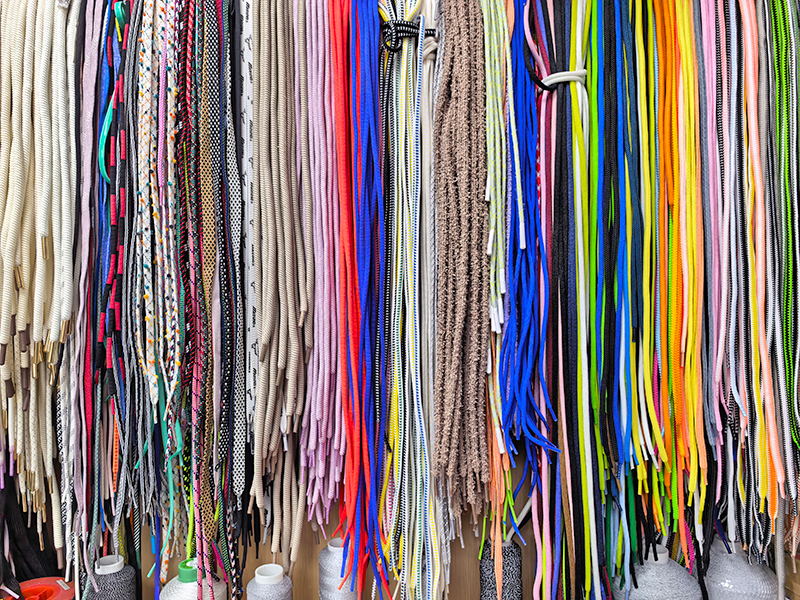
Look closely at the yarn itself. Pure fibers usually have a uniform twist and consistent thickness, while blends often show slight irregularities where two different staple lengths or textures have been spun together. Run a fingernail gently across the surface—if you feel tiny pills or short fibers lifting unevenly, there's a good chance the fabric combines natural and synthetic components.
Another tell is how the material reacts to moisture. Blends with cotton or wool absorb water more slowly than their pure counterparts because synthetic portions repel liquid. Drop a small bead of water on an inconspicuous area and watch: if it sits on the surface for a few seconds before soaking in, you're likely dealing with a mix rather than a single fiber type.
Finally, crumple the fabric in your hand and release it. Natural fibers like linen or ramie wrinkle sharply and hold creases, while polyester blends bounce back quickly with only soft folds. A fabric that resists wrinkles but still feels breathable is almost always a blend—pure synthetics feel clammy, and pure naturals crease deeply.
Why Aglet Failure Costs More Than the Lace Itself
A shoelace doesn't fail all at once—it starts with that tiny plastic or metal tip. When an aglet cracks or comes off, the exposed cotton or nylon frays almost immediately. You notice it the first time you try to thread the lace through an eyelet and it snags, leaving you yanking at a fluffy end while the clock keeps ticking. What used to take two seconds now takes ten, and if you're already running late, that small annoyance compounds fast.
Replacing the lace seems like a cheap fix until you try to find a match. The original laces on a decent pair of shoes are often a specific length, width, and shade that big-box packs never quite replicate. You might buy a three-pack for convenience, only to end up with laces that feel too slippery or too stiff against the shoe's leather. And if the shoes are from a niche brand, the replacement can cost more than a meal out—not to mention the time spent searching online or driving to a store.
Then there's the failure you don't see: a worn aglet makes the lace less secure, so the knot loosens slowly throughout the day. You retie it, then retie it again, and eventually the shoe loses its snug fit. That leads to heel slip, blisters, or worse—a trip on a loose loop. A five-cent plastic cap quietly pushes you toward a new pair of laces, and maybe even a new pair of shoes, all because nobody designed it to last as long as the lace wrapped around it.
Sourcing Laces That Feel Premium at a Budget Price
When you first start hunting for premium-feeling laces without the luxury markup, the trick is to stop looking at finished garment suppliers and go straight to the trims and notions wholesalers. Many of the same factories that produce laces for high-end brands sell off-season or overrun stock to these distributors at a fraction of the retail cost. The hand feel often comes down to fiber content and weave density, not the brand name stamped on the spool.
A better move is to request sample swatches before committing to any bulk order. Pay attention to how the lace recovers after you stretch it, whether the edge stays flat or curls, and if the dye is consistent under different light. Cotton and rayon blends can give that soft, matte premium touch, while nylon and polyester tend to feel slick or plastic—but they hold up better for athletic wear. The real cost saver is often in the finish: waxed laces look more expensive and stay tied longer, yet the waxing process adds only a few cents per pair.
Don't overlook small-batch suppliers on platforms that cater to independent designers. They frequently run closeout deals on premium deadstock laces left over from boutique production runs. Buying deadstock means you get true luxury materials—sometimes Italian or Japanese origin—at budget pricing because the supplier just wants to clear shelf space. Just be ready to buy quickly and without expecting reorders, as these lots are usually limited.
The One Question to Ask Before Signing a Supply Contract
Most people scan the fine print for hidden fees or termination clauses. But the real make-or-break question has nothing to do with penalties or pricing. It's simpler, and far more uncomfortable: “What happens when your biggest customer places an order twice your capacity overnight?”
That single question exposes whether the supplier sees you as a partner or just another purchase order. A vague answer like “we'll figure it out” is a red flag. A strong supplier will walk you through their surge plan, name the exact bottlenecks, and admit where they would need your help. If they can't answer with specificity, you're not buying reliability—you're buying hope.
Ask it early, before you're emotionally invested in the deal. The answer tells you more about their operational maturity than any slide deck or reference call ever will.
How to Turn Lace Returns into Sourcing Intel
Lace returns are rarely just a logistics headache—they are a live feed of what your customers actually tolerate. When a batch of floral lace trim comes back with frayed edges or a shade that leans too pink under store lighting, that data points to a supplier who cut corners on finishing or dye lot consistency. Instead of writing off the loss, tag each return with the original PO number, the defect observed, and the region where it sold. Over a few months, patterns emerge that no vendor scorecard will show you: one mill might consistently fail on stretch recovery, while another struggles with color matching across reorders.
The next step is to share these observations with sourcing partners in a way that feels collaborative rather than accusatory. Send a monthly defect digest that highlights the top three recurring issues for lace items, paired with photos and the percentage of returns tied to each. Ask for a corrective action plan and set a short window for improvement—say, two production cycles. Suppliers who engage seriously and adjust their processes become stronger partners; those who dismiss the data reveal themselves as risks worth replacing. This practice turns a painful reverse-logistics cost into a screening tool for supplier capability.
Finally, connect return intelligence to forward buying decisions. If a particular lace pattern shows high return rates only in humid climates, avoid stocking it in coastal stores or request a different fiber blend. Use the data to refine order quantities: when a style consistently comes back for sizing issues, order one size up in the next batch or adjust the spec sheet. Treat every return as a small market research survey that costs nothing extra—you already paid for the return shipping. Over time, your sourcing team builds a proprietary knowledge base that competitors cannot easily copy because it is built from your own customer interactions.
FAQ
Ask for batch records from their last three production runs, not just a single sample. Reputable makers will share details like fiber lot numbers, dye bath temperatures, and finishing tension settings. If they hesitate or only send a photo of one perfect pair, treat that as a red flag.
For athletic use, focus on abrasion resistance and stretch recovery—look for high-tenacity polyester or nylon with a tight braid. For casual or dress shoes, cotton and cotton-blend laces feel better in hand but need a waxed or coated finish to resist fraying. Always ask for the denier count and twist level, not just the fiber type.
Yes. Beyond the per-unit price, watch for tooling fees for custom aglets, surcharges on small dye lots, and freight costs that jump when packaging adds bulk. Some factories quote laces only, leaving tips and labeling separate, so request a landed cost breakdown that includes all components and packaging.
It varies widely. Standard colors and tips might start around 1,000 pairs, but custom-dyed or custom-tipped laces often require 5,000 to 10,000 pairs per color. If a factory offers very low MOQs with no setup fee, confirm whether they are using stock laces and simply cutting them to length, which limits your ability to control quality.
Request a pre-production sample and run your own bench tests: tie and untie the lace at least 500 times, rub it against a rough edge to check fuzzing, and soak it in water for 24 hours to see if the color bleeds or the tip loosens. Compare the results against a control lace from your current supplier rather than relying on the factory's own lab report.
For the US, check that dyes meet CPSIA requirements for lead and phthalates, especially in children's footwear. For the EU, REACH compliance is non-negotiable, and many retailers now ask for OEKO-TEX Standard 100 certification. Ask for test reports from an independent lab, not just a supplier's declaration.
Establish a physical master standard for each color and have the factory sign off on it before production. Specify an acceptable Delta E tolerance (usually under 1.5 for solid colors) and require a lab dip approval at the start of every run. Keep a reserve of the original dye lot to use as a reference for future orders.
Conclusion
Most buyers assume a supplier’s sample sets the standard for the entire production run, but hidden inconsistencies—like a slightly thinner core or a polyester blend masquerading as cotton—often go unnoticed until the laces are already on your product. Learning to spot fiber blends without a lab is less about fancy equipment and more about touch, sheen, and burn behavior: cotton turns to fine ash, while synthetics bead and smell like plastic. Then there’s the aglet, which seems minor until you see a return pile where every lace is intact but the tips have cracked or fallen off. Aglet failure quietly undermines your brand reputation because customers perceive the whole product as cheap, even if the lace body cost you very little.
Sourcing premium-feeling laces on a tight budget means rethinking where the cost actually lives—sometimes a slightly lower thread count with a better wax finish feels more expensive than a denser, rougher weave. Before signing any supply contract, ask your manufacturer what their defect tolerance is for color and diameter across batches; if they can’t give a concrete number, you’re signing up for drift. Finally, treat every returned pair of shoes as free market research: sort returns by lace failure type, and share those patterns with your supplier to force improvements instead of just eating the refund. That feedback loop turns a cost center into a sourcing advantage.
Contact Us
Contact Person: Mr Deng
Email: [email protected]
Tel/WhatsApp: +86-18926872657
Website: https://www.uniyongfeng.com/