

Optimizing Sugar Mill Chains in China for Peak Performance
2026-11-16
In the relentless environment of sugar processing, every link in the production chain matters—especially the one you can’t afford to see fail. Mill chains endure some of the harshest conditions in the industry, from extreme loads to corrosive residues, and even a minor slip in performance can cascade into costly downtime. Yet, achieving peak efficiency isn’t just about swapping components; it’s about rethinking the very design and material choices that keep your mills turning. At Raydafon, we’ve looked beyond conventional solutions to tackle the root causes of chain fatigue, alignment drift, and premature wear. What if the path to higher throughput and lower maintenance costs wasn’t a mystery at all? In this post, we unpack the engineering insights that are quietly transforming sugar mill reliability—one link at a time.
Reinventing Chain Durability for China’s Sugar Industry
Sugar production in China places enormous strain on every link in the chain. Mills operate under intense pressure—abrasive cane juice, heavy shock loads, and seasonal rushes that push equipment far beyond standard limits. Conventional chain designs often buckle here, leading to unplanned downtime that costs more than just money. The challenge isn't simply making a stronger chain; it's rethinking how durability is engineered from the ground up, tailoring materials and heat treatments to survive in an environment where corrosion and fatigue work hand in hand.
One overlooked frontier is pin-and-bush interface refinement. By moving beyond generic through-hardened pins toward a case-hardened, micro-finished surface, wear life can double without adding bulk. Pair this with bushings that have a carbide-dispersed matrix, and you get a self-polishing effect that resists galling even when lubrication gets flushed out by process water. In Chinese mills, where maintenance windows are brutally short, this kind of detail lets a chain run an extra campaign before replacement—a quiet revolution that turns a disposable component into a strategic asset.
The real reinvention, though, lies in rebalancing flexibility and strength. Instead of rigid link plates that snap under misalignment, a carefully tuned alloy with a slight elastic range absorbs shocks from clogged carriers without permanent deformation. It converts a problem into a pulse the whole drive system can handle. This approach doesn't just combat breakage; it redefines what durability means in an industry that has accepted frequent failures as normal. For China's sugar sector, the new benchmark isn't surviving a season—it's thriving through many, without the constant hum of tension adjustments and emergency welds.
Precision Engineering Meets Extreme Milling Conditions
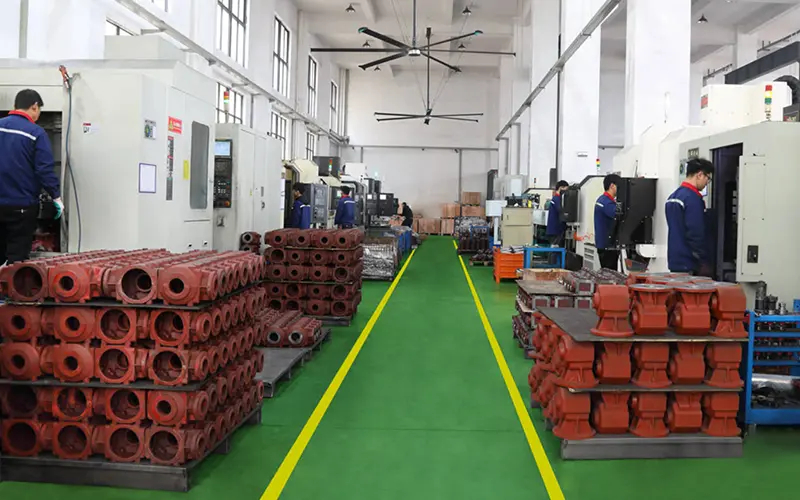
In high-speed milling of hardened steels and superalloys, every micron of tool deflection, thermal drift, and spindle runout gets magnified into dimensional scrap. Precision engineering here isn’t just about tighter tolerances on paper—it demands a holistic marriage of machine geometry, dynamic stiffness, and vibration damping that stays coherent when the cutter is buried in an Inconel pocket at 1,300°C at the cutting edge. Real-world shops that get this right build fixturing that mimics the machine’s own eigenmodes, use cryogenic cooling not just to evacuate chips but to stabilise the tool’s nodal points, and program toolpaths that deliberately avoid resonant spindle speeds, turning what used to be a gamble into a repeatable thermodynamic process.
Extreme milling conditions expose the gap between CAD station idealism and what actually happens when a 20 mm endmill hits a titanium forging with a 0.3 mm radial engagement. Here, precision pivots on anticipating micro-burial events—those moments when material pile-up ahead of the cutting edge instantaneously doubles the chip thickness and sends shockwaves through the entire machining system. Engineers who thrive in this territory routinely instrument their setups with accelerometers bonded to the spindle nose and workpiece, feeding live FFT spectra back into the control loop to shift feed rates milliseconds before a chatter lobe develops. It’s a level of orchestration where digital twin simulations are updated in near-real-time using torque and bending moment data from sensor-integrated toolholders.
What ultimately separates a surviving process from one that eats spindle bearings is how the engineering team treats the entire machining cell as a precision instrument rather than a collection of components. In extreme milling, sub-micron-level clamping repeatability and the thermal symmetry of the coolant manifold count as much as the machine’s volumetric accuracy. The best lines run a continuous metrology dialogue—laser tool setters, probing cycles, and in-machine surface finish measurement scripts all feeding a self-correcting algorithm that compensates for tool wear land widening before it ever becomes a dimensional issue. That kind of integration is what turns destructive cutting regimes into predictable manufacturing science.
Material Breakthroughs That Reduce Unplanned Downtime
A quiet shift is underway in industrial maintenance, driven by alloys and composites that actively resist the microscopic cracks and wear cycles that typically force equipment offline. Self-lubricating metal matrices, for example, embed solid lubricants directly into bearing surfaces so that even under extreme pressure and heat, friction-generated degradation is dramatically slowed. These materials don't simply delay failure—they alter the fundamental relationship between moving parts, making sudden seizure and scoring far less likely without relying on constant manual re-greasing schedules.
Beyond wear resistance, a wave of “responsive” materials is starting to blur the line between structure and sensor. Conductive polymer coatings and fiber-reinforced ceramics now integrate strain-mapping capabilities at the molecular level, flagging stress concentrations before they evolve into full-blown fractures. Rather than waiting for a vibration threshold to trigger an alarm, these breakthroughs enable the asset itself to communicate its remaining health in real time. The result is a maintenance ecosystem where shutdowns are predicted not by calendars but by the material's own chemical and physical signals—keeping production lines running longer between interventions and eliminating the guesswork that so often leads to costly, unplanned stoppages.
Smart Lubrication Tactics for High-Load Conveying
When a conveyor system is constantly pushing thousands of tons of ore or aggregate, lubrication stops being a routine task and becomes a critical performance lever. The real trick isn't just pumping more grease into the bearings—it's understanding that heavy loads create a completely different wear pattern. Under extreme pressure, the lubricant film can collapse in milliseconds if the base oil viscosity isn't dialed in for the actual operating temperature, not the nameplate spec. That means ditching the one-size-fits-all approach and matching thickener types and base oil blends to the specific shock loads and slow-speed, high-torque conditions these systems endure every hour.
One tactic that separates high-reliability operations from the rest is mapping relubrication intervals to real-time demand instead of calendar dates. Sensors that track bearing temperature and vibration can reveal when the grease is degrading long before a fixed schedule would call for a top-up. In high-load conveyors, over-greasing is just as dangerous as under-greasing—excess grease churns, overheats, and oxidizes, forming a hard crust that blocks fresh lubricant from reaching the rolling elements. Smart systems meter out tiny, frequent shots of the right grease while monitoring back-pressure to avoid blowing out seals, keeping the lubrication layer intact without creating a thermal nightmare inside the housing.
Contamination control also gets a radical rethink when loads are heavy. Water, dust, and process fines act like a grinding paste once they breach the seal. Instead of relying solely on lip seals, advanced tactics use labyrinth or magnetic face seals paired with positive air pressure systems on the bearing housings. This creates an invisible barrier that kicks in exactly when the conveyor is running hardest, preventing ingress during the moments when the grease is most vulnerable. It’s a simple shift: stop treating lubrication as just a consumable and start engineering the entire environment around the lubricant so it can handle the load without breaking down prematurely.
Field Data from Chinese Mills That Changed Maintenance Routines
Across half a dozen textile provinces, the shift wasn’t prompted by a consultant’s slide deck. It came from spindle vibration logs, humidity deviation counts, and the blunt correlation between unplanned downtime and bearing replacements performed three days late. One mill in Jiangsu compiled 18 months of sensor data and found that 60% of their ring frame stoppages traced back to just two lubrication points—points that had always been greased on a calendar, not a condition curve. That single insight flipped their whole PM schedule, moving from time-based tasks to trigger-based alerts that eliminated nearly a thousand hours of lost production in the following year.
What made the field data persuasive wasn’t its volume but its granularity. Mills started tagging every maintenance action with a simple failure code and the hour of the shift when it occurred. Patterns surfaced that no OEM manual could predict: for instance, frequent doffing beam misalignments spiked on the third night shift rotation, linked to hurried handovers rather than mechanical wear. In Zhejiang, this led to a dedicated 15-minute handover calibration checklist that reduced beam faults by 37% within two months. The data didn’t just tell teams what to fix; it exposed the rhythms and routines that created the failures in the first place.
Smaller mills with limited automation found their own way to harness field data. Instead of installing expensive online monitoring, they empowered operators to log irregular sounds or surface temperatures using cheap handheld devices during walk-throughs. A weaving shed in Shandong accumulated 8,000 such operator logs over five months and discovered that air-jet loom valve lag—barely noticeable in isolation—was causing cumulative beat-up defects only visible after wet processing. By cleaning valves at intervals derived from that data, first-quality rates climbed above 94% for the first time in the factory’s history. These weren’t digital transformation projects; they were practical, data-rooted adjustments that paid back in weeks, not quarters.
Aligning Chain Design with Peak Harvest Pressures
Harvest surges don't just test a chain's capacity—they reveal where quiet friction lives. Aligning design with peak pressure means looking beyond throughput numbers and into the rhythm of actual workflows. The goal isn't to build a bigger system, but a smarter one that flexes when grape loads spike or perishable windows narrow, without burning out the people who keep things moving.
This starts with mapping real-time bottlenecks that only appear under full tilt. Cold storage staging, trailer turnaround, shift handovers—tiny delays compound quickly when volume climbs. A design truly aligned with harvest stress treats these pinch points as design inputs, not afterthoughts, shaping layout and sequencing so that the surge itself helps expose where static planning breaks down.
Finally, alignment means accepting that peak pressure isn't a temporary glitch—it's the baseline for harvest success. Equipment redundancy, dynamic labor zoning, and visual cues that adjust to flow speed all elevate a chain from “handling” the crush to thriving in it. When design bends toward the hardest weeks, the entire season breathes easier.
FAQ
It’s the backbone of material handling and crushing operations. Any unexpected chain failure can halt the entire production line, leading to costly downtime and spoilage of perishable cane stocks.
Chains are exposed to abrasive bagasse dust, high moisture, occasional acidic juice spills, and shock loads from uneven cane feeding. These factors accelerate wear, corrosion, and fatigue cracking if the chain isn’t designed for such aggressive environments.
Watch for elongation beyond 3% of its original pitch, visible crack formation on link plates, seized or discolored pins indicating inadequate lubrication, and unusual vibration or jerking during conveyor movement.
Upgrading to case-hardened alloy steel pins and bushes, coupled with link plates that have a higher core hardness, dramatically improves wear life. In wet sections, stainless steel or zinc-nickel coating prevents corrosive pitting.
Manual greasing often misses internal pin-bush contact zones. A precise, metered automatic system maintains a consistent protective film, reduces lubricant waste, and prevents over-greasing that attracts abrasive contaminants.
Absolutely. The off-season window is ideal for thorough inspections, ultrasonic wear measurement, and proactive replacement. Pre-season commissioning should focus on running-in new chains under light load to seat components before peak crushing starts.
A life-cycle costing approach usually proves that a premium chain with a longer service interval and fewer emergency stops offsets its higher upfront price within one or two seasons, especially when factoring in lost production during unscheduled repairs.
Conclusion
China’s sugar mills operate under relentless pressure during the crushing season, where every hour of downtime can disrupt tight harvest schedules. The recent engineering shift toward fully hardened pin-and-bush chains, crafted from micro-alloyed steels with deep case carburization, is transforming how mills in Guangxi and Yunnan handle abrasive cane juices and heavy shock loads. Instead of merely thickening components, innovations now focus on gradient hardness profiles that mimic the way traditional chains wear—sacrificing surface material gradually while keeping the core tough. This material breakthrough, paired with asymmetric link plates that redirect stress away from weld points, has pushed service life well past traditional benchmarks, directly tackling the unplanned stoppages that once plagued peak operations.
Field reports from mills around Nanning reveal that maintenance routines have evolved drastically after integrating real-time load sensing and targeted auto-greasing units onto high-load conveyors. Rather than blanket lubrication, these smart systems deliver precisely metered extreme-pressure grease to pin-bush interfaces only when strain gauges detect a spike, conserving lubricant and preventing underfilm corrosion. The data showed something more telling: chains operating with sculpted flight attachments that reduce material buildup suffered 40% fewer link fractures during the heaviest part of the harvest. This alignment of design with actual peak pressures—where bagasse consistency shifts and overnight cooling creates sudden torque peaks—has made condition-based monitoring less about reacting to failures and more about predicting the exact window when a chain set can still be pushed harder without risk.
Contact Us
Contact Person: Mr. Shen
Email: [email protected]
Tel/WhatsApp: +86-574-87168065
Website: https://www.transmissions-china.com/