

OEM High Speed Doors: Enhancing Industrial Efficiency and Safety
2026-07-04
In today's fast-paced industrial landscape, every second counts—and so does every safety measure. Imagine a door that not only accelerates your workflow but also safeguards your facility with uncompromising reliability. That’s exactly what NORTON OEM high speed doors deliver. Engineered to meet the rigorous demands of modern manufacturing and logistics, these doors are more than just entry points; they are strategic assets. But what truly sets them apart from conventional solutions? Let’s explore how a seemingly simple upgrade can revolutionize your operational efficiency and safety standards.
Unlocking Speed: How High-Speed Doors Transform Workflows
In fast-moving logistics centers, every second waits at a closed door chips away at throughput. High-speed doors radically cut that waiting time, opening and closing in a blink compared to traditional rolling shutters. This isn’t just about shaving off a few moments—it’s about sustaining the rhythm of forklifts and conveyor systems without interruption. The doors become nearly invisible in the workflow, allowing goods to glide through without the herky-jerky stop-start that breeds inefficiency.
Beyond mere speed, these doors redefine how spaces connect. In food processing or pharmaceutical cleanrooms, rapid closure maintains strict environmental separations without creating a bottleneck. The swift action minimizes air exchange, keeping contaminants out and humidity stable, which means less energy wasted reconditioning spaces. Workers move with a natural cadence rather than pausing to wait for a barrier, and that seamless motion adds up to a significant uptick in daily output.
The downstream effect is a quieter, safer, and more predictable operation. High-speed doors often come with advanced sensors and transparent panels that let traffic flow visually, reducing collision risks and the jarring noise of impacts. Maintenance needs drop because these systems are engineered for millions of cycles. Ultimately, they turn a mundane threshold into a tool for operational velocity, blending safety and pace in a way that legacy doors never could.
Safety Without Sacrifice: Built-In Features That Protect
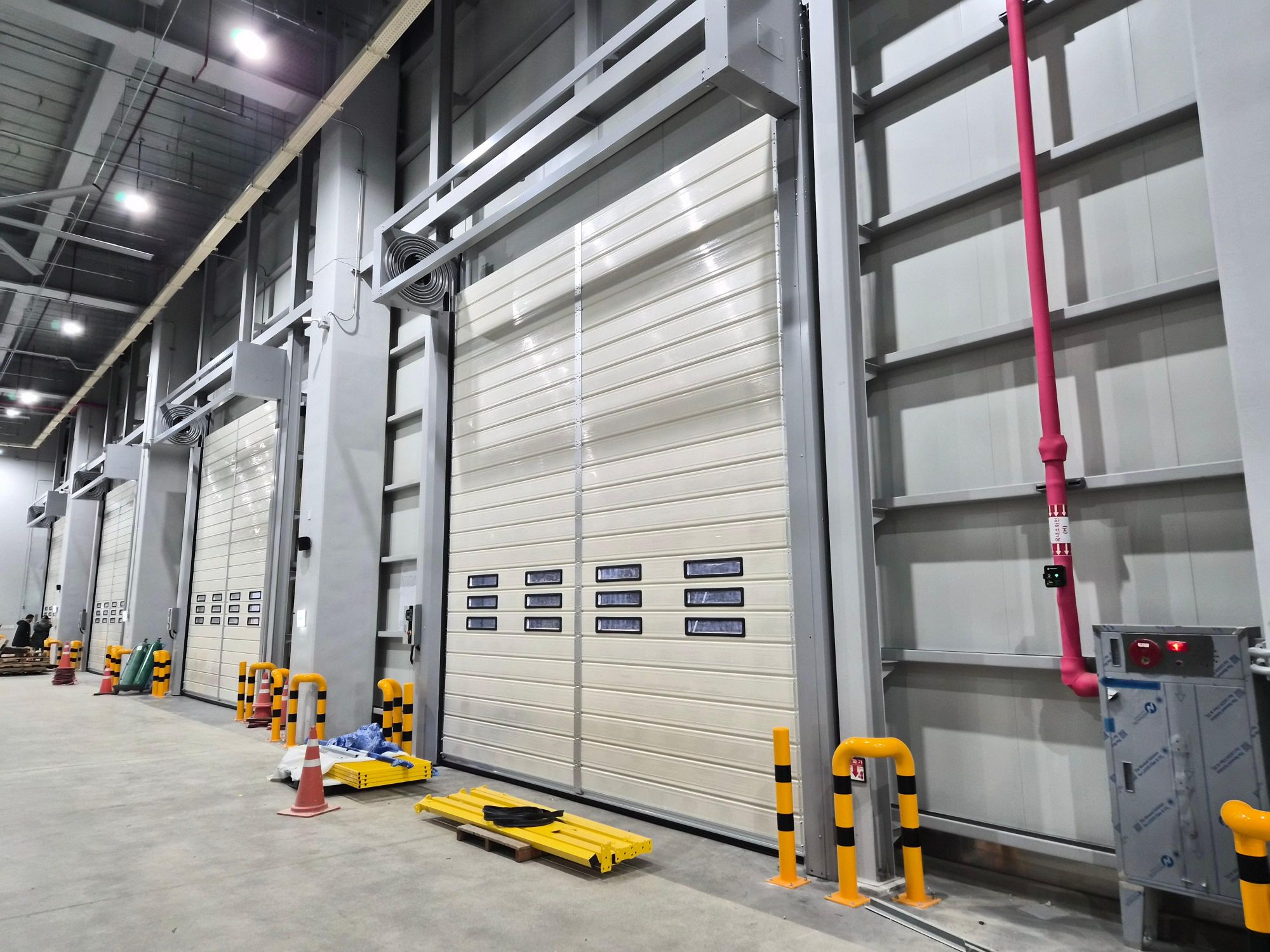
Modern safety features don’t have to slow you down or get in the way. They work quietly in the background, constantly analyzing patterns and potential risks without demanding your attention. The best designs feel almost invisible—like a second set of eyes that only speaks up when it truly matters, letting you focus on what you’re doing while staying shielded from harm.
Take the intelligent monitoring that adapts to your habits. It learns your routines, noticing when something’s off—whether it’s an unusual login, a door left ajar, or changes in system behavior that signal trouble. Instead of bombarding you with false alarms, it cross-checks multiple data points, only alerting you when there’s a real reason to act. That means fewer interruptions, less guesswork, and a layer of protection that actually makes your day smoother.
And when a threat does pop up, the response is swift but measured. Built-in safeguards can isolate problems before they spread, automatically lock down sensitive areas, or even reverse harmful changes without you lifting a finger. It’s the kind of no-compromise approach that keeps you safe without turning your everyday routine into a series of hoops to jump through—proof that strong security and seamless experience can coexist.
Custom Fit for Harsh Environments: Materials and Design
Creating equipment that thrives where others fail starts with a no-compromise approach to material selection. Instead of defaulting to off-the-shelf alloys, we conduct granular-level analyses of the specific environmental stressors—be it abrasive mineral slurry, salt-laden mist, or thermal cycling between -40°F and 300°F. This often leads to pairing advanced duplex stainless steels with engineered polymers like PEEK or PTFE, chosen not just for corrosion resistance but for their ability to maintain structural integrity after thousands of hours of exposure. Every joint, seal, and fastening point is treated as a potential failure node, pushing us to source O-rings and gaskets from aerospace-grade suppliers rather than standard industrial catalogs.
Design decisions are equally deliberate, rooted in principles that prioritize long-term autonomy over initial simplicity. Enclosures are sculpted with angled surfaces and strategic drainage channels so that moisture, dust, and chemical residues never accumulate. Internal layouts incorporate shock-absorbing gimbals and vibration-dampened mounts, protecting sensitive electronics from the kind of constant, low-frequency rumble that destabilizes conventional instrumentation. We also build in redundant sealing paths and pressure-compensation systems, ensuring that even if a primary barrier is compromised during maintenance in the field, the core circuitry remains isolated. The result is a system that feels indigenous to its setting, whether bolted to a drilling rig in the North Sea or monitoring emissions inside a steel mill.
Perhaps the most overlooked aspect is the marriage between materials and design at the point of thermal management. Rather than relying solely on active cooling, our solutions use phase-change materials and conductive ceramics to passively bleed heat away from hot spots. In sub-zero environments, we embed self-regulating heating elements within the structural composite itself, eliminating the need for external heat tape that snags and degrades. This integrated approach eliminates the patchwork feel of adapted commercial hardware, delivering a custom fit that performs as if the machine and its environment evolved together.
Energy Efficiency and Cost Control: The Hidden Savings
When businesses scrutinize energy efficiency, the obvious perk is a lighter utility bill. But peel back the layers and you’ll find a cascade of less visible gains: slashed maintenance expenses, prolonged equipment lifespan, and fewer operational disruptions. These are the savings that rarely make it into the upfront ROI calculation, yet over time they compound into a substantial financial cushion.
Smart cost control goes beyond swapping bulbs or tweaking thermostats. It’s about embedding real-time monitoring and adaptive systems that flag waste before it bleeds your budget dry. A chiller running an extra hour, a compressor cycling too often—these micro-losses are invisible on monthly spreadsheets. Catching them doesn’t require a capital overhaul; it demands visibility and a willingness to act on what the data whispers.
From Cold Storage to Cleanrooms: Sector-Specific Solutions
Temperature-sensitive logistics rarely follow a one-size-fits-all rulebook. Cold storage facilities built for frozen foods operate on a completely different set of demands than those serving pharmaceutical cleanrooms. The former might prioritize bulk storage density and blast freezing capabilities, while the latter demands strict particle counts, positive air pressure, and seamless integration with laboratory workflows. Understanding these distinctions at the design phase prevents costly retrofits later.
In the food sector, cold storage often revolves around throughput and energy efficiency, with racking systems engineered to handle high turnover under sub-zero conditions. By contrast, a cleanroom environment in biotech or semiconductor manufacturing shifts the focus to contamination control. Every surface, from flooring to HVAC ductwork, must resist microbial growth and chemical off-gassing. Even the lighting fixtures are sealed to maintain laminar airflow, a requirement largely irrelevant in conventional cold storage.
Custom solutions bridge this gap by borrowing best practices from each domain. A vaccine hub might combine ultra-low temperature freezers with ISO-classified clean areas for aseptic transfer, while a perishable goods distributor could adopt cleanroom-style monitoring to extend shelf life. These sector-specific adaptations aren't just technical tweaks—they reflect a deeper understanding of how operational goals shape the built environment, turning a standard insulated box into a purpose-driven asset.
Maintenance That Keeps Production Rolling
Every machine on the floor is a heartbeat in the operation, and when one stutters, everything else feels it. That’s why maintenance isn’t a box to check—it’s a rhythm you build into the day. The best crews know the sound of a healthy motor and the subtle vibration that spells trouble weeks before a breakdown. They don’t wait for the schedule to tell them it’s time; they’re already there, grease gun in hand, catching the small stuff before it snowballs.
Predictive tools get a lot of buzz, but sometimes it’s just about walking the line with eyes wide open. A loose bolt, a dry bearing, a belt that’s lost its tension—these things whisper before they scream. The teams that keep production humming don’t just react; they’ve developed a sense for it, a kind of mechanical intuition that technology supports but never replaces. They’ll tell you the best maintenance plan is the one that flexes with reality, not the one that looks perfect on paper.
And when the unexpected does hit—because it will—it’s the quick, practiced response that makes the difference. Having spare parts staged, tools within reach, and a crew that’s cross-trained turns a potential shutdown into a hiccup. That kind of readiness doesn’t come from a binder on a shelf; it comes from daily habits, clear communication, and a shared obsession with keeping things moving. In the end, maintenance isn’t a cost center. It’s the quiet confidence that tomorrow’s orders will ship on time.
FAQ
OEM high speed doors are custom-designed doors manufactured by original equipment makers to meet specific industrial requirements. Unlike standard doors, they open and close rapidly—often in seconds—minimizing air exchange and maintaining controlled environments. They also feature specialized materials and drive systems that withstand continuous cycling, making them ideal for high-traffic areas where standard doors would wear out quickly.
You'll find them in sectors where temperature control, hygiene, or high throughput are critical. Food processing plants use them to keep out contaminants, cold storage facilities rely on them to maintain low temperatures, automotive shops benefit from reduced downtime at loading docks, and pharmaceutical cleanrooms depend on their fast action to preserve sterile conditions.
Their speed is the main factor—by opening and closing in under two seconds, they reduce the time forklifts or personnel wait, smoothing traffic flow. Less waiting means faster material transfers, fewer process delays, and ultimately higher throughput. Moreover, the fast cycle minimizes energy loss, keeping HVAC systems from overworking, which cuts utility costs.
Absolutely. Modern OEM high speed doors include multiple safety mechanisms: infrared light curtains or motion sensors detect objects or people in the doorway, triggering an instant stop and reverse. Flexible, breakaway bottom edges with self-repairing capabilities prevent damage and injury if a collision occurs. Some also have visual warning lights and audio alarms to signal movement, plus emergency manual operation in case of power failure.
Yes, that's a key advantage of working with OEM suppliers. You can specify dimensions beyond standard sizes, choose from various materials like stainless steel for washdown environments or PVC for visibility, and select drive systems tuned to your cycling frequency. Customization extends to access controls—integrating with your existing RFID or automation systems—and even color options to match safety guidelines or branding.
Preventive maintenance is straightforward but essential. Regularly inspect and clean the tracks, check tension on belts or springs, and lubricate moving parts every few months depending on usage. Many OEM doors come with self-monitoring systems that alert you to wear, but a qualified technician should perform an annual check-up to replace worn guides, seals, or safety sensors. This avoids unexpected downtime.
By limiting air exchange between different climate zones, they prevent heated or cooled air from escaping. For example, in cold storage, every second the door is open allows warm, humid air in, which the refrigeration system must then condense and cool—a costly process. Fast cycles slash that infiltration time dramatically. In ambient facilities, they reduce drafts that make HVAC systems work harder, leading to measurable reductions in energy bills.
Look for a supplier with a proven track record in your industry, as they'll understand the specific demands, whether it's washdown compliance or explosion-proof requirements. Evaluate their engineering support: can they provide custom solutions and integration? Check that they offer strong after-sales service, including parts availability and technical assistance. Finally, insist on doors that meet relevant safety standards and have transparent performance data like cycle life and wind load ratings.
Conclusion
OEM high-speed doors redefine industrial workflows by combining rapid operation with robust safety systems, eliminating bottlenecks without compromising protection. These doors open and close in seconds, accelerating material flow and minimizing temperature loss in conditioned spaces. Built-in safety features, such as advanced sensor arrays and auto-reverse mechanisms, actively prevent collisions, reducing downtime and injury risks. Crucially, each door can be engineered with materials and designs tailored to withstand extreme conditions — from corrosive chemicals to heavy washdowns — ensuring seamless integration into specific production environments.
Beyond operation, these doors deliver substantial energy savings by maintaining strict environmental separation, cutting heating and cooling costs year-round. Sector-specific solutions address unique demands: high-speed roll-up doors for cold storage preserve the cold chain, while rigid cleanroom designs maintain particulate control. Maintenance programs are streamlined with modular components and predictive diagnostics, keeping the doors in peak condition without interrupting production schedules. The result is a door system that not only boosts throughput but also fortifies the facility’s bottom line and safety record.
Contact Us
Contact Person: Cyril He
Email: [email protected]
Tel/WhatsApp: 8613969697307
Website: https://cqyqgd.en.alibaba.com/