

OEM Galvanized Tangent Tower Dealers for Durable Transmission Line Infrastructure
2026-09-02
Most transmission line failures don’t start with a dramatic collapse—they begin with small compromises in tower fabrication or galvanizing. That’s why selecting the right OEM galvanized tangent tower dealers is one of the most overlooked decisions in durable transmission line infrastructure. At Anbang, the focus isn’t just on supplying towers—it’s on engineering the kind of long-term performance that keeps grids reliable. This post looks at what separates dependable dealers from the rest and what to check before your next project moves forward.
What OEM Galvanized Tangent Tower Dealers Won’t Tell You About Zinc
Most buyers only see a shiny gray coating and assume the tower is fully protected. What rarely gets mentioned is that the zinc layer can vary more than the spec sheet suggests. A dip that's too quick, a bath that wasn't properly cleaned, or recycled zinc with higher impurity levels can leave sections with thinner coverage than the stated microns. Those weak spots may not show up for years, but they're exactly where rust starts once the coating gets scratched or weathered.
There's also the question of adhesion. Hot-dip galvanizing bonds zinc to steel metallurgically, but only if surface preparation is done right. Some dealers don't talk about the difference between a coating that merely looks complete and one that actually resists delamination under wind load, thermal cycling, or minor impacts during transport and erection. If the zinc cracks away from the base steel around bolt holes or flange edges, the exposed metal is left with little more than cosmetic protection.
The real cost isn't always in the upfront price. A tower with borderline zinc thickness can pass inspection at the factory and still fail early in a coastal or industrial environment. What you're not told is that re-coating in the field is far more expensive than getting the galvanizing thickness and bond right the first time. Asking for batch test reports, coating weight measurements, and proof of adherence isn't overreach—it's the only way to know what you're actually paying for.
Straight-Line Load Paths: Why Tangent Tower Design Dictates Durability
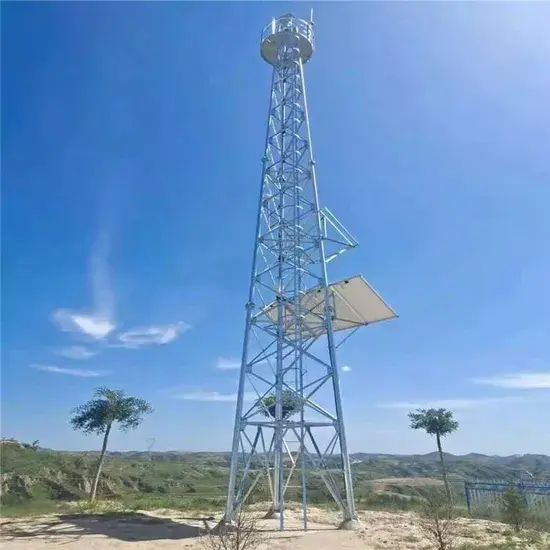
Loads travel through a tangent tower like water down a straight pipe. When the tower body, crossarms, and foundation follow a single continuous line, forces don't need to detour, branch, or pile up at awkward joints. This directness means less bending stress on welds, fewer fatigue cracks at connection points, and a structure that shrugs off wind gusts instead of fighting them. It's not just a geometry lesson—it's why some towers stand for fifty years while others start showing hairline fractures after ten.
Curved or sharply angled designs look striking on paper, but every bend introduces a stress riser. A tangent tower avoids that trap by keeping the load path as straight as possible from top to ground. The crossarm transfers wire tension straight into the shaft, the shaft sends it straight down to the base plate, and the base plate spreads it evenly into the concrete. There's no hidden hinge point, no eccentric moment waiting to twist the steel. This simplicity is the real durability secret—fewer parts that can fail, fewer places for corrosion to hide, fewer surprises after a decade of thermal cycling.
You can see the difference during a severe ice storm. Tangent towers carry the extra weight without drama because the load never has to negotiate a corner. Compare that to an angle tower down the line, where the same ice load gets redirected at a kink, concentrated on a few bolts, and eventually starts chewing through the galvanizing. That's why utilities reserve tangent designs for long, open spans—they know the straight load path is not just efficient, it's the backbone of a maintenance-free lifespan.
Dealer Vetting for Transmission Work: Beyond the Tonnage Price
A shop can quote a tempting per-ton rate and still leave you stranded with a transmission that fails six months later. The real vetting starts with how they diagnose. Any dealer can read a code, but the ones worth your business pull line-pressure readings, inspect fluid for metal, and walk you through wear patterns on the clutch packs. If the quote skips straight to “replace it” without a teardown conversation, that low tonnage figure is probably hiding a shortcut.
Warranty terms matter more than the initial number. A transmission rebuild that carries full parts-and-labor coverage for two years costs less per operating hour than a cheap bench job with a 90-day tail. Ask where the hard parts come from, whether the torque converter gets replaced or just flushed, and how they handle a comeback. Dealers that stand behind their work tend to be specific about what’s covered—and what isn’t.
Finally, look at the shop itself. Clean fluid handling, proper jigs for case alignment, and a technician who has rebuilt your specific model more than once all point to a lower total cost of ownership. Tonnage price only tells you what you pay today; the vetting process tells you what that transmission will cost over the next five thousand hours.
Custom OEM Tangent Towers: When Standard Drawings Don’t Match the Terrain
Off-the-shelf tangent tower drawings assume a flat, predictable right-of-way. But once the survey crew hits rolling hills, rocky outcrops, or a sudden drop near a creek crossing, those standard dimensions stop making sense. A tower designed for level ground might need a longer leg on the downhill side, a shifted crossarm to keep conductor clearances honest, or a completely different base plate angle. That's when custom OEM work stops being a luxury and starts being the only way to keep the line buildable without cutting extra access roads or over-excavating the slope.
Working from actual terrain data instead of a generic template changes the whole conversation. The fabricator can adjust leg extensions, tweak the body taper, or relocate the insulator attachment points so the tangent structure still handles the same tension loads even when one side sits three feet higher than the other. It's not about reinventing the tower; it's about respecting the ground it stands on. A good OEM will take your as-built survey, mark the high and low points under each leg, and then redraw the base section and diaphragm layout so the final assembly arrives at site ready to drop onto pre-set foundations without field drilling or shimming.
The real payoff shows up during erection. When the custom drawings already account for the slope, the crew doesn't waste a day trying to level a standard tower with timber cribbing or extra anchor bolts. Bolts line up, crossarms sit plumb, and the conductor attachment heights match the sag-tension calculations from the line design. That's the difference between a drawing that fits a desk and a drawing that fits the land.
Galvanizing Standards, Mill Certs, and the Paper Trail That Actually Matters
A mill cert isn't a guarantee—it's a snapshot. When a batch of steel leaves the galvanizing kettle, the paperwork attached to it should tell you which standard governed the coating thickness, what the bath chemistry looked like that shift, and whether the inspector actually signed off on adhesion tests. Too many teams file the cert without reading past the first page, and that's exactly where nonconformance hides.
The standards that matter most on North American jobsites are ASTM A123 for structural shapes and A153 for fasteners, while ISO 1461 covers much of the rest of the world. But the numbers on the cert only mean something if the sampling method matches the standard's actual requirements—random selection, correct lot size, and the right magnetic gauge calibration. A cert that lists "passed" without referencing those details is just a formality.
Worth keeping: the original heat number from the steel mill, the galvanizer's kettle log, and any repair records for bare spots touched up with zinc-rich paint. That chain of custody is what lets you trace a coating failure back to a bad dip, a bad batch of steel, or a handling mistake. If the paper trail breaks, you're left arguing over rust with nothing but a purchase order.
From Dealer Yard to Right-of-Way: Delivery Logistics That Protect Deadlines
Moving a piece of equipment from the dealer yard to the right-of-way is rarely a straight shot down an open highway. The route might thread through narrow county roads, dodge weight-restricted bridges, or queue up at a rail crossing that only clears twice a day. Delivery managers who protect deadlines treat every mile as a series of handoffs rather than a single drive, checking for width clearances, escort requirements, and local curfews before the truck ever leaves the yard. It is that kind of pre-trip scrutiny that keeps a promised arrival time from turning into a phone call nobody wants to make.
Once the trailer rolls, the real coordination begins. A police escort might be needed only for the last three miles, but if it is not booked three days ahead, the whole convoy stalls at the county line. Fuel stops get picked not by price but by turnaround space—a 53-foot lowboy cannot squeeze into a corner station. And the driver's hours-of-service log becomes a countdown clock that shapes every decision, from when to stop for the night to whether a second driver needs to meet the load halfway. Teams that meet deadlines consistently treat these constraints as a live map, updating it with traffic cameras, weather radar, and phone calls to the site foreman who knows that the grading crew is waiting on the dozer.
Finally, the last stretch from pavement to right-of-way often holds the hidden delays. A temporary access road that looks fine on a satellite image might be too soft for a loaded trailer after two days of rain. The turning radius into the site gate may require backing in from the opposite lane, which means flaggers and a few minutes of stopped traffic. The best delivery planners walk or drone that final approach beforehand, marking where the tires will track and clearing the way for the truck to pull in, unload, and get out without forcing the project schedule to absorb another day.
FAQ
A dependable dealer does more than take orders. They review tower drawings against terrain data, confirm steel grades before fabrication, and keep the galvanizing thickness within ASTM A123 or ISO 1461 limits. They also track batch numbers for traceability and usually have a direct line to the factory floor, so design changes do not stall the project.
Hot-dip galvanizing forms a metallurgically bonded zinc-iron alloy layer, not just a surface coat. In coastal zones, the zinc corrodes slowly and sacrificially protects the steel underneath. Properly galvanized tangent towers often last 40 to 60 years before the first major touch-up, even with salt spray, as long as drainage holes and venting were designed correctly.
Yes, most OEM-oriented dealers can adjust leg extensions, base plate dimensions, and body panel geometry. They work from the line designer's loading calculations, so towers hold up under wind, ice, or uneven settlement. Custom bolt patterns and extra reinforcement at the leg-to-stub connection are common when soil bearing capacity is low.
Tangent towers carry the conductors on straight sections where the line angle is small. They are lighter and faster to assemble than angle or dead-end structures, which keeps total project costs down. Because they handle everyday vertical and transverse loads rather than sharp directional pulls, they can be spaced closely and erected with smaller cranes.
Start by checking the galvanizing thickness at several points with a magnetic gauge. Look for bare spots, lumps, or sharp spikes that could cut linemen's gloves. Verify bolt hole alignment with a template on a sample tower, and make sure the mill certificates match the heat numbers stamped on the steel. If anything is off, pause unloading and photograph the damage before the truck leaves.
Custom orders usually add two to four weeks for drawing approval and material cutting, but the total lead time can stay similar if the dealer has reserved steel coils and galvanizing slots. Stock towers ship faster, but they may force the line designer to accept heavier sections or extra foundation work. A good OEM dealer gives a realistic schedule up front and updates it when final drawings are approved.
The tower body gets wider at the base, the bracing pattern becomes denser, and the steel thickness increases in the legs and lower panels. For heavy ice, the cross-arms are reinforced and the conductor attachment points are raised to maintain ground clearance under sag. Some dealers also specify high-strength steel like ASTM A572 Grade 50 to reduce weight while keeping the same load capacity.
They should pack tower members in sequence by erection section, not mixed at random. Bundles need weatherproof tags with piece marks visible from the outside. For remote sites, the dealer may arrange staged delivery to a nearby rail siding or port and then coordinate truck transfers when the access roads are dry enough. Clear packing lists and weight certificates help the site crew avoid double-handling.
Conclusion
Most OEM galvanized tangent tower dealers won't volunteer that zinc thickness alone is a weak proxy for years of corrosion resistance. The real story sits in the galvanizing bath chemistry, the steel's silicon and phosphorus levels, and how the coating bonds at welds and edges—details that separate a tower surviving three decades from one rusting at the flanges. Straight-line load paths sound simple, but tangent tower geometry quietly dictates whether wind and ice transfer into the lattice without hidden fatigue points. A dealer that treats every tangent tower as interchangeable is missing the point: standard drawings rarely survive contact with actual terrain. Custom OEM work means reshaping leg extensions, adjusting face widths, or re-angling crossarms so the structure sits true on a slope instead of fighting it.
Vetting a dealer for transmission work goes far beyond the tonnage price. You need to see mill certs that trace the steel heat, a galvanizing spec that matches ASTM A123 or ISO 1461 with actual inspection reports, and a paper trail showing where each batch got dipped and how it was handled. From the dealer's yard to the right-of-way, delivery logistics dictate whether your deadline holds. Bundling, bolting, and securing tower sections for long hauls—especially with mixed pole lengths and fragile galvanized threads—can make or break a project. The dealers worth keeping don't just sell steel; they understand sequence, terrain access, and how a late truck cascades through your entire stringing schedule.
Contact Us
Contact Person: antor khan
Email: [email protected]
Tel/WhatsApp: 8613863903569
Website: https://www.qdabtower.com/