

OEM Check Valve Factory: Custom Solutions for Reliable Flow Control
2026-05-17
In industries where fluid precision is non-negotiable, a custom check valve can make or break system efficiency. At the heart of this challenge lies the ability to tailor every component—from cracking pressure to materials—without compromise. That’s where an experienced OEM partner steps in. ZMV has quietly earned its reputation by solving flow control puzzles that off-the-shelf valves simply can’t handle. Whether you’re battling corrosive media, space constraints, or demanding cycle life, a purpose-built solution isn’t just an option—it’s the competitive edge. Let’s explore how dedicated OEM manufacturing transforms reliability from a buzzword into a measurable asset.
Tailored Check Valve Designs for Unique System Demands
Every industrial fluid system carries its own set of operating conditions, and off-the-shelf check valves rarely fit all of them without compromise. When temperatures swing from cryogenic to steam-level heat, or when media include slurries and aggressive acids, a generic design quickly becomes a failure point. Customizing the valve body, seat, and internal components to match these specific stresses is not a luxury but a practical necessity for long-term reliability.
Material selection is often the first area of customization. A chemical processing line might demand an all-PTFE wetted path to withstand hydrochloric acid, while a subsea manifold requires duplex stainless steel combined with coatings engineered for saltwater immersion. Even small changes to disc weight or hinge geometry can alter the cracking pressure enough to prevent backward leakage in low-flow scenarios, something standard product lines rarely accommodate.
Sometimes the most critical modification addresses dynamic behavior rather than material durability. In a large cooling water system, for example, slamming disc closure can create destructive pressure surges. A tailored solution might incorporate a dashpot or a spring-assisted, non-slam mechanism that decelerates the disc before seating, effectively dampening shock without increasing flow resistance. These kinds of refinements evolve from close collaboration with system designers who understand the real-world transients that a datasheet doesn’t capture.
Precision Manufacturing That Eliminates Leakage Risks
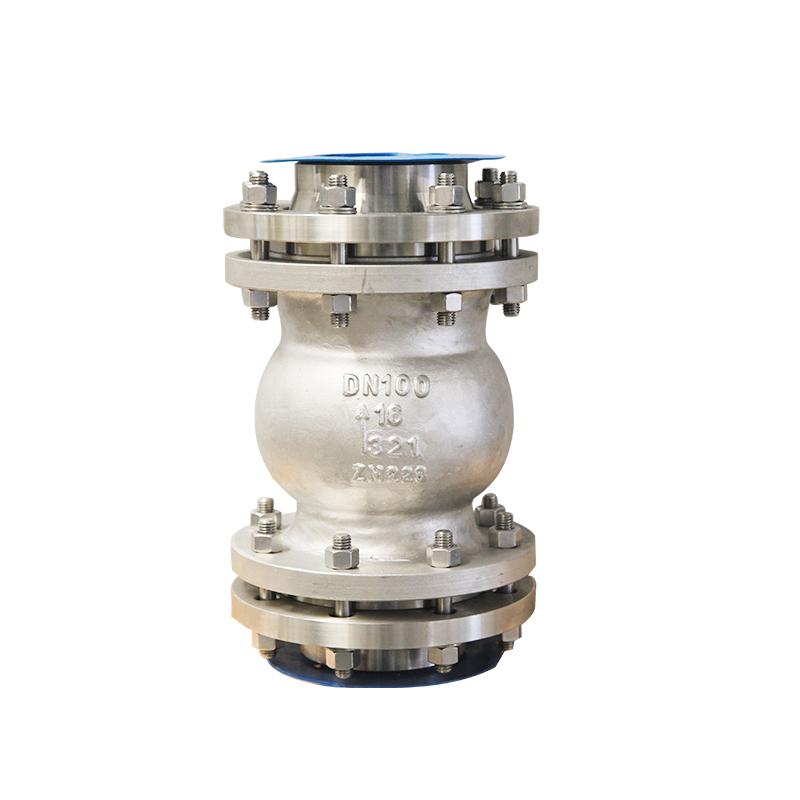
Every component emerges from a tightly controlled machining process where tolerances are held to single-digit micron levels, not as an afterthought but as a foundational requirement. Surface finishes rival those of optical mirrors, ensuring that mating faces achieve near-perfect conformity without reliance on gaskets or excessive sealants. The result is a metal-to-metal closure so precise that even helium molecules find no escape path, transforming what was once a persistent headache into a non-issue.
Our approach replaces conventional trial-and-error fitting with computational fluid dynamics and finite element analysis early in the design phase. By simulating pressure gradients and thermal expansion before the first chip is cut, we preempt the subtle distortions that invite leaks. This means every flange, valve body, and connector arrives pre-validated, eliminating the need for on-site lapping or repeated torque adjustments that plague less meticulous assemblies.
Real-world verification goes beyond standard hydrostatic tests. Each assembly undergoes helium mass spectrometry under conditions that replicate extreme operational cycles—alternating vacuum and high pressure while temperatures swing from cryogenic to ambient. These trials uncover weaknesses that typical pass/fail protocols miss, guaranteeing that when our products leave the floor, they carry a documented leak rate measured in the sub-10⁻¹⁰ mbar·L/s range, a figure that renders fluid loss statistically irrelevant over the service life of the equipment.
Material Selection Guidance for Harsh Environments
In harsh environments, the usual rules of material selection often break down. It's not just about strength or cost anymore—you're dealing with corrosion that eats away at standard alloys, temperatures that make polymers brittle, or UV exposure that degrades surfaces within months. The key is to think less about what works in a lab and more about what has survived in the field. Start by mapping every stressor a component will face simultaneously—salt spray and cyclic loading, for instance, can conspire to cause failure modes you won't find in a textbook.
One underappreciated tactic is to look beyond generic grades. A stainless steel might perform terribly in chloride-rich atmospheres, but a super duplex or a high-nickel alloy could thrive. Similarly, don't assume all plastics are equal; PTFE might handle chemical attack brilliantly, while PEEK offers mechanical resilience up to 250°C. However, real-world conditions often throw curveballs—like erosion from wind-blown sand or rapid thermal swings that cause micro-cracking. That's why validation through accelerated life testing, tailored to mimic actual exposure cycles, is non-negotiable.
Finally, remember that material selection is never purely technical. The best material on paper can become a nightmare if it requires exotic fabrication processes or has a lead time of six months. In harsh environments, the cost of failure often dwarfs the cost of the material, so it's wise to weigh lifecycle expenses—maintenance, downtime, and safety risks—against upfront price. Sometimes the optimal choice is a familiar material with a clever protective coating, or a carefully designed geometry that minimizes vulnerable areas. There's rarely a single right answer, but there's always a best-fit solution when you balance performance, practicality, and real-world endurance.
Streamlined Integration with Existing Piping Networks
Connecting new equipment to aging infrastructure often means tearing out sections of pipe, welding custom adapters, or shutting down operations for days. This system flips that script. Every port, fitting, and flange is designed to match ANSI, ISO, and JIS standards right out of the box, so it slides into your current layout without forcing a redesign. No exotic tools, no weld certifications — just common gaskets and a torque wrench.
Think of it less like an installation and more like a swap. The modular coupling points accept everything from Schedule 40 carbon steel to thin-wall stainless, using a self-aligning collar that eats up minor misalignment. What used to require a crew of four and a crane now takes two technicians and an afternoon. Best part? The downstream flow remains undisturbed, because isolation valves are built into every branch connection point.
This is not about rigidly conforming to a manufacturer’s vision of your plant — it’s about giving your team a component they don’t have to fight. The moment you realize you can bolt on new capacity without re-routing a 20-year-old header, the true value becomes obvious: you’re buying back time that traditional expansion projects write off as unavoidable chaos.
Rigorous Testing Protocols Beyond Industry Standards
Our commitment to quality goes far beyond ticking boxes on a standard checklist. We’ve engineered testing protocols that simulate real-world extremes most labs never touch. From thermal shock cycling that pushes components from -40°C to 85°C in seconds, to continuous 1,000-hour salt spray tests, every product faces conditions harsher than it will ever see in the field. This isn’t about meeting a minimum—it's about uncovering the true breaking point and then building a safety margin on top of it.
We also dig into the invisible vulnerabilities that conventional tests miss. Our vibration tables don't just run a fixed frequency sweep; they replay actual road-load data collected from years of customer usage across six continents. Combine that with accelerated UV exposure chambers calibrated to replicate a decade of equatorial sunlight in just three months, and you get a validation process that ages a product faster than time itself, revealing long-term degradation patterns early.
Every test is documented with forensic-level detail, linking failure modes directly back to design or material choices. This loop between lab data and engineering refinements means our products don’t just survive the tests—they evolve through them. The result is a reliability that customers feel every day, a quiet confidence that comes from knowing the device in their hands has already endured far worse than anything their work will throw at it.
Dedicated Engineering Support from Concept to Production
Bringing an idea to life requires more than just a blueprint—it demands a team that understands the nuances of your vision. Our engineers embed themselves in your process from day one, asking the right questions and challenging assumptions to ensure the concept is not only viable but primed for real-world success. We don't just hand off designs; we collaborate closely, refining ideas until they're ready to take shape.
As the project moves into development, our support becomes the backbone of your production journey. We troubleshoot potential pitfalls before they become problems, adapting designs to fit manufacturing realities without compromising on quality or intent. This isn't about generic oversight—it's about having a dedicated partner who anticipates what's needed next and makes sure every step forward is a step in the right direction.
When production ramps up, we're still right there with you. From fine-tuning processes on the factory floor to addressing last-minute adjustments, our commitment doesn't end at prototype sign-off. We take ownership of the entire lifecycle, ensuring that what was once just a concept emerges as a polished, market-ready product—backed by the same hands that helped shape it from the start.
FAQ
We engineer each valve to match specific operating conditions—whether that’s non-standard materials, unique end connections, or tight space constraints. Instead of forcing a one-size-fits-all part, we adapt geometry and sealing mechanisms to your actual flow media, pressure spikes, and installation environment.
Every design undergoes cyclic endurance testing at full rated pressure and temperature extremes before shipping. We also provide computational fluid dynamics reports when requested, so you can see how the internals behave under your exact flow profile, not just theoretical specs.
Yes, our in-house rapid machining cell handles single-piece prototypes often within two weeks. We keep a wide range of raw bar stock and common spring grades on the shelf specifically for quick-turn development runs, so you don’t have to commit to large batches for initial validation.
Beyond standard 316SS and brass, we regularly work with Hastelloy C-276, duplex stainless, PVDF, and PTFE-lined bodies. Our team gives practical guidance on galling risks and chemical compatibility based on decades of field feedback, not just textbook data.
We’ll reverse-engineer from your existing piping and performance requirements. Send us a sketch or failed part, and we’ll build a drop-in replacement—often improving crack pressure stability or sealing life while keeping the envelope identical.
We have a dedicated cleanroom assembly area for degreasing, precision cleaning, and oxygen-safe packing. Certifications per CGA G-4.1 or ASTM G93 are standard for such orders, and we can include detailed contaminant analysis reports with each shipment.
Common ones include semiconductor fabrication (ultra-high-purity gases), hydrogen fueling stations, diesel emission fluid dosing systems, and custom hydraulic manifolds where pressure drop must be negligible. But we’ve also made valves for espresso machine boilers and veterinary anesthesia circuits—anything that needs one-way flow without compromise.
Yes, combined-function bodies are a frequent request. We can machine in a precise metering orifice, a threaded bleed port, or even a relief feature in the same forging or barstock piece, which saves connection points and potential leak paths.
Conclusion
An OEM check valve factory delivers much more than off-the-shelf components—it provides custom-engineered solutions that ensure reliable flow control across diverse industries. From the earliest design stages, dedicated engineering support helps refine valve concepts to meet unique system demands, whether that means crafting a compact profile for tight installations or developing a specialized cracking pressure for low-flow conditions. Material selection guidance plays a critical role as well, especially when valves must endure corrosive chemicals, extreme temperatures, or abrasive slurries. By recommending alloys, polymers, or coatings proven in harsh environments, the factory helps avoid premature failure and costly downtime. This collaborative approach means every check valve is purpose-built, not adapted from a generic template.
Precision manufacturing then turns those designs into leak-free, dependable hardware. Advanced machining and stringent assembly practices eliminate common leakage risks, while streamlined integration features—like matching end connections or custom flange patterns—allow the valve to drop into existing piping networks without costly modifications. Before shipment, every unit undergoes rigorous testing protocols that go beyond standard industry requirements, verifying performance under real-world pressures, temperatures, and cycle counts. This commitment to quality doesn’t stop at delivery; ongoing support ensures that as systems evolve, the OEM partner can refine or scale the valve design seamlessly. The result is a check valve solution that protects your process, simplifies integration, and stands up to the toughest operating conditions.
Contact Us
Contact Person: Lucas Lin
Email: [email protected]
Tel/WhatsApp: 8613968913000
Website: https://www.zhengmaogroup.com