

Industrial HVLS Fans Company: Revolutionizing Large-Space Airflow Solutions
2026-06-24
In the world of large-scale industrial and commercial spaces, air management is more than just comfort—it's a critical factor in productivity, safety, and energy efficiency. Conventional fans often fall short in vast warehouses, factories, or event venues, leaving stagnant air and soaring costs. Enter VINDUSFAN, a pioneer in High Volume Low Speed (HVLS) technology that’s rewriting the rulebook on industrial airflow. With a fresh approach to engineering and design, VINDUSFAN doesn’t just move air—it shapes environments. In this post, we peel back the layers of how VINDUSFAN is setting new standards for large-space ventilation, delivering solutions that are as quiet as they are powerful. Get ready to discover why businesses worldwide are turning to VINDUSFAN to revolutionize their airflow strategies.
How Airflow Shapes Industrial Comfort
In vast industrial settings, the silent movement of air dictates more than temperature—it defines the daily experience of everyone on the floor. Proper airflow management is the invisible hand that eases the strain of machinery heat, carries away fumes, and ensures that workers aren’t fighting their environment just to stay focused. When circulation is carefully tuned, it transforms a stifling cavern into a space where people can breathe deeply and move without fatigue, making the difference between a grueling shift and a productive one.
Beyond basic ventilation, the pattern and speed of airflow directly influence how comfortable a workplace feels. A gentle, consistent draft can mimic natural breezes, tricking the senses into perceiving a cooler atmosphere without drastic temperature drops. Strategic placement of fans and vents creates microclimates that cater to distinct zones—cooler near heat-intensive processes, warmer in assembly areas—so each task feels deliberately supported rather than endured. This attention to air movement curbs the oppressive stillness that often plagues large interiors, replacing it with a sense of life and renewal.
What often goes unnoticed is how air quality and flow intertwine to shape alertness and long-term health. Stagnant pockets become traps for dust, humidity, and airborne particles that wear down both equipment and people. Pulsing, well-directed airflow flushes these out continuously, leaving behind an environment where the air itself feels clean and invigorating. It’s a quietly engineered comfort—less about blasting cold air and more about orchestrating a dynamic, invisible stream that keeps industry alive and its people genuinely at ease.
The Cost of Stagnant Air in Large Spaces
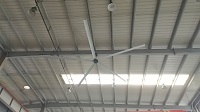
In cavernous spaces like warehouses, auditoriums, or open-plan offices, still air quietly drains resources. Without consistent circulation, temperature layers form—warm air rises and cool air sinks—forcing HVAC systems to work harder to maintain comfort. This stratification not only spikes energy bills but also accelerates wear on equipment, leading to more frequent repairs and earlier replacement. The financial drain is stealthy, often mistaken for normal operational costs until it compounds over months and years.
Beyond the budget, the human toll can be steeper. Stagnant air traps moisture, odors, and airborne contaminants, creating pockets of stale atmosphere that affect focus and well-being. Employees or visitors may experience fatigue, headaches, or respiratory irritation without realizing the air itself is the culprit. In settings like gyms or event halls, these conditions can dent attendance and reputation, turning what should be a comfortable experience into a subtle deterrent.
Addressing stagnant air isn’t just about adding fans; it requires smart circulation strategies tailored to the space. Destratification systems, high-volume low-speed fans, or even redesigned vent layouts can restore airflow balance, cutting energy use by up to 30% while stabilizing temperatures floor to ceiling. The upfront investment pays back quickly in lower utility costs and longer equipment life, not to mention a fresher environment that keeps people productive and present.
Engineering Fans That Work Smarter, Not Harder
The days of a one-speed fan roaring in the corner are fading. Real engineering means building a device that senses what a room actually needs. A well-designed fan doesn’t shove air around aimlessly; it reads humidity and temperature shifts, adjusting its output so you stay comfortable without touching a switch. It’s the quiet kind of clever that goes unnoticed until you realize your space has never felt more pleasant.
Blade geometry matters more than most people assume. Borrowing from the way an owl’s wing feathers break up turbulence, modern fan blades can slice through the air with hardly a whisper. Combined with a motor that calculates the minimum revolutions required for the desired effect, the result is a breeze that feels natural, not mechanical. You get consistent cooling, and your electricity meter barely twitches.
Durability gets a rethink here, too. Sealed bearing systems and materials that resist warping in high humidity cut out the usual reasons a fan ends up in the attic. Maintenance becomes an afterthought. And when the hardware links to a simple app that learns your routine—kicking in before you arrive home, dialing back when you leave—you end up with a fan that fits your life instead of demanding your attention.
Custom Solutions for Irregular Layouts
When standard configurations fall short, tailored approaches step in to make the most of every nook and angle. Instead of forcing a conventional setup into an unconventional space, custom solutions adapt to the precise contours of the room. This transforms odd corners, sloped ceilings, and alcoves from design headaches into distinctive focal points. By measuring meticulously and crafting each element to fit, even the most awkward footprint becomes a seamless, functional part of the whole.
Thinking beyond off-the-shelf pieces opens the door to inventive storage and display. Bespoke shelving can trace a slanted wall, while built-in cabinetry turns a narrow recess into a compact workspace or reading nook. The key lies in treating constraints as creative prompts rather than limitations. A triangular gap, for instance, can host a custom bench that doubles as storage; a protruding pipe might inspire a cleverly designed wrap-around unit that conceals it while adding character. These thoughtful interventions not only solve spatial puzzles but also infuse the interior with personality.
The real value of customized design is how it elevates daily life by eliminating compromise. Every inch works harder, and the flow of the room improves because the elements were designed to belong exactly where they sit. It’s a shift from imposing a layout onto a space to letting the space itself suggest what it needs. The result feels effortless and organic, as if the solutions were always meant to be there, quietly making the irregular feel entirely natural.
What Facility Managers Notice First After Installation
Right after the crew packs up and leaves, a facility manager’s eye goes straight to the seams, edges, and transitions. It’s not about the big picture—they’ve already seen the renderings. They’re looking at how the new work meets the old, whether the caulk lines are crisp, if the paint cut-ins are clean, and if any surfaces got scuffed during install. A slightly crooked faceplate or a misaligned ceiling tile will bother them more than a delayed delivery.
Once the visual scan is done, they immediately test how the space actually functions. A door that doesn’t latch properly, a faucet with weak pressure, a diffuser that rattles—these will kill any pride in the new install. They’ll flip switches, run water, open drawers, and listen. Silence is often the biggest compliment. If something hums, buzzes, or wobbles, it becomes a mental punch list item before they even leave the room.
What leaves the strongest early impression, though, is how clean the install left the surrounding area. Dust on horizontal surfaces, sticky residue on floors, or stray fasteners hiding in corners tell a story of carelessness. When the space is pristine, it signals that the contractor respected the building and its occupants. That trust is built—or broken—in the first silent walkthrough.
The Long-Term Value of Investing in Air Movement
Air movement might seem like a simple piece of a building's design, but it quietly shapes how people feel, work, and live day after day. When you invest in thoughtful airflow solutions—ceiling fans, strategic window placements, or whole-fan systems—you're not just buying hardware. You're investing in everyday comfort that reduces the need for constant air conditioning, preserves indoor air quality, and keeps spaces livable through changing seasons. This kind of planning doesn't scream for attention, but it pays back in lower energy bills and quieter, more habitable rooms years after the initial decision is made.
Over time, the hidden economics become clear. Buildings designed with effective air movement simply cost less to operate. They shrug off the strain on HVAC systems, filter less dust, and even protect interiors from the sort of dampness that leads to costly repairs. The people inside those spaces notice it in subtler terms—fewer complaints about stuffy afternoons, more focus in meeting rooms, a sense of calm in lobbies that never quite feels too warm. When you map it all out over a decade, that up-front choice to prioritize airflow transforms from a budget line item into a quiet engine of reliability and human-centered value.
FAQ
HVLS stands for High Volume, Low Speed. These are oversized ceiling fans, typically with blade diameters from 7 to 24 feet, designed to move massive amounts of air gently. Unlike small, high-speed fans that create turbulent blasts, HVLS fans produce a steady, non-disruptive breeze that circulates air evenly across vast areas.
They work on a simple principle: moving air feels cooler because it accelerates sweat evaporation from skin. In winter, the same fans can be reversed to push warm air trapped near the ceiling back down to the floor, reducing heating costs. This destratification means employees stay comfortable year-round without blasting AC or cranking up heaters.
Rather than just selling standard hardware, they focus on custom airflow engineering. Their team analyzes your facility's layout, usage patterns, and existing HVAC systems to design a solution that maximizes energy savings and comfort. They also use proprietary blade profiles and direct-drive motors that run quieter and last longer than traditional gearboxes.
Their versatility extends way beyond factories. You'll find them in airport terminals, livestock barns, gymnasiums, even open-air restaurants. Any space where air stratification or stagnant zones are a problem can benefit. The key is ceiling height—generally at least 12 feet—and open floor plans that allow the large airflow column to develop.
Real-world data shows cooling energy savings of 20–30% in summer and heating reductions up to 30% in winter. In some distribution centers, they’ve eliminated the need for dozens of high-speed floor fans or ductwork extensions. The payoff period often surprises facility managers—sometimes under two years when you factor in both energy and productivity gains from a better working environment.
Modern HVLS fans, especially those with direct-drive brushless motors, are nearly maintenance-free for years. The company’s design minimizes wear points—no belts, gearboxes, or chains. Occasional blade cleaning and an annual check of fasteners is usually all that's needed. Many of their fans have been running for over a decade without major issues.
In many mild or dry climates, they make AC unnecessary by creating effective cooling through air movement alone. Even in hot, humid regions, they drastically reduce the load on air conditioning systems, letting you raise thermostat set points by 8–10°F without losing comfort. It’s not about replacing everything but about making your existing systems work smarter.
They engineer each component for balance and precision. The blades are shaped and calibrated to cut through air silently, and the direct-drive motors produce minimal hum. Before installation, a structural analysis ensures ceiling mounts won't transmit vibrations. In spaces with ultrasensitive equipment, they can provide custom damping solutions that keep noise levels below a library whisper.
Conclusion
In vast industrial settings, air isn't just empty space—it's a dynamic force that directly shapes comfort, productivity, and operational costs. When airflow stagnates, heat and humidity build up in layers, forcing HVAC systems to work overtime while workers suffer from fatigue and unsafe conditions. Recognizing this, the Industrial HVLS Fans Company has re-engineered large-diameter, low-speed fans to move massive columns of air gently yet persistently throughout the entire volume of a facility. By harnessing aerodynamic principles refined in wind tunnels, these fans create a uniform environment without the disruptive drafts of high-speed units. The smart engineering behind every blade and motor delivers measurable efficiency: destratifying temperatures from ceiling to floor, reducing strain on mechanical systems, and turning dead zones into comfortable, usable space.
What sets this company apart is its relentless focus on real-world challenges—irregular building layouts, mezzanines, or aisles that break airflow patterns. Instead of off-the-shelf products, their team designs custom mounting configurations, variable speed profiles, and zone-based controls tailored precisely to each site. Facility managers quickly notice the difference: better air mixing eliminates condensation on floors, reduces thermal drift, and creates a noticeable freshness that elevates the entire workspace. Over time, the investment proves its worth through lower energy bills, longer equipment life, and improved employee well-being. Quietly operating overhead, these fans become an invisible asset—one that transforms large spaces into healthier, more cost-effective environments while quietly setting a new standard for industrial air movement.
Contact Us
Contact Person: Michael Danielsson
Email: [email protected]
Tel/WhatsApp: +1 951 565 7769
Website: https://www.vindusfans.com