High Tenacity Nylon 6 Filament Yarn: Unlocking Industrial Performance and Durability
2026-08-09
When equipment failure isn’t an option, material choice becomes everything. High tenacity nylon 6 filament yarn from Changshu Polyester redefines what industrial textiles can endure—pushing abrasion resistance, tensile strength, and fatigue life far beyond conventional expectations. Yet most engineers still underestimate how much performance is left on the table with standard grades. This post peels back the layers on why this engineered yarn is quietly replacing heavier, costlier materials in demanding applications.
Beyond Basic Nylon: The Hidden Workhorse Behind Heavy-Duty Textiles
When you think of nylon, cheap stockings or flimsy camping tents might spring to mind. But tucked inside the hulls of cargo ships, lining the beds of dump trucks, and bracing the edges of wind turbine blades, a far tougher cousin is quietly doing the heavy lifting. This isn't your grandmother's hosiery material—it's an industrial-grade workhorse engineered to shrug off abrasive gravel, corrosive chemicals, and relentless UV exposure without losing its grip.
What makes this variant so unassuming yet indispensable is its chameleon-like adaptability. By tweaking the polymer chain length or weaving in specialized coatings, manufacturers can coax it into roles as diverse as conveyor belts that never seem to wear out or military-grade webbing that stops bullets in their tracks. It absorbs shock, damps vibration, and even resists mildew in swampy environments—all while weighing a fraction of metal alternatives. No fanfare, just decades of silent service in places most people never look.
Perhaps its greatest trick is invisibility. Architects spec it into tension structures without a second thought. Stage riggers trust their lives to it night after night. Yet you won't find glossy ads celebrating its tensile strength or chemical resistance. It simply exists in the background, stitched into the fabric of modern infrastructure so completely that we forget it's even there—until you realize that without it, half the industrial world would literally fall apart.
Why Conventional Nylon Falls Short in Extreme Industrial Settings
Standard nylon often breaks down when pushed beyond mild factory conditions. High heat can soften its structure, leading to deformation under load, while prolonged UV exposure causes brittleness and surface cracking. These are not rare edge cases—they’re daily realities in foundries, chemical plants, and outdoor heavy machinery. The polymer chains simply cannot maintain integrity once temperatures climb above 180°F for extended periods, making parts distort or fail without warning.
Another critical weakness lies in moisture absorption. Nylon draws in water from humid air or direct contact, swelling parts and altering critical dimensions. In precision components like bushings or gears, this swelling introduces play that accelerates wear, especially when mated with metal. The absorbed moisture also reduces tensile strength by up to 30%, turning a once-rigid part soft and unreliable. In applications where chemical resistance matters, conventional nylon can be attacked by acids, alkalis, and certain solvents, leading to surface erosion or catastrophic cracks.
Finally, the fatigue behavior of generic nylon under cyclic stress is rarely discussed but frequently encountered. In moving assemblies, repeated flexing causes internal heating and gradual loss of stiffness, long before visible cracks appear. This creep and stress relaxation mean that what worked on Monday may fail by Friday. When downtime costs thousands per hour, such unpredictability is unacceptable. It’s not that nylon is flawed—it simply was never designed for the outer edges of industrial performance, so expecting it to perform there without reinforcement or replacement is a gamble most engineers can’t afford.
Unmatched Tensile Strength: The Heart of High-Tenacity Performance
At the core of every material engineered for demanding applications lies a property that separates the exceptional from the ordinary: tensile strength. When we speak of unmatched levels, we’re not merely citing a number on a spec sheet—we’re describing a material’s refusal to yield under forces that would tear lesser alternatives apart. This isn’t about stiffness or hardness alone; it’s the raw capacity to stretch, absorb energy, and hold together when every fiber is screaming toward its breaking point. In synthetic fibers, this quality is measured in grams per denier, but its meaning is felt in the real world: a lifting sling that doesn’t fray, a sail that doesn’t blow out in a gale, a rope that laughs at the load it carries up a cliff face.
High-tenacity performance doesn’t come from a single trick—it’s built into the very molecular backbone of the material. Through precise control of polymer orientation and crystallinity, manufacturers coax ordinary base resins into arrangements where the chains align like soldiers bracing for impact. The result is a fiber that often exceeds 7 grams per denier, a threshold that marks the difference between “strong” and “unyielding.” And it’s not just about resisting a straight pull; these materials shrug off the kind of shock loads and repetitive stresses that degrade competitors over time. Whether woven into geotextiles that stabilize shifting earth or spun into cordage for maritime mooring, the underlying principle stays the same: deliver strength that doesn’t just meet expectations, but renders them obsolete.
What really sets unmatched tensile strength apart, though, is how it translates into real-world peace of mind. Think of a rescue line dangling from a helicopter, spinning in rotor wash, yet holding firm because its core was never going to be the weak link. Picture a conveyor belt dragging tons of ore up from a mine, day after day, never snapping because it was engineered to treat its rated load as a warm-up. That’s the heart of high-tenacity performance—not a number to boast about, but a quiet promise woven into every strand, ready to prove itself when it matters most.
Thriving Under Pressure: How It Defies Abrasion, Chemicals, and Fatigue
Materials that truly excel in harsh industrial settings do more than just survive—they adapt. When we talk about thriving under pressure, it's about maintaining integrity when constantly scraped, exposed to corrosive agents, or cyclically loaded. The secret often lies in a dense, tightly bonded surface that acts like armor. Rather than simply coating the material, this armoring is inherent, meaning it won't flake off over time. Abrasion from gritty particulates or sliding contact erodes conventional metals, but here, the resistance is almost stubborn—microscopic grooves may form, but they rarely deepen into failure points. It’s the kind of durability you notice only by its absence of wear patterns, even after months of rough service.
Chemical resistance tells a similar story of defiance. Where harsh solvents, acids, or alkalis would typically cause swelling, cracking, or degradation, this material holds its own. It doesn’t just repel liquids superficially; its molecular structure resists penetration, meaning harsh substances bead up or drain away without leaving a trace. This inertness means fewer maintenance shutdowns for cleaning or component swaps. And fatigue? That’s where the long game matters. Repeated loading cycles can induce tiny fractures that creep through weaker alloys, but in this case, the material’s crystalline arrangement dissipates stress rather than concentrating it. So instead of catastrophic rupture, you get a slow, predictable, and manageable lifespan—a characteristic that engineers dream about.
From Conveyor Belts to Climbing Gear: Where This Yarn Quietly Excels
In heavy-duty conveyor systems, this yarn handles relentless tension and abrasion without breaking stride. Its filaments are engineered to flex and recover thousands of times a day, resisting fatigue in ways that standard synthetics simply cannot match. The result is a belt that runs longer with fewer interruptions, even when carrying sharp-edged aggregate or hot materials.
Out of the factory and onto the rock face, the same fiber core is transformed into climbing ropes and slings that hold firm when it matters most. It absorbs dynamic forces from falls gracefully, spreading the load without the jarring snap-back feel. Climbers learn to trust the quiet stretch and almost invisible give that signals a well-made line, not the stiff, dead weight of something that’s ready to fail.
That crossover between industrial grit and life-safety instinct isn't an accident. The yarn’s molecular structure provides a rare blend of high tenacity and low creep, meaning it stays true to its shape and strength over years of cyclic loading. Whether it’s pulling ore out of a mine or catching a leader a hundred feet up a cliff, the performance never announces itself—it just keeps working long after other materials would have given out.
A Smarter Choice for Long-Lasting, Lightweight, and Reliable Solutions
When you need a solution that won't weigh you down but still holds up over time, the choice becomes clear. Our approach strips away unnecessary bulk, leaving only what's essential for reliability and day-to-day performance. This isn't just about cutting weight – it's about rethinking design so that every gram serves a purpose, and every material earns its place.
Durability doesn't have to come at the cost of convenience. By combining advanced composites with intelligent engineering, we've created something that resists wear, handles real-world stress, and feels effortless to use. The result is a product that stays strong year after year, without the heavy, overbuilt feel of traditional options.
Reliability is the foundation of any good tool or device, and that's what this delivers. Whether you're navigating daily tasks or more demanding environments, you can trust it to perform consistently. It's a smarter pick because it balances all three – lightness, toughness, dependability – in one neat package.
FAQ
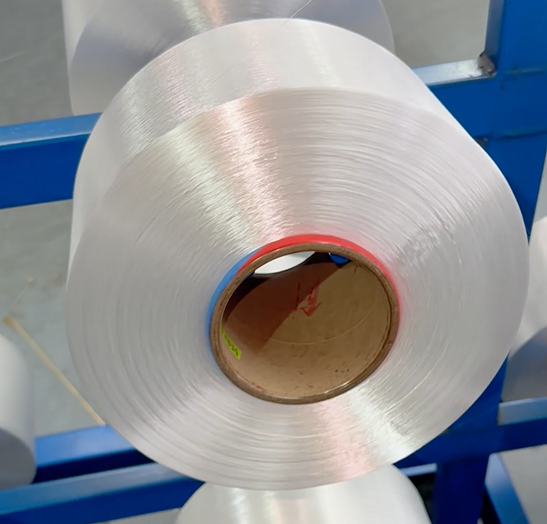
High tenacity nylon 6 filament yarn is an engineered synthetic fiber with a significantly greater strength-to-weight ratio than regular nylon 6. The manufacturing process involves specialized drawing and heat-setting techniques that align the polymer chains more effectively, resulting in a yarn that can withstand much higher tensile stress before breaking. This structural difference gives it superior toughness, fatigue resistance, and energy absorption capacity, making it indispensable in demanding industrial applications where standard nylon would fail.
It is heavily utilized in sectors requiring extreme material endurance, such as the production of heavy-duty ropes, slings, and tie-downs for maritime and construction lifting. Automotive tire cords and airbags rely on its impact absorption, while geotextiles and safety nets benefit from its weather-resistant durability. Additionally, conveyor belts, parachute webbing, and protective clothing depend on its unique combination of lightness, flexibility, and high energy dissipation.
The yarn excels due to a combination of properties: high tensile strength (often exceeding 8 grams per denier), excellent abrasion resistance, and impressive shock-absorbing ability. It retains flexibility in cold conditions and resists degradation from oils, fuels, and most alkalis. Its low elongation at break ensures dimensional stability under load, while UV-stabilized variants can withstand prolonged outdoor exposure without catastrophic strength loss.
Durability is engineered through both the filament production and the final yarn construction. The yarn may be twisted, plied, or cabled to enhance inter-fiber friction and distribute load. In some cases, core-sheath structures or air-entangled texturing are used to create volume and improve knot strength. These physical constructions, combined with the inherent high tenacity fibers, prevent premature single-fiber failure and ensure reliability under cyclic loading.
It is commonly produced in a wide range, from around 210 denier for lightweight webbing up to 3000 denier or more for heavy lift slings and marine hawsers. Higher denier yarns offer greater breaking strength and handling robustness but sacrifice some pliability and increase weight. Manufacturers often select a mid-range denier and multiply the strands through plying or braiding to achieve the exact balance of strength, flexibility, and cost required by the application.
Compared to industrial polyester, nylon 6 offers significantly higher elongation and recovery, which translates to superior shock absorption and fatigue resistance under repeated stress. It also has a slightly lower specific gravity, providing more volume per kilogram. While polyester has better UV and moisture resistance, nylon’s toughness and ability to stretch without permanent deformation give it a decisive edge in dynamic applications such as climbing ropes, tow straps, and heavy mooring lines where sudden loads are common.
Proper care involves storing the yarn away from direct sunlight and high-temperature, dry environments that cause embrittlement. Products should be kept clean from abrasive dirt and chemically neutral. Testing typically follows ASTM D885 or ISO 2062 standards for tensile properties, with particular attention to conditioned state testing to account for nylon’s moisture sensitivity. Regular inspection for cuts, abrasion, or chemical damage is crucial, as localized defects can propagate and cause unexpected failure under load.
Yes, producers often offer significant customization beyond standard white. This includes solution-dyed colors for high-visibility safety gear, marine-grade UV inhibitors, anti-static finishes for mining and electronics, and coated variants for enhanced wear resistance. The yarn can also be heat-stabilized for better performance in hot automotive and industrial applications, or built with specific elongation profiles to match the unique force-absorption curves required by specialized defense and aerospace equipment.
Conclusion
High tenacity nylon 6 filament yarn is redefining what's possible in industrial textiles, emerging as the hidden workhorse behind demanding applications that conventional nylons simply cannot handle. Its secret lies in a molecular architecture engineered to deliver unmatched tensile strength, far surpassing standard nylons that quickly degrade under extreme stress. This specialized yarn features densely packed polymer chains and enhanced crystallinity, resulting in fibers that resist tearing, stretching, and sudden failure even when subjected to continuous dynamic loads. Unlike basic nylon, which becomes brittle or deforms under harsh conditions, this advanced material maintains structural integrity, making it ideal for safety-critical uses like climbing ropes, cargo slings, and automotive airbags where every newton of force matters.
Beyond raw strength, the yarn's ability to thrive under pressure sets it apart in punishing environments. It defiantly withstands abrasion from constant friction, chemical exposure from industrial processes, and fatigue from repeated flexing—challenges that would rapidly deteriorate lesser materials. This durability translates into real-world advantages across sectors, from heavy-duty conveyor belts that keep mining operations moving to lightweight, long-lasting inflatable structures and protective geotextiles. By choosing high tenacity nylon 6 filament yarn, manufacturers gain a smarter, weight-conscious alternative to steel or bulkier synthetics, achieving substantial weight reduction without sacrificing reliability. The result is a versatile, cost-effective solution that extends product lifespans, reduces maintenance cycles, and quietly elevates performance in applications where failure is not an option.
Contact Us
Contact Person: CONNIE
Email: [email protected]
Tel/WhatsApp: 86-0512-53671634
Website: https://www.lida-yarn.com/