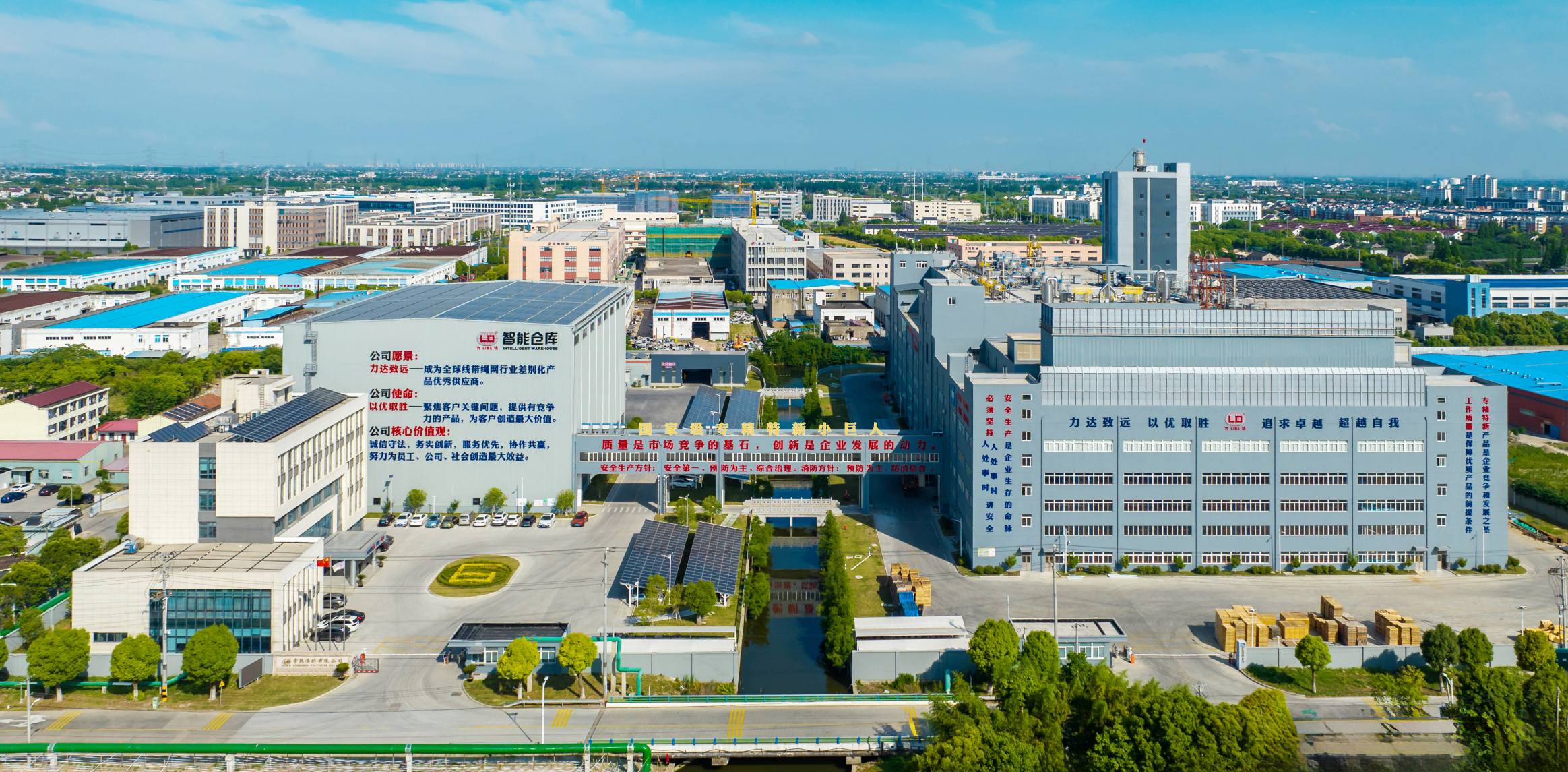

High Tenacity Nylon 6 Filament Yarn: Insights from a Leading Exporter
2026-07-28
Discover the exceptional world of high tenacity nylon 6 filament yarn, where strength meets versatility. As a leading exporter, Changshu Polyester brings unmatched expertise to every spool, transforming industries from outdoor gear to automotive textiles. Curious about what sets this material apart? Dive in to explore its secret blend of durability and lightness—and why it’s the choice for innovators worldwide.
The Unseen Backbone of Industrial Textiles
In every sector where performance, safety, and durability are non-negotiable, industrial textiles operate quietly behind the scenes. These engineered fabrics reinforce mining haul roads, stabilize coastal erosion barriers, and shield chemical processing pipes from abrasive wear. Their presence is rarely glamorous, yet without them, modern infrastructure would literally fray at the edges.
What sets them apart is not just strength, but versatility under extreme conditions. A single substrate might need to withstand direct flame for 20 minutes, filter micron-sized particles at 800°C, or keep its shape after a decade of UV exposure in the desert. The real craft lies in selecting the raw polymers, weave architectures, and finishing chemistries that turn a simple sheet into a reliable, long-term solution.
Far from commodity materials, these textiles are intensely application-specific. A water-repellent canopy for an offshore rig shares almost no design DNA with a biocompatible mesh for tissue engineering, yet both fall squarely within the industrial textile spectrum. It’s this fusion of material science and problem-solving that makes the field a quiet driver of innovation across industries that never make headlines.
Why Leading Exporters Choose Nylon 6 Over Alternatives
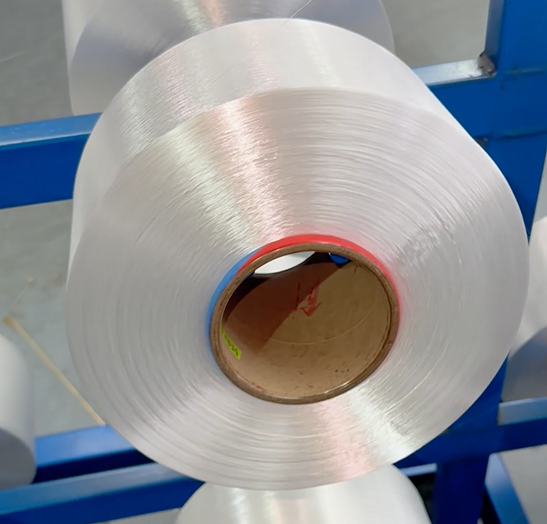
Nylon 6 brings a rare mix of resilience and processing ease that competing materials struggle to match. Its lower melting point reduces energy costs during molding while still delivering high tensile strength and impact resistance. Factory floors appreciate the faster cycle times, and logistics teams value how finished parts hold up under repeated stress without cracking or deforming—qualities that directly protect export margins.
Beyond performance, the supply chain for nylon 6 is refreshingly straightforward. Consistent raw material availability and shorter lead times cut the inventory headaches that come with specialty polymers. This reliability lets exporters scale production without the nagging doubt of sudden shortages—a quiet advantage that keeps delivery schedules intact and customers coming back.
There’s also a subtle cost advantage that unfolds over time. Tooling lasts longer thanks to nylon 6’s non-abrasive nature, and its excellent surface finish often eliminates secondary operations like painting or coating. These savings accumulate shipment after shipment, making it a favorite among those who export by the container load and need every container to arrive at the same quality as the last.
Decoding High Tenacity: More Than Just Strength
When we talk about tenacity in materials, it’s easy to fixate on sheer tensile strength — the ability to resist being pulled apart. But true high tenacity threads, fibers, and fabrics reveal a far more nuanced performance profile. They absorb energy, deform without breaking, and recover from strain cycles that would permanently damage ordinary materials. This resilience translates into real-world durability, where repeated loading and unpredictable stress are the norm rather than the exception.
The secret lies in the molecular engineering behind these materials. By carefully aligning polymer chains and controlling crystallinity, manufacturers create a product that doesn’t just resist initial failure but actively distributes stress across its structure. This means a high-tenacity rope doesn’t just lift heavy loads — it withstands the jerks, twists, and abrasion of daily industrial use without sudden, catastrophic failure. It’s a quiet reliability that engineers depend on, whether in mooring lines battling ocean swells or in next-generation composite reinforcements that keep aircraft intact under extreme conditions.
Real-World Applications That Demand Superior Filament
In aerospace engineering, the integrity of components like turbine blades and structural brackets hinges on filament that can withstand extreme temperatures and mechanical stress. Advanced materials such as PEEK and ULTEM are not just preferred—they are mandatory for parts that must perform reliably in jet engines or satellite components, where failure is not an option.
Medical device manufacturing presents another uncompromising arena. Surgical guides, prosthetics, and implantable devices require filaments that are biocompatible, sterilizable, and dimensionally stable. A slight deviation in material quality can lead to patient risk, making high-performance filaments like medical-grade TPU or PPSU essential for applications where precision directly impacts human lives.
Beyond these, the automotive and energy sectors increasingly rely on superior filaments for under-hood components, electrical insulation, and fluid handling systems. Parts exposed to aggressive chemicals, constant vibration, and thermal cycling demand materials that maintain their properties over time. For instance, carbon-fiber-reinforced nylons provide the strength-to-weight ratio needed for lightweighting electric vehicles, while fluoropolymer filaments enable the corrosion-resistant linings essential for chemical processing equipment.
From Polymer to Performance: A Quality-Centric Journey
The path from raw polymer to high-performance component is paved with deliberate, often painstaking, quality controls. It begins not at the extruder, but in the realm of material science—where resin properties are mapped against end-use demands. Each polymer's molecular architecture, from chain length to branching, dictates its thermal stability, chemical resistance, and mechanical strength. Our process demands rigorous incoming inspection, using differential scanning calorimetry and melt flow indexing to verify that every batch meets the narrow specifications essential for consistency. Without this foundation, even the most refined fabrication techniques yield unreliable results.
Transforming that verified polymer into a performer requires process mastery. Parameters like temperature profiling, pressure gradients, and cooling rates aren't just settings—they're a craft, honed through iterative trials and real-time analytics. We embed sensors directly into tooling to monitor cavity conditions, catching deviations within milliseconds. This immediate feedback loop allows us to adjust on the fly, ensuring each part achieves its designed crystallinity and dimensional precision. It's a dynamic quality dance where data and instinct converge, preventing defects long before a final inspection stage.
Finally, performance validation pushes beyond conventional pass/fail metrics. Components undergo simulated lifecycle testing that mirrors actual operating environments—thermal cycling, chemical exposure, and sustained mechanical loads. We profile failure modes with precision microscopy and spectroscopic analysis, feeding insights back into polymer selection and process refinement. This closed-loop philosophy dissolves the boundary between quality assurance and innovation, turning every trial into an opportunity to elevate not just the part, but the entire manufacturing ecosystem.
Navigating Global Markets: The Exporter’s Edge
Stepping into global markets demands more than just a great product—it requires a mindset that embraces cultural nuance and local business rhythms. Successful exporters know that what works at home rarely translates directly abroad. They invest time in understanding how relationships are built, how decisions are truly made, and what subtle gestures can seal or sink a deal. This human layer of international trade is often the true edge, turning a foreign transaction into a lasting partnership.
Beyond cultural fluency, the practical machinery of cross-border trade can become a powerful differentiator if approached creatively. Instead of treating logistics and compliance as mere hurdles, top exporters weave them into their value proposition. They design supply chains that are not just efficient but also resilient to geopolitical shifts. They turn regulatory knowledge into a service, helping their buyers navigate complexities that often deter competitors. In this light, what many see as friction becomes a strategic moat.
The real exporter’s edge, however, lies in the ability to anticipate market shifts before they become obvious. This goes beyond reading reports—it means embedding oneself in local networks, sensing on-the-ground sentiment, and adapting faster than multinational giants can muster. Agility is not just speed; it is the capacity to reconfigure offerings, messaging, and even business models in sync with emerging local trends. Those who master this rhythm don’t just enter markets; they shape them.
FAQ
High tenacity nylon 6 filament yarn offers significantly greater strength and durability due to its oriented molecular structure, making it ideal for demanding applications like industrial ropes, heavy-duty sewing threads, and reinforced composites, whereas standard nylon may not withstand such loads.
A leading exporter has firsthand knowledge of global market trends, diverse customer requirements, and rigorous quality control processes, which collectively offer practical perspectives on how high tenacity nylon 6 performs across different environments and industries worldwide.
Its high strength-to-weight ratio makes it suitable for automotive tire cords, conveyor belts, safety nets, fishing lines, and geotextiles. It’s also used in outdoor gear where abrasion resistance and longevity are critical.
The process involves controlled spinning, drawing, and heat-setting steps that align the polymer chains, increasing tensile strength and reducing elongation. Additives and specific cooling profiles can further tailor properties for niche applications.
Key indicators include breaking tenacity (g/den), elongation at break, denier uniformity, and resistance to UV and chemicals. Certifications like OEKO-TEX or ISO compliance also reflect reliable manufacturing practices.
Yes, manufacturers can adjust denier, filament count, twist level, and surface finishes to meet exact specifications. Anti-static, flame-retardant, or UV-stabilized variants are available for specialized end-uses.
Leading producers are investing in recycling technologies to reclaim post-industrial waste and develop bio-based feedstocks. Energy-efficient spinning and closed-loop water systems also reduce the environmental footprint.
While polyester offers superior UV resistance and lower moisture absorption, high tenacity nylon 6 provides better abrasion resistance, impact strength, and flexibility. The choice depends on the end-use environment and mechanical demands.
Conclusion
High tenacity Nylon 6 filament yarn operates as the quiet workhorse behind countless industrial textiles, yet its role often goes unnoticed. As a leading exporter with decades of hands-on experience, we’ve seen firsthand why manufacturers across sectors consistently pass over polyester and traditional nylons in favor of this specialized material. It isn’t just about raw breaking strength—though that’s critical—it’s about a misunderstood combination of fatigue resistance, thermal stability, and dimensional integrity under continuous load. When you’re engineering conveyor belts that run 24/7 in mining operations or stitching airbags that must deploy in milliseconds without tearing, the margin for error disappears. Our customers don’t buy yarn; they buy confidence that their end product won’t fail in the field.
The journey from caprolactam monomer to fully drawn yarn is where true differentiation lives. A quality-centric approach means controlling every variable—spinning speed, draw ratio, heat-setting temperature—to lock in the molecular alignment that gives the filament its tenacity without sacrificing elongation. In our facilities, we reject entire batches if a single bobbin shows the slightest denier variation because we know that inconsistency translates to weaving defects and performance gaps in finished goods like geotextiles or heavy-duty webbing. Global markets reward this obsession: technical buyers in Europe and North America increasingly bypass local suppliers for our proven consistency and logistics reliability. When a fishing net must withstand days of stormy seas or a parachute cord needs to arrest a 200-kilogram load, the exporter’s edge is rarely about price—it’s about delivering a material that performs exactly as specified, shipment after shipment, with zero surprises.
Contact Us
Contact Person: CONNIE
Email: [email protected]
Tel/WhatsApp: 86-0512-53671634
Website: https://www.lida-yarn.com/