

High-Quality Concrete House Moulds: Key Benefits and Expert Buying Tips
2026-09-11
Concrete house moulds are the silent backbone of modern residential construction. A high-quality mould doesn't just shape walls—it determines structural integrity, surface finish, and overall project cost. Yet many builders still choose based on price alone, only to face cracks, alignment issues, or premature wear. In this guide, you'll discover the key benefits of investing in premium moulds and get practical expert tips to evaluate suppliers, including what sets LugongMachinery apart in a crowded market.
What Really Makes a Concrete House Mould High-Quality?
The first thing to check is the steel itself. A high-quality concrete house mould starts with plate that holds its shape under repeated vibration and hydrostatic pressure. On budget moulds, you'll often find 3 mm side plates that flex visibly once the pour reaches the top course. That flex translates into wall bowing and uneven panel thickness. A better mould uses at least 6 mm plate for side walls and a thicker base, often 10 mm or more, with full-length stiffeners welded along the outside. The steel grade matters too; something like Q355B offers a noticeable step up in yield strength compared to generic mild steel, which means fewer deformed corners after a few hundred cycles.
Precision in the joints is what separates a reusable mould from a one-off form. Look at how the side panels meet the base and how the corner angles are assembled. In a well-built mould, edges are laser-cut and then machined so the shut lines stay tight, often within a millimeter across a three-meter panel. Welding is done on the outside only where possible, leaving the casting face clean. Internal corners get ground and polished so they release without chipping. If the supplier skips this step, you'll see concrete fins along every seam, and those fins mean extra grinding time on every single panel.
Finally, pay attention to the small details that extend service life. A high-quality mould includes alignment pins or tapered locators that guide the side panels into place without hammering. Lifting lugs are positioned so the mould can be flipped or moved by crane without twisting the frame. The steel surface should come with a proper rust-preventive coating, not just a thin film of oil that washes off before the first use. And if the mould is designed well, the release angle on ribs and reveals will let you strip panels cleanly instead of fighting the form every morning. These details don't show up in a catalogue photo, but they're exactly what determine whether the mould lasts for five hundred pours or starts causing problems after fifty.
Why Reusable Moulds Save You Money Over Multiple Projects
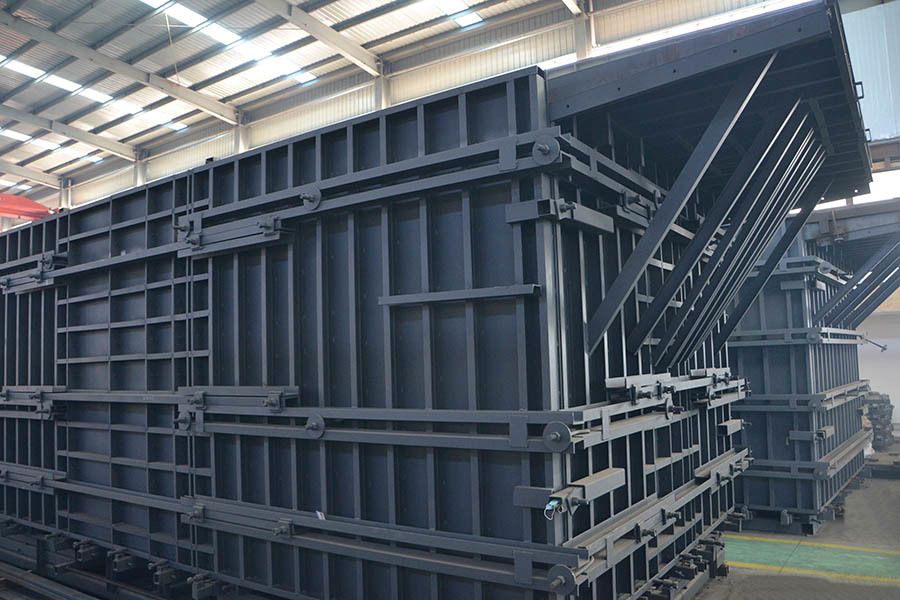
The upfront cost of a reusable mould might look steep compared to single-use options, but that's a narrow view. When you spread that investment across five, ten, or twenty pours, the cost per project drops sharply. A quality steel or fibreglass mould can handle hundreds of cycles with minimal maintenance, meaning each new project essentially gets the formwork for a fraction of what a disposable version would cost.
There's also the hidden cost of rework. Cheap, single-use moulds often warp, leak, or leave rough surfaces that require extra finishing. Reusable moulds hold their dimensions, so you avoid the labour and material waste that comes from patching, grinding, or even repouring. Over a year of regular projects, those avoided fixes add up to real money.
And don't overlook the inventory advantage. Instead of ordering new moulds for every pour, you keep a small set of proven shapes ready to go. That cuts procurement time, reduces shipping fees, and lets you quote competitive prices on repeat work because you already own the tooling. Reusable moulds turn a recurring expense into a one-time asset.
How to Spot Weak Points Before You Buy
Most products hide their flaws in plain sight, but you have to know where to look. Start with the joints and transitions—seams on a jacket, hinges on a cabinet, the connection between a laptop screen and base. These are the first places stress accumulates, so if they feel flimsy, wobble, or show uneven gaps, that’s your cue to dig deeper or walk away.
Don’t just read the five-star reviews; sort by the lowest ratings and look for recurring complaints. One person’s gripe might be bad luck, but three people mentioning the same zipper snag or peeling finish tells you there’s a pattern. Also check the warranty terms—not just its length, but what it actually covers. A ten-year warranty that excludes every likely failure point is more marketing than protection.
Finally, trust your hands more than the product photos. Run your fingers along edges, press on panels, open and close moving parts a few times. If something feels like it needs to be handled gently to last, it probably won’t survive everyday use. Weak points rarely announce themselves; they show up as subtle give, thin material, or a mechanism that already feels tired.
The Truth About Mould Materials and Concrete Finish
Many people assume the final look of a concrete surface is mostly down to the mix or the curing process, but the choice of mould material actually leaves a deeper fingerprint than you'd expect. Timber, for instance, can transfer subtle grain or saw marks straight onto the concrete if it hasn't been properly sealed, while a polished steel mould pushes you toward a much slicker, almost reflective finish. Recognizing this early saves a lot of disappointment later.
The trade-offs go well beyond texture. Steel and aluminium offer excellent dimensional stability and can be reused hundreds of times, but they often highlight every joint line and tiny imperfection unless you're careful with assembly. Plastic and fibreglass moulds are lighter and easier to handle, and they can replicate intricate patterns, yet they tend to warp or flex under heavy pours, which shows up as wavy or uneven surfaces. Rubber moulds are superb for capturing fine detail, but they wear out quickly and can leave a slightly softened edge profile if the rubber is too thick or too soft.
In practice, the best finish comes from matching the mould material to both the desired surface and the casting conditions. A timber form that's been sealed with a high-quality release agent can deliver a warm, matte look with just a hint of grain, whereas an unsealed plywood face might soak up moisture and create a mottled, inconsistent tone. Testing a small sample with the exact mould and release agent combination is the only way to know what you'll actually get. Don't assume that what worked on one job will carry over to another without adjustments.
Questions Experienced Builders Ask Mould Suppliers
Experienced builders rarely open with price. They start by asking where the steel is sourced, whether the supplier can produce mill certificates for every cavity block, and how heat treatment is logged. A builder who has been burned before will want to see hardness readings from the actual cavity, not just test coupons. If a supplier hesitates on any of these, that's usually a red flag.
The next set of questions revolves around tryouts and dimensional stability. Seasoned buyers ask for full mould trial reports with short shots, pressure curves, and cooling time variations. They also want to know if the supplier measures Cpk on critical dimensions after a 5,000-cycle run, or only at first article inspection. This separates suppliers who truly understand production from those who just cut steel.
Finally, they dig into after-sales support. Questions include who pays for modifications if the part design shifts, what spare parts are kept on the shelf, and how fast a technician can be on site if a hot runner fails on a Friday night. A builder with multiple moulds running 24/7 will also ask about preventive maintenance schedules and wear part inventory. These conversations are less about negotiating price and more about avoiding downtime.
A Simple Maintenance Routine That Doubles Mould Lifespan
Most mould failures aren't caused by dramatic cracks or material defects. They come from tiny deposits of outgassing, plastic residue, or rust that build up along the parting line and venting channels. Wiping those surfaces with a soft copper brush and a lint-free cloth after every shift takes less than ten minutes, yet it prevents the micro-pitting that eventually forces a mould out of service. If you also blow out moisture from cooling channels with dry air, you avoid internal corrosion that quietly eats away at the steel from the inside.
A second habit that pays off is checking the moving parts before they start to bind. Ejector pins, guide pillars, and slides tend to collect a sticky film of grease mixed with dust. A quick clean with a solvent and a thin reapplication of a high-temperature lubricant keeps them sliding freely. You don't need expensive tools—just a consistent schedule. Many workshops find that doing this every 50,000 cycles or every Friday afternoon, whichever comes first, is enough to double the interval between major refurbishments.
A small notebook or a shared spreadsheet is enough. Record cycle counts, lubrication dates, and any unusual flash or noise. Those notes give you an early warning before a small problem becomes a cracked insert or a broken ejector. Over time, you'll see patterns that tell you exactly which areas of the mould need attention. That kind of awareness is what pushes a mould from 100,000 shots to 200,000 or more without major repair.
FAQ
Look beyond surface finish. A dependable mould uses precision-machined steel or reinforced composite panels, maintains tight dimensional tolerances across repeated pours, and includes sturdy alignment pins or clamping systems. Weld quality, flatness under load, and a proven track record for hundreds of casts matter more than a glossy paint job.
They typically raise the initial outlay but lower the total cost per finished unit. Better rigidity reduces rework from warping or leaks, allows faster demoulding cycles, and extends service life well past cheaper alternatives. In practice, the savings in labor, material waste, and replacement moulds often offset the higher purchase price within the first major project.
For high-cycle production, steel remains the benchmark because of its resistance to abrasion and impact. Aluminum offers a lighter alternative for smaller teams, though it demands careful handling to avoid dents. Engineered composites can work for custom shapes but need thicker ribs and metal edges at high-stress points. Match the material to your expected number of pours, not just the initial form complexity.
Quick-release wedge bolts, numbered panel joints, and integrated lifting anchors make a noticeable difference. Moulds with self-aligning corners reduce the need for hammer adjustments, while tapered side rails allow the form to separate cleanly without excessive force. Avoid designs that rely on dozens of small, easily lost fasteners.
Ask for a sample corner or joint section, not just a brochure. Request references from projects with similar wall heights and pour rates. Check whether they provide dimensional inspection reports and heat-treatment certificates for steel components. A reputable supplier will also explain their repair and spare-part lead times openly, which often reveals more than marketing language.
Yes, largely by controlling form pressure and vibration transfer. Rigid panels minimize deflection that causes bulging or uneven texture. Properly sealed joints prevent grout loss and honeycombing at edges. Smooth, non-absorbent surfaces with a controlled release agent also help achieve a uniform finish without relying on heavy patching later.
Clean contact faces immediately after each pour while residue is still soft. Use a non-corrosive release agent suited to the panel material. Store moulds flat or on purpose-built racks, never leaning against uneven ground. Inspect welds, hinges, and clamping points every 20-30 cycles and address small cracks before they spread. Reapply protective coatings to machined surfaces in humid climates.
It depends on repetition and architectural demand. If the design repeats across many units, a custom mould pays for itself through faster assembly and fewer joints to align. For one-off or highly varied layouts, a well-maintained modular system with adjustable panels often gives better flexibility and resale value. Calculate the cost per square meter of contact area across the entire project, not just the purchase tag.
Conclusion
A high-quality concrete house mould earns that label through tight dimensional accuracy, a rigid frame that resists distortion under heavy vibration, and a smooth, non-porous face that releases cleanly without staining or surface voids. Reusable moulds, despite a higher upfront cost, quickly pay for themselves across multiple pours because you skip re-fabrication each time and keep wall dimensions identical from unit to unit. Before you commit to a purchase, look closely at the weakest points: pressed steel corners that can crack after repeated clamping, thin side plates that bow outward during pouring, and pivot pins that lack hardened bushings. Material choice directly shapes the finished concrete. Steel offers crisp edges and a high-gloss face but needs diligent rust protection; aluminum is lighter yet can react with alkaline concrete if not coated properly; polypropylene is cheap and flexible but may warp under hot, sunny conditions. Fiberglass composite splits the difference, giving a smooth finish with less weight, though it chips if stripped carelessly.
Experienced builders rarely settle for a brochure description. They ask suppliers about actual wall thickness at stress points, maximum pour height without external bracing, the grade of steel or polymer used, tolerance variation across a full set, and whether corner and tie-rod spares are kept in stock. Another question that exposes weak supply chains is whether the supplier can provide a sample panel for concrete testing. Once you own good moulds, a simple maintenance routine can effectively double their lifespan: wash off concrete residue while it is still green using only plastic scrapers, apply a thin, uniform coat of release agent after every third use, store panels flat and absolutely dry, and inspect hinge bolts and weld joints monthly for hairline cracks. A little rust converter on bare metal spots and replacing damaged tie rods before the next pour prevents small problems from turning into wall alignment failures. These habits cost minutes per cycle but keep the mould face slick and the frame square for years.
Contact Us
Contact Person: Zhang Zhenlai
Email: [email protected]
Tel/WhatsApp: 8618563210000
Website: https://en.lugongmachinery.com/