

High Quality 7 Segment LCD Screen: A Complete Guide to Superior Display Solutions
2026-05-15
When it comes to clear, reliable numeric displays, 7 segment LCD screens remain a cornerstone of electronic design—from digital meters to industrial timers. But not all displays are created equal. The difference between a crisp, high-contrast readout and a washed-out, unreadable panel often lies in the quality of the technology behind it. In this guide, we explore what makes a superior 7 segment LCD, how to choose the right one for your project, and why partnering with a trusted supplier like Jingda-Display can elevate your end product from functional to exceptional. Whether you're an engineer seeking durability or a product designer chasing visual perfection, you'll find actionable insights to help you make an informed decision.
Understanding the Core Mechanics of 7-Segment LCDs
A 7-segment LCD is built around the principle of controlling light passage through liquid crystal cells. Each segment consists of a thin layer of liquid crystal material sandwiched between two polarizing filters and transparent electrodes. In its default state, the liquid crystal molecules are aligned to twist the light's polarization, allowing it to pass through the second filter and appear visible. When a voltage is applied to the electrodes, the molecules realign, eliminating the twist and blocking the light. This simple on-off electrical control for each segment forms digits by selectively darkening specific areas.
The common electrode structure is multiplexed to reduce pin count, with all segments sharing a backplane and individual segment lines driven by a dedicated LCD driver IC. The driver generates an AC waveform – typically square waves with a controlled DC offset – to prevent permanent damage to the liquid crystal material from electrolysis. Contrast is optimized by adjusting the voltage levels and the viewing angle, which also depend on the specific fluid type and cell gap. Passive matrix addressing is standard, where each segment is a single pixel, keeping the control logic straightforward and robust.
Material Quality and Manufacturing Precision
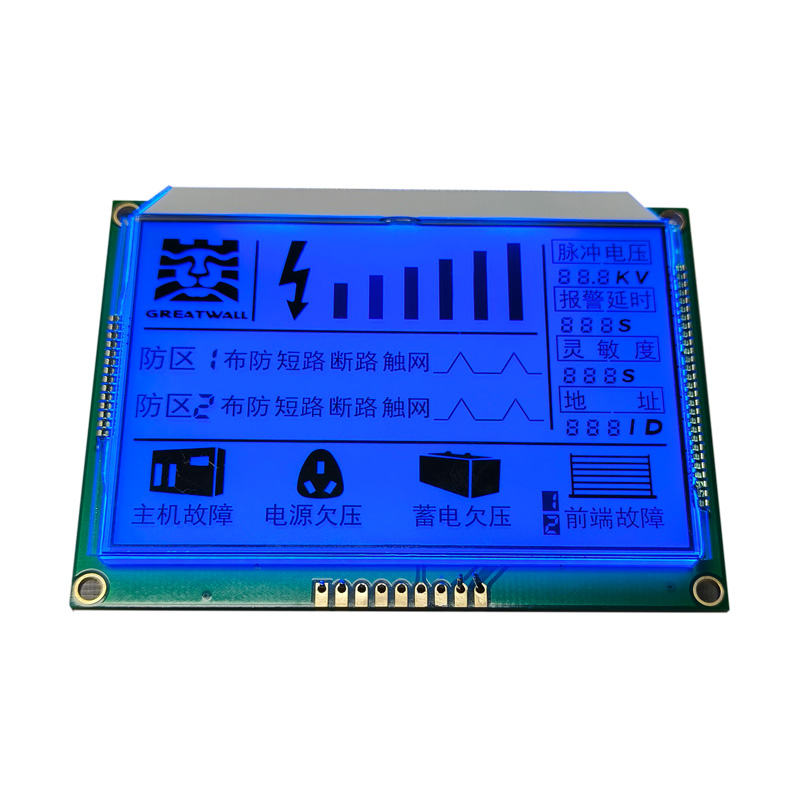
The choice of materials fundamentally dictates a product's longevity and performance. High-grade alloys, aerospace-grade aluminum, or reinforced polymers are not just labels; they reflect a commitment to withstanding stress, thermal cycling, and corrosion far beyond everyday wear. By prioritizing suppliers with verifiable material certifications, we ensure that every component meets stringent benchmarks for tensile strength and chemical purity, eliminating the risk of premature failure due to substandard inputs. This rigor is what separates a product that lasts a decade from one that fades after a single season.
Precision manufacturing is where design intent meets tangible reality. Tolerances measured in microns, CNC machining with real-time feedback loops, and laser-guided assembly processes allow for consistency that hand-built methods can never achieve. Each moving interface, from gears to hinges, operates with a fluidity that reduces friction and noise, directly translating to a more reliable user experience. We treat variation as the enemy—employing statistical process control to catch anomalies before they become defects, guaranteeing that every unit leaving the line mirrors the flawless prototype.
The interplay between material integrity and exacting production methods often reveals hidden advantages. For instance, components built with low internal stresses retain their shape under temperature swings, while surfaces finished via micro-honing resist pitting and contamination. This holistic view moves beyond simple checklists, fostering an environment where engineers collaborate with shop-floor technicians to refine even the most minute details. The result is a product that doesn't just meet specifications on paper but performs consistently in the hands of the end user, quietly defying expectations through its sheer build quality.
Comparing Display Technologies: Why 7-Segment LCDs Still Reign
In an era dominated by high-resolution OLEDs and vibrant TFT screens, the humble 7-segment LCD might seem like a relic. Yet, it continues to be the go-to choice for countless devices where simplicity and reliability matter most. From digital clocks and kitchen timers to industrial meters and medical instruments, these displays persist because they excel at delivering precisely what’s needed: clear, instant numeric readouts with minimal power draw. Their enduring presence isn’t about nostalgia—it’s a testament to a design that has never been surpassed for specific, practical applications.
One major reason for their longevity is the unique balance between visibility and efficiency. Unlike emissive displays that fight against ambient light, reflective 7-segment LCDs use existing light to their advantage, becoming sharper and more legible in bright sunlight. This passive quality also translates to incredibly low energy consumption, allowing devices to run for years on a single coin cell battery. When you compare this to power-hungry alternatives that require constant backlighting, it’s clear why manufacturers stick with this technology for battery-operated and always-on gadgets where changing batteries frequently isn’t an option.
Beyond the technical specs, there’s an underappreciated elegance in the 7-segment form—a design so intuitive that it transcends language and literacy barriers. The same segmented pattern that displayed numbers on calculators in the 1970s still feels instantly familiar today. In critical settings like healthcare or aviation, this familiarity translates to safety; a momentary glance at a seven-segment display leaves no room for misinterpretation. While fancier displays can dazzle with color and detail, they often introduce visual clutter. The classic 7-segment LCD endures because it strips away everything unnecessary, proving that sometimes the most advanced solution is the one that simply works—without demanding attention.
Optimizing Readability Under Diverse Lighting Conditions
Crafting text that remains clear across wildly different lighting scenarios starts with a deep understanding of how our eyes respond to contrast. When sunlight floods a screen or a reader squints in a dim café, the difference between letters and background becomes everything. High-contrast pairings—dark ink on light surfaces, or light text on dark—provide a reliable foundation, but the real magic happens when design accounts for ambient adaptation. A layout that subtly shifts its tone, increasing contrast in bright glare and softening it in low light, mirrors the way our pupils dilate and constrict naturally, reducing strain.
Beyond simple color schemes, typography choices play an equally vital role. Sans-serif fonts with generous x-heights and open counters maintain their shape when backlit or under harsh office fluorescent. Adjusting line spacing and weight dynamically—perhaps bolding text slightly as brightness drops—can rescue a page from becoming a blur. The goal isn't a one-size-fits-all solution, but a responsive design philosophy that treats readability as a living, breathing requirement, sensitive to where and how people actually read.
Customization Options for Niche Industrial Applications
In the realm of niche industrial applications, off-the-shelf solutions rarely address the unique demands of specialized workflows. That’s why we’ve moved beyond generic configurations to offer granular customization that adapts to your operation—whether it’s fine-tuning control algorithms for a one-of-a-kind manufacturing process or reshaping data outputs to match your existing analytics stack. Our engineers collaborate directly with your team, dissecting every nuance of the challenge so the final system feels less like a retrofit and more like a purpose-built extension of your facility.
What truly sets these options apart is how they preserve your competitive edge without overcomplicating maintenance. Instead of layering endless features, we focus on adjustable parameters that genuinely matter for your throughput, safety margins, or material handling quirks. Think swappable sensing modules that accommodate exotic substrates, or UI dashboards that surface only the metrics your operators need—nothing more. This lean approach keeps training straightforward and cuts down on the clutter that often plagues “customizable” industrial tech.
Finally, we treat every customization as a living, upgradeable component rather than a one-time patch. As your product lines evolve or new regulations come into play, the same foundational system can be re-tuned without starting from scratch. It’s a philosophy rooted in listening to small-scale manufacturers and research labs who can’t afford downtime for full-blown overhauls, yet still demand precision that mass-market equipment can’t deliver.
Longevity and Energy Efficiency in Mission-Critical Devices
Devices operating in mission-critical environments cannot afford downtime, yet their very nature demands continuous, unfaltering performance. Longevity isn’t just about surviving harsh conditions—it’s about maintaining precision years after deployment, often in places where maintenance is impossible. Energy efficiency plays a quiet but pivotal role here: the less power a device consumes, the less heat it generates, reducing thermal stress on components and slowing the degradation that leads to failure. In aerospace or deep-sea monitoring, a mere five percent gain in power efficiency can mean the difference between a decade of silent service and a premature, data-silent death.
Engineers tackle these twin demands through a blend of adaptive power management and component selection that borders on obsessive. Instead of chasing the newest, fastest chips, they lean toward mature, proven architectures that sip rather than gulp electricity, often running at reduced but rock-solid clock speeds. Real-time power profiling lets systems throttle back processing when full capability isn't needed—a habit that slashes energy use and extends silicon lifespan. Encapsulation and circuit design also suppress leakage currents that slowly bleed battery reserves dry, preserving every microwatt for the sensors and safeguards that actually save lives.
In practice, this synergy reshapes entire deployments. Modern pacemakers now last a decade on a single cell not because batteries improved, but because circuitry learned to nap between heartbeats. Remote seismic nodes dotted across Antarctic ice shelves report trembling shifts for fifteen years, their longevity funded by solar-aware duty cycling that respects the long polar night. When failure is measured in human cost rather than warranty claims, efficiency is no longer a marketing checkbox—it’s the hidden architecture of trust.
FAQ
A high-quality 7-segment LCD screen is a simple numeric display that uses seven individual bars arranged in a figure-eight pattern to show numbers from 0 to 9. These displays are found everywhere from digital clocks and kitchen timers to industrial meters and medical devices. The 'high-quality' part comes from using premium materials and precise manufacturing, resulting in sharper contrast, wider viewing angles, and longer durability. You'll often see them in harsh environments like factory floors or outdoor equipment because they remain easy to read even after years of heavy use.
Unlike LED or OLED screens that generate their own light, a 7-segment LCD operates by controlling the transmission of ambient light through liquid crystal segments. Each segment is sandwiched between polarizers, and applying voltage twists the crystals to block or allow light through. This means they don't emit light themselves – they need a backlight or external light source. The advantage is significantly lower power consumption and zero pixel degradation over time, which isn't always the case with OLED screens. However, without a backlight, they depend on environmental lighting, which can be a limitation in dark spaces.
The difference often lies in the construction and materials. High-quality units use better liquid crystal formulations that respond faster and more consistently across temperatures. You'll notice wider operating temperature ranges, often from -40°C up to 85°C, making them reliable in extreme conditions. The contrast ratio is typically higher, and they incorporate anti-glare coatings or specially designed polarizers to reduce reflections. Reliability testing is more rigorous, and the electrical components are built to withstand voltage spikes and constant vibration. Essentially, while a basic one fades or ghosts over time, a premium display maintains crisp numbers for decades.
Yes, that's actually one of their strong suits. Because they work by reflecting or transmitting ambient light, they're naturally sunlight-readable without needing intense backlight. In fact, the brighter the environment, the better they look. High-quality versions often include a transflective layer that boosts reflectivity, so numbers stay sharp even under direct sun. There's no competition with glare the way you'd get with an emissive display trying to overpower sunlight. This makes them ideal for outdoor gasoline pumps, parking meters, and agricultural equipment where readability is non-negotiable.
Extremely efficient. A typical 7-segment LCD draws microwatts to low milliwatts when running, largely because it doesn't produce light and only consumes power during segment state changes. In a battery-powered device like a thermostat or a handheld meter, the LCD is rarely the main power drain. In many designs, the display can run for years off a small coin cell. When backlighting is added, energy use rises, but even then, LED-backlit configurations are still far kinder to batteries than full TFT or OLED panels displaying the same numbers.
The most obvious limitation is character set: you're restricted to numbers and a very crude set of letters. So displaying alphabetical messages or complex symbols isn't possible without adding more segments or switching to a dot-matrix display. Response time can be slower than modern emissive displays, especially in cold temperatures, which might lead to ghosting if not designed properly. Also, without a backlight, they're invisible in the dark, so you'll need external lighting or a built-in LED backlight for nighttime use. Finally, compared to graphical LCDs, the segment design isn't easily customizable after manufacturing.
First, match the environmental demands: operating temperature range, humidity resistance, and vibration specs are critical. Look at the display mode – reflective, transmissive, or transflective – based on lighting conditions. Viewing angle is important if the device won't be read straight on; some high-quality panels offer nearly 180-degree visibility. Evaluate the driver interface: does it require a dedicated chip, or can your microcontroller handle direct drive? Also check segment size and color combination; certain backgrounds and segment colors yield better readability. Finally, ask for reliability data, like mean time between failures, especially if repair is costly.
A premium 7-segment LCD can easily last 100,000 hours or more under normal conditions – that's over 11 years of continuous operation. What shortens lifespan the most is prolonged exposure to high temperatures, UV radiation, and extreme humidity, which can degrade the liquid crystal fluid and polarizers. Cheaply made units might show dim segments or yellowing after a few years. High-quality ones use UV-resistant polarizing films and hermetically sealed glass, maintaining clarity for decades. In practice, the backlight LED might fail before the LCD itself, so design with that in mind if backlighting is essential for your application.
Conclusion
At the heart of every high-quality 7-segment LCD lies a deceptively simple yet finely tuned mechanism. Liquid crystal molecules are sandwiched between precision-etched glass plates and respond to voltage changes to block or transmit light. What elevates a basic design into a premium display is the marriage of material purity and manufacturing exactness—optically clear polarizers, uniform cell gaps, and reliable seals that prevent moisture ingress. When you compare them to OLED or TFT modules, 7-segment LCDs hold their ground not through flashiness but through sheer practicality: they deliver vast viewing angles, operate on microamps, and remain crisp in direct sunlight. Modern versions often incorporate transreflective layers or LED backlights, sidestepping fade-outs in dim environments and glare under harsh light, making them the go-to for everything from medical pumps to outdoor fuel dispensers.
Tailor-made solutions push the boundaries even further. Industrial users can specify digit count, icon legends, color filters, and even conformal coatings for hostile environments—something that off-the-shelf panels rarely offer. The result is a component that slots seamlessly into mission-critical devices where silence, longevity, and low total cost of ownership matter more than high resolution. Energy efficiency remains a standout trait: a static 7-segment display can run for years on a coin cell, a feat no full-color equivalent can match. By balancing time-tested optical principles with modern customization, the 7-segment LCD continues to prove that reliable, readable, and enduring display technology doesn't need to be reinvented—it just needs to be refined.
Contact Us
Contact Person: Vincent
Email: [email protected]
Tel/WhatsApp: 86 135 5485 1379
Website: https://www.jda-display.com/