

High Containment Valve Vendor Selection Criteria for Reliable Powder Containment
2026-08-24
Ask any plant engineer what keeps them up at night, and powder containment often tops the list. Getting high containment valve vendor selection right is the difference between a line that runs clean and one that leaks trouble. Below, we break down the criteria that matter for reliable powder containment—and why AVM earns its place in the conversation.
Seal Integrity Under Powder Load: What to Demand
Powder behaves nothing like a clean liquid or gas. It packs into clearance gaps, grinds against mating surfaces, and often carries abrasive fines that accelerate wear long before a visible leak appears. A seal that survives a hydrostatic test can fail within days once dry product starts working its way under the lip. That's why specifying for powder service means accepting that the primary enemy is not pressure alone, but particle intrusion. The seal must actively exclude powder from the dynamic interface—either through a wiper lip, an air purge, or a double-seal arrangement with a barrier fluid. If the design relies on a single elastomer lip wiping a dry shaft, expect early grooving and product leakage.
Material selection has to move beyond generic chemical compatibility charts. Hard-facing the sealing counterface with tungsten carbide or ceramic is often non-negotiable because soft stainless shafts will score quickly under powdered abrasives. For the seal element itself, look for compounds with high tear strength, low compression set, and genuine resistance to abrasive wear—not just a datasheet claim. In many dry powder applications, a filled PTFE or a urethane lip outperforms standard nitrile or FKM. Also ask about the filler content and hardness durometer; too soft and the lip folds, too hard and it won't track shaft runout. The right material pair buys time, but only if the geometry also prevents powder packing behind the lip.
Finally, demand validation that mirrors real conditions. A water-bath leak check or a low-cycle pneumatic test tells you almost nothing about how the seal performs under a dust load. Require the manufacturer to run a dry-media test with a representative particle size distribution, at operating speed and temperature, for a duration long enough to expose abrasive failure. Ask for the measured wear rate, any leakage after thermal cycling, and whether the seal's spring or energizer remains functional after the test. If the supplier cannot produce this data, treat their powder-rated claim as unproven. What you truly want is not a seal that merely survives, but one whose wear curve and leakage rate stay predictable throughout the service interval.
Material Choices That Survive Abrasive Streams
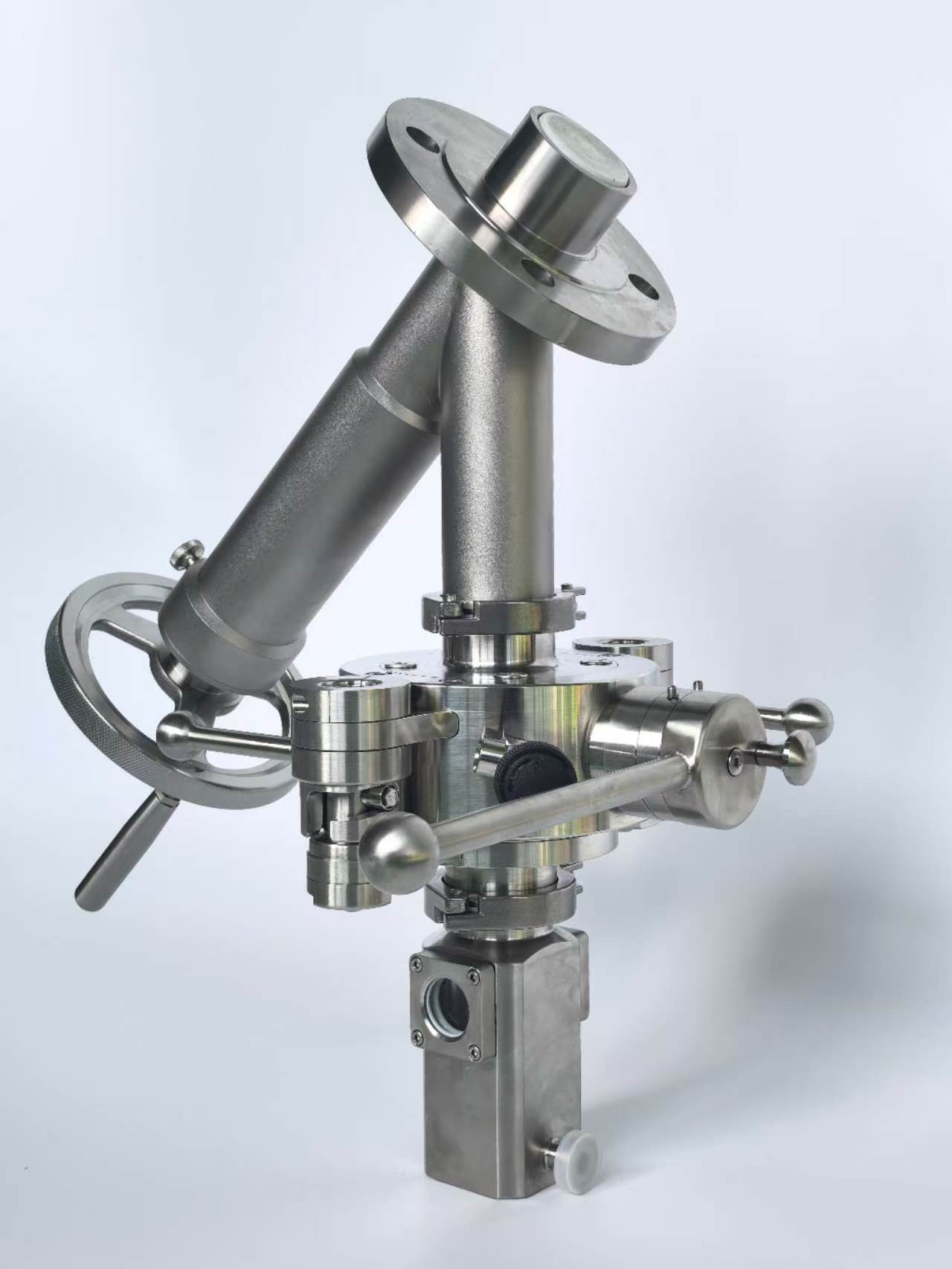
Abrasive streams do not care about a material's reputation. What matters is how the surface responds to constant gouging, micro-chipping, and the occasional heavy impact. Tungsten carbide overlays are often the first choice for severe sliding abrasion, but they can crack if the stream carries large, jagged particles at high velocity. Ceramic liners, especially alumina and silicon carbide, handle fine-particle erosion extremely well, yet their brittleness makes them a poor fit for areas where impact angles are steep or where thermal shock is a daily occurrence.
For mixed flows with both fine grit and occasional oversized debris, polyurethane and rubber linings absorb energy that would otherwise fracture harder materials. They work best when the abrasive stream strikes at a shallow angle, letting the elastomer flex and rebound. Hardened steels with a high chromium content offer a middle ground: they resist gouging better than mild steel, cost less than tungsten carbide tiles, and can be welded or reshaped in the field. The key is matching the wear mechanism, not just the hardness number, because a material that excels in a laboratory pin-on-disk test may fail quickly when a real slurry hits it at 20 meters per second.
Many plants end up combining materials rather than betting on a single liner. A ductile steel shell supports bolt-on ceramic tiles in straight pipe sections, while polyurethane lines the elbows where particle impact is more glancing. In chutes and hoppers, replaceable wear plates with a hard facing on the leading edge and a tougher steel backing give maintenance crews a quick swap-out point. This layered approach costs more upfront, but it extends service intervals and prevents the kind of unexpected failure that stops an entire process line.
How Quick Changeouts Reduce Cross-Contamination
Swapping out tools or contact surfaces between batches isn't just a hygiene formality—it's a direct barrier against unseen carryover. In high-mix production lines, residual powders, liquids, or biofilms cling to equipment, and even a thorough wash can leave microscopic traces. A quick changeout system sidesteps this by letting you physically remove the contaminated component and drop in a clean, dedicated set. The result is less time spent scrubbing, fewer chemical residues from cleaning agents, and a sharper segregation between product runs.
What makes rapid changeouts effective is their focus on modular design. Instead of one large, hard-to-clean assembly, the line uses split halves, quick-release clamps, or disposable contact parts. An operator can isolate the contaminated section without dismantling the entire machine, which keeps the surrounding environment stable. This also means you don't have to rely on a single cleaning procedure to work perfectly every time—you replace the risk point rather than trying to sanitize it in place.
From a contamination control perspective, the speed of the swap matters just as much as the swap itself. Slower changeovers tempt operators to rush or skip steps, increasing the chance of cross-contact. A well-designed rapid changeout takes under a minute, which means it actually gets done at every required interval. Over a full production day, those consistent, small interventions add up to a far cleaner process than one heroic deep clean at the end.
Proof Beyond Claims: Validation Data Worth Reviewing
Most product pages tell a compelling story. But stories don't survive contact with real-world conditions. That's where validation data steps in—raw numbers, independent tests, and field reports that show whether the promise holds up when nobody's watching. Without this layer, a claim is just another opinion dressed in marketing language.
Look for data that wasn't produced by the vendor alone. Third-party lab results, long-term user telemetry, failure rates under stress, and side-by-side comparisons against competitors all carry more weight than a curated testimonial. The key is specificity: a vague "improves performance" means nothing, but an 18% reduction in error rates over 10,000 cycles tells you something concrete.
Reviewing such evidence takes effort, but it's the only way to separate products built on engineering from those built on adjectives. When you can trace every headline feature back to a measurable result, you're not just reading a claim—you're verifying it. That changes the entire conversation.
Support After Installation: The Overlooked Criterion
Most buyers fixate on features, price, and aesthetics when selecting a product, but the real test begins once the box is opened. Installation rarely goes exactly as planned, and that is where the quality of post-purchase support becomes painfully visible. A company that offers clear, human-led assistance after the sale saves you from hours of frustration and unexpected costs down the line. Without it, even a well-engineered product can turn into a source of regret.
The difference between brands often shows up in small moments: a phone call answered by someone who actually knows the product, a troubleshooting guide that addresses real failures instead of generic tips, or a warranty process that doesn't bury you in fine print. These are not flashy selling points, yet they determine whether a purchase feels like a wise investment or a lingering headache. In practice, the availability of direct, knowledgeable support can outweigh minor differences in specs or price.
Before committing to a purchase, it is worth asking a simple question: what happens if something goes wrong after delivery? Checking user forums, testing the support line, or reading about long-term ownership experiences often reveals more than any marketing page. Companies that invest in post-installation care tend to earn quiet loyalty, while those that don't rely on customers who never need help. The overlooked criterion may not be glamorous, but it is frequently the one that matters most.
Regulatory Alignment Without the Paper Chase
Compliance teams once spent entire weeks assembling binders of screenshots, signed attestations, and manually cross-referenced spreadsheets to prove alignment with shifting regulations. That ritual is fading fast. Modern regulatory alignment leans on direct connections to statutory databases and rule engines, which feed updates straight into internal control frameworks within minutes of publication. The paper trail becomes an audit log that writes itself.
Instead of emailing policy drafts back and forth or waiting for legal to translate a new rule into a checklist, teams can now map regulatory requirements to operational controls using lightweight tagging and versioned APIs. A change in a data retention clause, for example, automatically flags the affected system owners and triggers a targeted review queue—no printing, no wet signatures, no courier envelopes. The alignment happens in the workflow, not in the evidence folder.
This shift does more than save time. It reduces the gap between what regulators expect and what organizations actually practice. When every control carries a live link to its source requirement, auditors can sample directly from the system rather than request reams of static documentation. The result is a compliance posture that stays current by design, leaving the paper chase to history.
FAQ
Split butterfly valves and high-integrity rotary valves dominate this space. Focus on models with minimal dead zones, metal-to-metal contact at the split point, and inflatable or double-seal arrangements that limit dust escape during docking and undocking.
Ask for third-party particle leakage test results using surrogate powders like lactose or riboflavin. Verify the stated OEL or OEB rating against your actual operating pressure, cycle frequency, and powder characteristics, not just ideal lab conditions.
Prioritize 316L stainless steel with product-contact surfaces polished to Ra 0.4 micron or better. Seals should be PTFE or EPDM compatible with your cleaning solvents and SIP temperatures. Avoid threaded connections or deep crevices where powder can accumulate.
It is often the deciding factor. A vendor should provide reference installations handling similar potency levels, such as OEB 4 or 5, and demonstrate a working knowledge of containment validation protocols rather than just valve actuation mechanics.
Look for tool-free disassembly, replaceable seal cartridges, and clear wear indicators on dynamic parts. Request mean-time-between-failure data from current users and confirm whether the vendor offers on-site service, spare part stock, or operator training.
Yes, especially for multi-product facilities. The valve must tolerate repeated washdowns or WIP cycles without seal swelling or loss of compression. Request cleanability studies showing residue levels below your acceptable carryover threshold after standard cleaning routines.
Inquire how they measure leak tightness during split-valve separation, whether they offer active air extraction ports for high-toxicity operations, and if disposable product-contact parts are available to reduce cleaning burden between campaigns.
Avoid selecting on initial purchase price alone. Compare total cost of ownership: seal replacement frequency, downtime for cleaning or maintenance, potential exposure events, and regulatory audit readiness. A modest upfront increase often prevents much larger long-term losses.
Conclusion
When evaluating high containment valves for powder handling, the first things that separate a dependable vendor from a risky one are often the least glamorous. You need to ask hard questions about seal integrity under actual powder load—not just a clean bench test. A valve that leaks under a few kilograms of fine API will wipe out any containment gains, so demand evidence of performance with your specific powder characteristics, including particle size and moisture. Equally important is the material selection: abrasive powders can chew through soft elastomers or thin metal seats in months, leading to hidden breaches. Look for vendors who can show long-term wear data on their seat and body materials, and who don’t shy away from discussing failure modes. Finally, quick changeouts are not just a convenience; they are a contamination control strategy. If a valve takes half a day to disassemble and clean, operators will skip preventive maintenance, and cross-contamination becomes inevitable. A well-designed split valve or rapid-transfer system can cut changeover time by more than half, making containment a practical daily habit rather than a quarterly ordeal.
Beyond the hardware, a vendor’s credibility hinges on proof and ongoing partnership. Anyone can claim “validated containment,” but you need to see the raw numbers: surrogate powder tests, exposure monitoring data from real installations, and third-party certifications that match your target OEL. Don’t accept a glossy brochure as validation—ask for the full test reports, including worst-case scenarios with high dust loads and repeated cycles. After installation, support becomes the difference between a smooth operation and a costly shutdown. Check whether the vendor offers on-site training, spare parts inventory recommendations, and a responsive technical line that doesn’t route you through three layers of sales. Many buyers overlook this, but a containment valve that is misused or poorly maintained will fail long before its design life. Finally, regulatory alignment should be a given, not a paper chase. A good vendor understands GMP, ATEX, and local environmental rules, and can provide documentation that is actually usable for your audits—preformatted, clear, and tied to your specific process. If you find yourself asking for “the right certificate” multiple times, that’s a red flag. Choose a partner who treats compliance as engineering, not as an afterthought.
Contact Us
Contact Person: Ananda
Email: [email protected]
Tel/WhatsApp: 8619016718200
Website: https://www.wzaomi.com