

Healthcare Thermal Printable Wristband Manufacturer Essentials for Reliable Patient Identification
2026-09-28
Patient misidentification remains one of the most preventable yet persistent risks in healthcare. Every wristband tells a story—but only if it survives the chaos of emergency rooms, sanitizer exposure, and time. That's where choosing the right thermal printable wristband manufacturer becomes non-negotiable. BAOBI has spent years perfecting the small details that keep patient data legible when it matters most. In this guide, we'll break down the essentials you should demand from any manufacturer—and why settling for less isn't an option.
What Happens When Thermal Wristbands Meet Alcohol-Based Sanitizers
Most thermal wristbands rely on a heat-sensitive coating that contains a leuco dye and a developer. Alcohol-based sanitizers act as a solvent on this coating. Within seconds of contact, the dye can start to bleed or lift away from the paper substrate, causing printed text to smudge, fade, or turn into an unreadable blur. The higher the alcohol concentration, the faster this degradation tends to occur.
Beyond ink damage, the wristband material itself may soften or become tacky. The alcohol penetrates the thin top layer and weakens the bond between the coating and the base film. In humid or warm conditions, this can make the wristband feel sticky, curl at the edges, or even tear more easily. Repeated exposure from hand sanitizing throughout the day often leaves the band looking worn and fragile long before it would naturally degrade.
For anyone wearing these wristbands in settings where sanitizer is used frequently, the practical result is often a loss of legibility for patient IDs, event access codes, or payment barcodes. Some facilities try to mitigate this by applying clear protective tape over the printed area or switching to synthetic wristbands that resist solvent damage. But standard thermal paper wristbands are rarely engineered to survive repeated contact with alcohol gels or sprays.
Print Contrast Ratios That Keep Barcodes Scanning Every Time
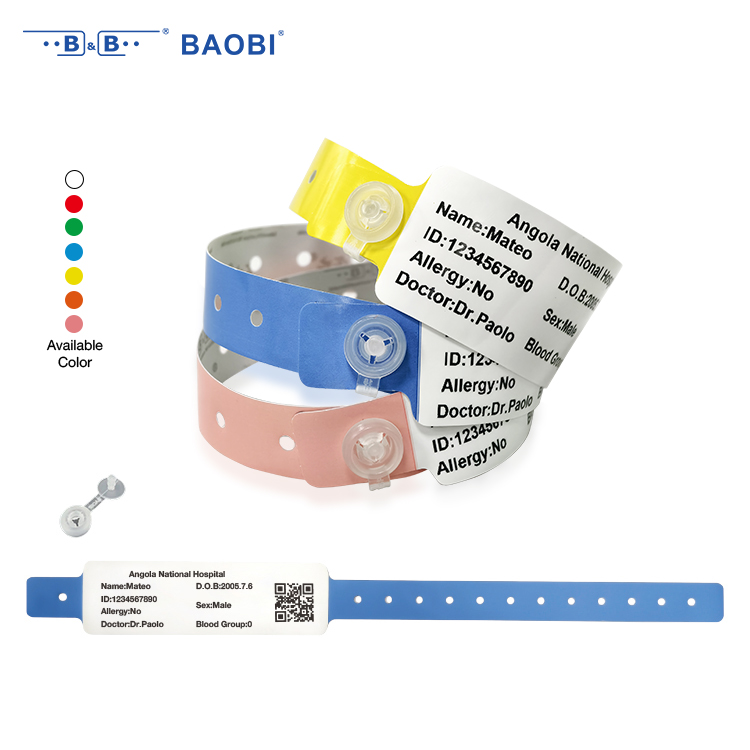
A barcode that looks crisp on your screen can turn into an unreadable mess once it hits paper. The real culprit isn't the printer resolution or the symbology you chose—it's the contrast ratio between the bars and the background. If that ratio dips too low, scanners simply won't see the code, no matter how many times you wave it past the reader.
Most scanning standards call for a minimum print contrast ratio of 70% or higher, but chasing that number alone can mislead you. Matte black ink on bright white stock usually lands near 90%, yet warm-tinted labels or recycled cardboard can silently eat away at that margin. Instead of relying on your eyes, use a handheld verifier to read the actual reflectance values—cheap models give you a pass/fail, while better ones show exactly which bars are drifting out of spec.
If you're stuck with colored packaging or low-cost thermal stock, don't fight the physics. Increase bar width slightly, switch to a darker ink formulation, or add a white underprint behind the barcode area. Small tweaks like these often recover 15–20 points of contrast, which is the difference between a line that scans on the first try and one that frustrates every warehouse worker who touches it.
The Link Between Adhesive Choice and Patient Skin Tears
Skin tears are a persistent and often under-recognized problem in clinical care, particularly among older adults and those with fragile or compromised skin. While many factors contribute to these injuries, the type of adhesive used to secure dressings, tubing, or monitoring devices plays a surprisingly direct role. A high-tack adhesive may seem reliable for keeping a dressing in place, but when removed, it can strip away the outermost layers of the epidermis, turning a routine tape change into a painful wound. Conversely, an adhesive with too little strength may allow movement and friction, which can also shear delicate skin. The goal is not simply to pick the strongest or gentlest product, but to match the adhesive's properties to the individual patient's skin condition, the expected wear time, and the specific anatomical site.
Clinicians often underestimate how quickly adhesive-related damage can occur. On thin, papery skin—common in patients over 70 or those on long-term corticosteroids—even a single removal of standard medical tape can cause a full-thickness skin tear. Silicone-based adhesives have gained attention because they provide secure fixation while distributing peel force more evenly, reducing trauma during removal. Yet no adhesive is universally safe. A patient with oily skin may need a stronger initial bond, while a patient with edema or weeping wounds may benefit from a gentler, more breathable option. The real connection lies in individualized assessment: checking skin integrity before every application, rotating tape sites, using adhesive removers when appropriate, and re-evaluating the product choice as the patient's condition evolves.
Preventing adhesive-related skin tears is not just a nursing task—it requires a shift in mindset across the care team. Too often, the same tape or dressing is used out of habit without reconsidering whether it still suits the patient. Simple interventions, such as choosing a low-trauma silicone tape for fragile skin, applying a skin barrier film under high-risk adhesives, or switching to a tubular bandage instead of tape for securing gauze, can dramatically reduce injury rates. Ultimately, the link between adhesive choice and skin tears is a matter of respect for the skin's limits. By treating every adhesive application as a clinical decision rather than a routine step, healthcare providers can protect patients from preventable harm and improve overall comfort during healing.
Why Wristband Durability Hinges on Thermal Coating Chemistry
Wristbands live in a hostile environment: skin oils, sunscreen, salt from sweat, and constant flexing. A thermal coating that isn't chemically tuned for that reality will start to crack or peel within weeks. The key is how the coating's polymer chains crosslink during curing. Too little crosslinking leaves the surface soft and prone to scuffing; too much makes it brittle, so micro-cracks form at the points where the band bends most.
The chemistry also determines how the coating handles temperature swings. A band left in a hot car or worn during a winter run goes through rapid expansion and contraction. If the coating's thermal expansion coefficient is mismatched with the base material, it will delaminate. Silicone-based thermal coatings with flexible side groups tend to track the substrate's movement better than rigid epoxy alternatives, which is why they show up more often on bands designed for daily wear.
Chemical resistance is the third leg. Sweat is not just water; it contains salts, lactic acid, and traces of lotions. A thermal coating with hydrophobic segments repels moisture and slows down the penetration that leads to staining or softening. But if the coating forms an overly dense barrier, it can trap moisture underneath. The best formulations strike a balance—keeping out external chemicals while allowing the band to breathe enough to avoid blistering at the coating interface.
Managing Variable Data Printing Without Sacrificing Legibility
Variable data fields rarely behave the way you expect once real customer information flows in. A name that fits perfectly in a mock-up can balloon into a four-line paragraph when it's a full legal name with middle initials and suffixes. Instead of forcing every record into a rigid frame, set type to scale or reflow within a defined safe area. Use conditional logic to switch to a condensed style only when a field exceeds a character count, and keep letter-spacing and word-spacing values slightly tighter than default to buy extra room without shrinking below 9pt.
Legibility in VDP often breaks down because the same font size is applied to both a five-character product code and a forty-character description. Establish a minimum readable size for the longest expected value, then work backward. If that means the short fields look too small on their own, consider aligning them to a baseline grid or giving them a subtle background tint so they still feel intentional. Avoid thin or decorative typefaces for data-heavy areas; a sturdy grotesque or humanist sans with open apertures holds up better under variable stress.
Testing with sanitized placeholders is the quickest way to miss layout failures. Pull a random sample of fifty real records—not the clean ones—and run them through the template at final resolution. Look for clipped descenders, orphaned punctuation, or fields colliding with neighboring graphics. When you find a problem record, don't just patch that one; adjust the rule so the entire class of similar data gets the same treatment. Small tweaks to line height, hyphenation zones, or overflow behavior often restore legibility without compromising the personalized feel.
The Hidden Cost of Replacing Wristbands Before Discharge
Every time a wristband is swapped out just before discharge, the clock starts ticking in ways most budgets don't capture. Nurses interrupt discharge teaching to find a printer, wait for label stock, verify the new band against two identifiers, and then update the bedside chart. That five-minute detour multiplies across dozens of daily discharges, quietly stealing hours that could go to actual patient care.
There's also a reliability gap. A last-minute replacement introduces a second data entry point at the exact moment staff are rushing to clear beds. An incorrect date of birth or misspelled name on the new band can force pharmacy to pause medication reconciliation, or delay a home health referral that depends on matching the discharge summary to the wristband identifier.
Some units try to reduce the nuisance by printing extra bands at admission, but that creates its own inventory of confusion. When a patient arrives with an old band from a previous stay, or a nurse accidentally scans the discarded one left on the bedside table, the system logs an identity mismatch that has to be investigated. The hidden cost isn't just the wristband itself; it's the ripple of corrections, audits, and near-misses that follow a change made at the worst possible time.
FAQ
Look beyond basic certification. The manufacturer should have a track record of withstanding alcohol swabs, hand sanitizers, and daily bathing. Ask for samples and run them through your actual printers and scanners, not just a demo. Also check if they provide technical support for printer compatibility and can supply wristbands in multiple sizes to avoid reprints.
Direct thermal printing relies on heat-sensitive coatings, so the topcoat matters as much as the base film. A quality manufacturer uses a protective layer that resists abrasion from bed rails and UV exposure from window light. Without that, text and barcodes can fade within days, forcing staff to replace wristbands and risking misidentification. Thermal transfer is another option if you need longer-term durability, but direct thermal is more common for short stays.
Synthetic films like polyester or polypropylene tend to outperform paper-based stocks. They resist moisture, stretching, and tearing. Look for a soft, flexible face stock with a matte finish to reduce glare under scanners. For patients with sensitive skin, a latex-free adhesive or a snap closure can make a big difference. Some manufacturers use a tri-layer construction with a thermal coat, a film core, and an adhesive layer that stays put without damaging skin.
Barcodes are the bridge between the wristband and the electronic health record. If a scanner fails after hand sanitizer exposure or creasing, staff may resort to manual entry, which introduces errors. A good manufacturer tests barcode grades (ANSI/CEN/ISO) after simulated wear. They also control print contrast signal and ensure quiet zones are maintained. Ask for third-party verification or a certificate of conformance.
In the US, wristbands fall under FDA Class I medical devices if they are intended for patient identification. That requires compliance with 21 CFR Part 820 quality systems, though many hospitals simply request ISO 13485 certification. For materials, ask about ISO 10993 biocompatibility tests for skin contact. In Europe, CE marking under MDR may apply. A reputable manufacturer will share these documents without hesitation.
Yes, but only if the customization aligns with clinical workflows. Pre-printed color zones for allergies or fall risk can reduce labeling errors. Adding a second barcode for lab specimens can speed up collection. However, over-designing with too many graphics can clutter the wristband and hurt barcode scan rates. Work with the manufacturer to test layouts on your actual admission systems before full rollout.
Antimicrobial coatings may reduce bacterial colonization on the wristband surface, but they are not a substitute for hand hygiene. Latex-free materials are critical because latex allergies can cause contact dermatitis or worse. Soft, rounded edges and breathable micro-perforations also reduce skin maceration under the band. These details matter for long-term patients or neonates.
The most common failures are barcode fade, adhesive breakdown, and snap detachment. Quality manufacturers prevent fade by using a stable leuco dye and a UV-resistant topcoat. Adhesive failure is often due to low surface energy on skin with lotions or sweat, so they may offer a stronger adhesive for adults and a gentler one for infants. Snaps should be ultrasonically welded, not just glued. Request failure testing data for your specific environment.
Conclusion
A wristband that looks fine at admission can become unreadable after a few hand hygiene passes. Alcohol-based sanitizers routinely break down inferior thermal coatings, leaving barcodes pale and patient data vulnerable. Reliable manufacturers treat the coated surface as a working layer, not just a printable film, and adjust the thermal chemistry so that alcohol exposure, moisture, and friction do not fade critical identifiers before discharge. The same attention applies to the adhesive side: an aggressive bond may hold firmly but can tear fragile skin, especially in elderly or long-stay patients. Balancing adhesion strength with gentle removal is not a minor detail; it directly affects patient safety and staff confidence. Print contrast ratio matters just as much as chemical resistance. Barcodes need enough dark-to-light separation to scan under varying reader angles and hospital lighting, even after the wristband has been stretched or curved around a wrist.
Variable data printing introduces another failure point if the printhead settings and substrate are not matched. High-density text, tight barcode modules, and rapid patient turnover push many stock wristbands into low-contrast or smeared output. Manufacturer support should include practical guidance for setting print speed, darkness, and barcode sizing so legibility survives from admission through every scan event. Overlooking these factors has a hidden cost: repeated reprints consume nursing time and new wristbands long before discharge, and each replacement creates a fresh opportunity for misidentification or delayed care. A dependable thermal wristband program therefore depends on coating chemistry, adhesive selection, and disciplined print data management working together, not on any single feature alone.
Contact Us
Contact Person: Bill Xu
Email: [email protected]
Tel/WhatsApp: 8618688898707
Website: https://www.baobitech.com/