

Extruder Factory: Essential Guide to Quality and Efficiency
2026-11-02
Ask any plant manager where extruder lines quietly lose money, and you'll hear the same list: inconsistent melt temperatures, worn screw elements, and changeovers that eat entire shifts. But rarely do they talk about the factory itself. This guide pulls back the curtain on what makes an extruder line truly efficient—not just on paper, but on the floor. We've gathered hard-won insights from SFC engineers who live with these machines daily, so you can spot the difference between a line that merely runs and one that returns profit hour after hour.
Raw Material Handling That Sets the Tone
In many production environments, raw material handling is seen as nothing more than moving inputs from point A to point B. But that mindset quietly undermines everything downstream. When materials are received, stored, and transferred with genuine care—checking moisture levels, segregating incompatible batches, or simply keeping floors clear of debris—the entire operation starts from a position of control rather than catch-up. It’s not about expensive automation; it’s about refusing to let the first touch be a careless one.
The tone set at this stage shows up in predictable ways. Operators who witness careful unloading and labeling tend to mirror that discipline at their own stations. Contamination risks drop when raw materials aren’t left exposed near open doors or stacked against unclean surfaces. Even small choices, like using dedicated bins for specific ingredients or marking oldest stock first, remove guesswork later. Over time, these habits become the unspoken standard—new hires absorb them not from a manual but from watching how materials are handled on day one.
Companies that treat raw material handling as a defining process, not a chore, often find fewer quality disputes and less rework. The reason is straightforward: if the input is treated with respect, the output inherits that stability. It sets a rhythm that no amount of end-of-line inspection can recreate. And when audits or customer visits happen, the raw material zone tells a story before a single product is made—either one of carelessness or one of quiet confidence. That story sets the tone for everything that follows.
Screw and Barrel Design Choices Worth Revisiting
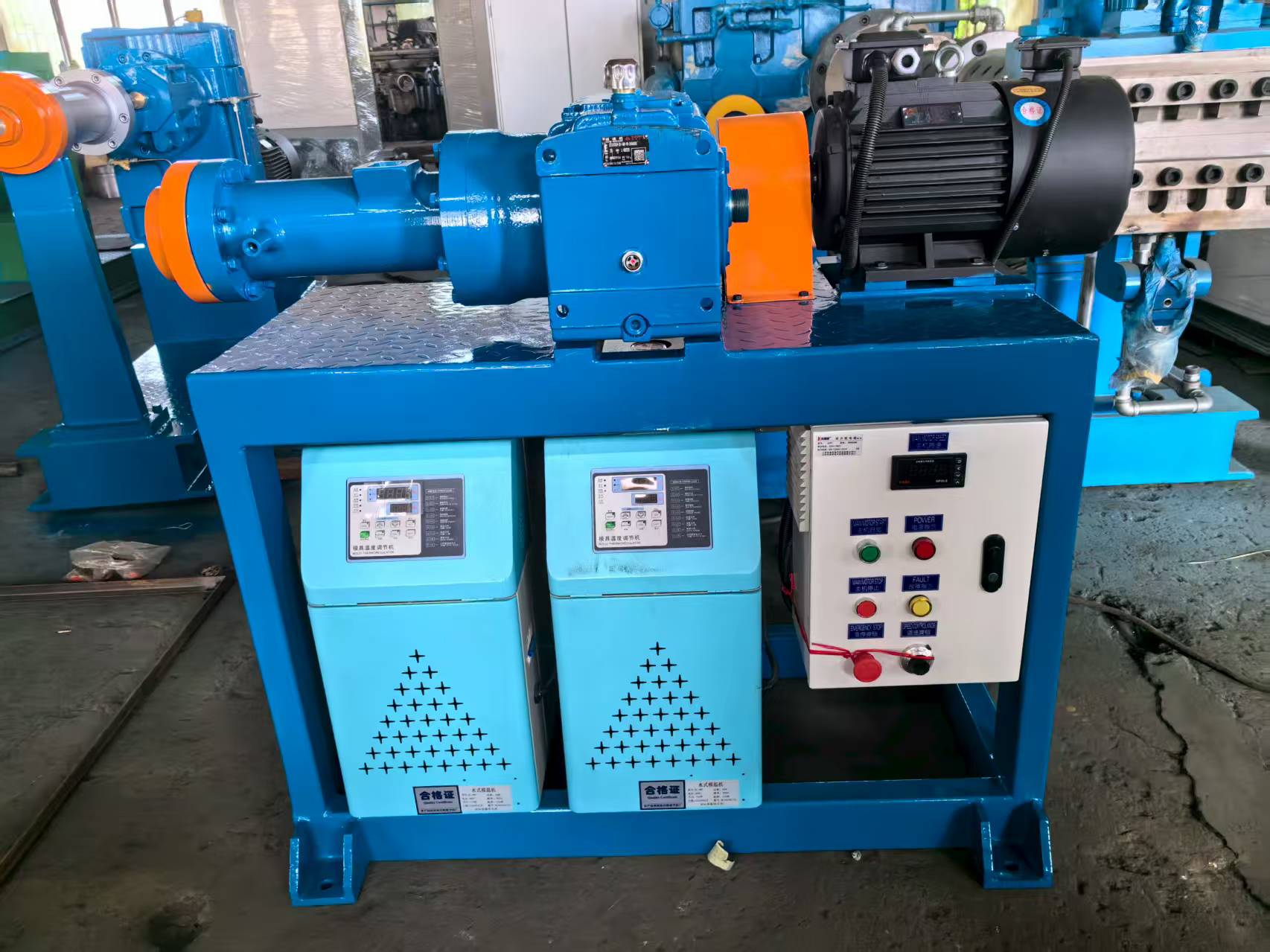
Many extrusion and injection molding lines still run with screw geometries that were optimized for resins and throughputs from a decade ago. Revisiting the compression ratio, feed depth, and barrier flight clearance can reveal mismatches that quietly drive up melt temperature and energy use.
The barrel is just as easy to overlook. Wear patterns near the feed throat and along the vent port often signal that the current metallurgy or surface treatment is no longer a good fit for the fillers or regrind being processed. Small changes in clearance or coating can shift residence time distribution enough to reduce black specks and improve color changeovers.
Rather than replacing an entire screw when a product range changes, it may be worth testing modular or damper-tipped designs that allow the mixing section to be adjusted independently. The goal is not to chase a single perfect geometry, but to align the screw and barrel choices with how the line actually runs today.
Temperature Profiles: The Hidden Efficiency Lever
Most operators treat temperature as a simple setpoint—something to be held steady while other variables get the attention. Yet the shape of the thermal journey, from cold start through steady state and into every cycle transition, quietly dictates how much energy is wasted, how fast components degrade, and whether a batch meets spec on the first pass. A flattened profile that ignores thermal inertia can force a system to fight itself, overshooting and then overcorrecting in a loop that shows up nowhere on a standard dashboard.
The real leverage sits in the shoulders and ramps, not just the peak. For instance, a slow approach to a target temperature often cuts total energy use by double digits while improving uniformity across a load—because the driving force stays closer to what the material can actually absorb. Conversely, a deliberately steep ramp can be the right call when surface reactions need to outpace diffusion, but only if the rest of the line is tuned for that transient. Ignoring these dynamic choices means leaving efficiency gains buried inside the process data.
Modern sensing and control stacks make it practical to treat the entire profile as a design variable. Rather than asking "what temperature do we need?", teams can ask "what thermal history produces the best yield, the longest asset life, and the lowest utility bill?" The answers often contradict old habits—sometimes a lower peak with a longer soak outperforms a hotter, faster cycle. Those who map their actual temperature-time curves against quality and energy outcomes usually find that the hidden lever has been sitting in plain sight.
Real-Time Monitoring Without Overcomplicating the Line
Adding visibility to a production line shouldn't mean stacking on layers of hardware or forcing operators to learn a whole new interface. A straightforward approach uses compact sensors that clamp onto existing equipment, feeding a simple readout of cycle times, downtime, and throughput. No rewiring the floor or pausing shifts for weeks—just a few well-placed devices that quietly collect data while the line keeps moving.
The trick is to show only what matters right now. Instead of a dashboard packed with dozens of charts, a single screen highlights the three or four signals that actually drive decisions: is the line running, at what pace, and where is the next bottleneck forming. Color-coded status boxes and a trend line for the last hour give operators enough to react without wading through raw logs or digging into menus.
Alerts should be equally restrained. Set thresholds around normal variation, not perfection, so a brief pause doesn't trigger a flood of notifications. When something genuinely drifts—a station slowing down, a feeder running low—the system sends one clear message to the right person, with a timestamp and a suggested check. That keeps monitoring useful without turning the line into a control room full of sirens and pop-ups.
Maintenance Habits That Prevent Silent Drift
Silent drift rarely announces itself. It shows up as a skipped warm-up, a slightly later reply, a standard you quietly lower because no one is watching. The habits that stop it aren't heroic; they're boring on purpose. A Friday afternoon inventory of what got pushed, what got rushed, and what got quietly dropped keeps small compromises from becoming the new normal. Write it down, not as a to-do list but as a short audit against the standard you actually want to hold.
Another effective pattern is to name one non-negotiable per month and defend it aggressively. Not ten habits, one. For example, if you value precision in code, the non-negotiable might be reviewing every diff before merging, even when the deadline is tight. That single protected action acts as a tripwire: the moment you start making excuses for it, you know drift has already begun. Rotate the non-negotiable so it doesn't become background noise.
Finally, build in a third-party check. Drift thrives in isolation. A short weekly note to a peer, a quick photo of a workspace, or a standing fifteen-minute call with someone who knows your standards makes the invisible visible. You don't need a mentor or a formal review. Just one other person who can say, 'This doesn't look like your usual work,' with no drama attached. That outside voice resets your baseline faster than any self-talk.
Training Operators to Catch What Machines Miss
Factories lean heavily on automated inspection these days, but even the sharpest vision systems miss what a seasoned operator catches in a split second. The trick isn't to replace human judgment with more sensors—it's to train people to notice the subtle, messy signals that machines overlook: a faint vibration, an off smell, a tool that sounds just slightly wrong. That kind of sensory literacy only comes from guided practice on real, imperfect parts.
Good training flips the usual script. Instead of telling operators what the machine already flagged, you start with the borderline cases where automation failed. Have them run their hands over a surface, listen to a spindle, watch how material curls away from a cutter. Then compare notes. Over time, they build a mental library of anomalies that no spec sheet captures—and they start catching defects before the line even slows down.
The payoff shows up in scrap rates and downtime, but the real shift is in confidence. Operators stop babysitting screens and start reading the process itself. Machines get better too, because the data from human catches feeds back into tighter tolerances and smarter algorithms. It's not man versus machine. It's man teaching machine what to look for next.
FAQ
Look past the polished photos and ask about the details that affect daily output: screw and barrel tolerances, the brand of gearbox and bearings, how they control barrel temperature, and whether they run a full load test before shipping. A good factory will openly share those specs and even let you witness the test. If they dodge those questions, that tells you everything.
The biggest gains usually come from properly sized AC drives, insulated barrels with zoned heating, and screw geometries that generate less shear heat for a given melt quality. Some plants also recover heat from the cooling system to preheat feedstock. Those measures can trim energy per kilogram by 10 to 20 percent compared with older designs.
At minimum, ask for a recorded no-load run of at least four hours, a load trial with your actual material or a close match, dimensional checks on screw flight clearance, and a temperature uniformity test across the die zone. If the factory won't provide those records, treat that as a red flag.
Because the screw and barrel are where wear, corrosion, and melt quality problems start. For filled or abrasive resins, a nitride-treated surface may fail within months, while bimetallic alloys can last years. Spending more upfront on the right metallurgy usually costs far less than a mid-season rebuild and lost production.
Track gearbox oil temperature and change it on schedule, not by guesswork. Keep a log of barrel zone temperatures and motor amps so small drifts get caught early. Purge heat-sensitive resins properly at shutdown, and check screw wear against a baseline every 3,000 to 5,000 hours. Those habits beat waiting for a bearing to scream.
Yes, within limits. A modular screw design and a flexible barrel venting setup help switch between polyolefins, engineering resins, and some filled compounds. But you'll still need to adjust screw speed, temperature profile, and sometimes screw elements. It is more realistic to target a material family than to expect one machine to excel at everything from soft PVC to glass-filled nylon.
Ask for the specific output rate in kilograms per hour with your material, the screw speed, melt temperature, and motor load at that rate. A credible factory will also provide specific energy consumption, not just a burst rate. If the claimed output only happens for five minutes before the motor overheats, it's not a real production figure.
They buy on price and ignore the local support, spare parts lead times, and training quality. Even a well-built extruder will need service, and a factory that can't ship a replacement heater band or a screw tip within days will cost you far more than the initial savings.
Conclusion
Quality in an extruder factory rarely hinges on a single dramatic decision. It starts with raw material handling that sets the tone—moisture control, consistent feed rates, and clean regrind blending all shape the melt before it ever reaches the screw. Revisiting screw and barrel design choices is equally critical; a worn flight or mismatched compression ratio quietly wastes energy and invites surging. Temperature profiles are the hidden efficiency lever most managers ignore. A barrel zone that runs five degrees too hot can degrade resin, while a too-cold feed throat starves output. Real-time monitoring without overcomplicating the line means choosing a handful of pressure and melt-temperature sensors, not a wall of dashboards, so operators actually trust what they see.
Maintenance habits prevent silent drift: checking screw wear every few months, calibrating thermocouples, and logging amps drawn by the drive can catch small losses before they become scrap rates. Yet machines alone never fix everything. Training operators to catch what machines miss—odd smells, subtle color shifts, a change in pellet sound—turns a reactive crew into a proactive one. The best factories pair this human feel with simple data logs, not complex AI overlays, because consistency comes from people who understand what the barrel is telling them. When raw material discipline, smart screw geometry, careful thermal control, lean monitoring, steady maintenance, and operator intuition work together, quality stops being a target and becomes a habit. That is the real essential guide: not a checklist, but a mindset that sees every extrusion run as a chance to learn the line’s language.
Contact Us
Contact Person: Chen Zhengwei
Email: [email protected]
Tel/WhatsApp: +86-13963975727
Website: https://www.sfcrubbermachine.com