
Experience Dongba Culture in Lijiang: A Complete Guide
2026-08-09
Step into the mystical world of Dongba culture, where ancient shamanic traditions still whisper through the stone-paved lanes of Lijiang. If you think you've seen all of Yunnan's charms, wait until you witness the living heritage preserved at Jade Water Village. Here, the Naxi people's sacred rituals, pictographic scripts, and mountain-rooted wisdom come alive in ways no museum can replicate. Ready to go beyond the postcard views? This guide strips back the tourist veneer and invites you to walk with the Dongba priests, taste the wild-foraged teas, and feel the pulse of a culture that refuses to fade away.
Dongba’s Living Legacy: More Than Just a Museum Exhibit
When you step into a museum and see Dongba script on aged paper, you might think it's a relic of a vanished world. But walk through the villages of the Naxi people in Yunnan, and you'll realize this ancient pictographic writing system still breathes. It’s not locked away in glass cases; it’s woven into daily prayers, seasonal rituals, and the conversations of elders passing knowledge to the next generation. The Dongba tradition persists not as a performance for tourists, but as a living current that shapes how people understand nature, illness, and harmony.
Beyond the museums, Dongba culture thrives in the hands of practitioners who chant texts during all-night ceremonies, heal illness through nature-based rites, and craft the unique paper that carries their sacred symbols. These activities aren’t simply reenactments—they evolve as the community adapts to modern life without severing roots. Young Naxi are learning the script through apps and village workshops, blending digital tools with ancient strokes. The legacy survives not because it’s preserved in archives, but because it remains relevant to personal identity and communal memory in a changing landscape.
What makes Dongba more than an exhibit is its refusal to stand still. It is a philosophy of interaction—with mountains, rivers, and ancestors—that defies easy categorization. In a world racing toward homogeneity, this living culture offers a counter-narrative: a way of seeing script as more than words, and ritual as a form of ecological dialogue. Stepping out of the museum and into a Dongba ceremony, you witness a tradition that isn’t being saved; it’s saving something else entirely—a relationship between people and place that refuses to be archived.
The Priest, The Painter, The Storyteller: Who Are the Dongba?
In the mountain-rimmed villages of southwest China, a Dongba is many things, but above all a living conduit between the seen and the unseen. Clad in worn robes and bearing handheld drums, they chant the ancient rhythms that coax spirits to listen. Their rituals are not performances but acts of survival—healing the sick, blessing the harvest, guiding the dead home. Each motion, each syllable, is steeped in a lineage that stretches back before empires, a quiet defiance that the world of the Naxi ancestors has never truly vanished.
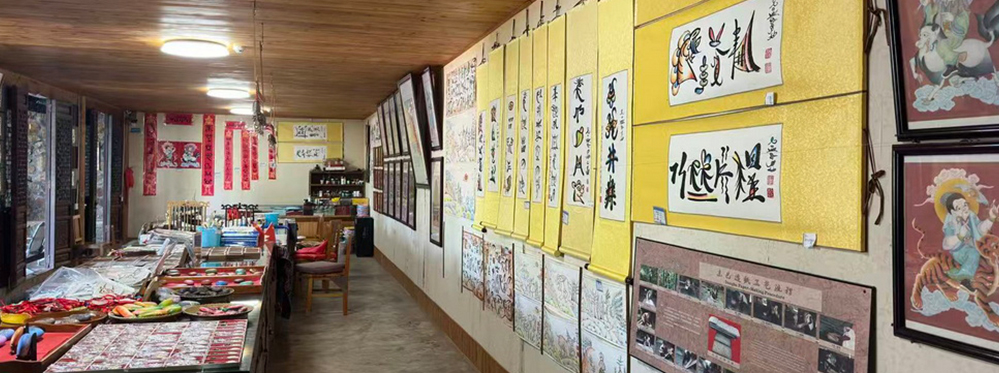
With a bamboo brush dipped in pine soot ink, the Dongba turns paper made from tree bark into a sacred map of existence. They paint what cannot be spoken: demons wrapped in wind, gods who taught men to sow barley, and serpents coiled around the roots of the world. These pictographic manuscripts are not decorations—they are instructions for how to run a funeral, how to name a child, how to recall a soul lost to fright. No two Dongba paint the same way, and in that slight tremor of the hand lies an entire cosmology kept alive, one stroke at a time.
When the fires burn low and the grain wine is poured, the Dongba becomes the heartbeat of memory. They are storytellers who do not simply recite but re-member, pulling threads of myth into the present tense. Tales of the warrior Chong Heng, the deluge that drowned greed, the origin of sickness and its cures—these are not folktales gathering dust. They are shaped by the voice, deliberately flawed and fertile, so that every telling is an act of creation. In a world racing toward sameness, the Dongba raises a voice that cracks but never breaks, holding a people’s imagination steady against the pull of forgetting.
Symbols with Soul: Why Dongba Pictographs Defy Time
Dongba pictographs aren’t just a writing system—they’re a living conversation with the past. Unlike scripts that evolved toward abstraction, these characters still pulse with the rhythms of nature, each stroke a miniature ritual. They refuse to let time flatten them into mere phonetics; instead, they carry the weight of ceremony, myth, and the Naxi people’s bond with their mountains and rivers. A symbol for “sun” doesn’t just denote light—it holds the promise of warmth, the cycle of seasons, the stories whispered around fires that have long since turned to ash.
What keeps them from fading into museum pieces is their stubborn adaptability. The script isn’t locked in ancient manuscripts; it breathes through contemporary brushes, appearing on silk scrolls in modern homes and in the hands of artists who blend old meaning with new forms. Each pictograph is a vessel—not for fixed definitions but for shared memory, constantly refilled by those who still read the world through its shapes. That’s why they endure: not because they’re frozen in time, but because they move with it, soul intact.
Sounds of the Sacred: Music and Chant in Dongba Rituals
In the rugged highlands of southwest China, the Naxi people sustain a ritual tradition where sound does far more than accompany ceremony—it forms the spine of spiritual mediation. The dongba, or priest, draws on a repertoire of chants and instrumental music so intimately woven into the rite that one cannot exist without the other. An invocation to a mountain deity might ride on the gentle, hypnotic rhythm of a hand drum, its skin vibrating under the dongba’s palm, while melodic lines traced on a wooden flute coax the attention of ancestors. These are not performances in any modern sense; they are sonic tools, each tone and cadence chosen to bridge the visible and invisible.
Chant, in particular, carries the weight of sacred narrative. Sitting cross-legged before an altar adorned with painted scrolls, the dongba recites from pictographs that encode entire myths, his voice shifting between gravelly incantation and a near-singing intonation as the story demands. The language is an archaic form of Naxi, preserved only in these liturgical contexts, and its musical patterns mimic the contours of the surrounding landscape—rising like a mountain pass, falling like a stream. In some rituals, a sharp, percussive clash of cymbals marks a spirit’s passage through dangerous thresholds, while the long, steady hum of a gong holds the assembled community in a collective stillness. The effect is immersive; even bystanders find their breathing syncing without conscious effort.
What sets this tradition apart is its profound connection to the natural world. Each ritual soundscape is tuned to a specific ecology—the rustle of wind through sacred trees might be echoed in the hiss of a shaken bamboo rattle, the subterranean rumble of a mountain emulated by a large drum. Dongba texts often specify not only which instruments to use but the exact manner of playing to mimic thunder, rain, or animal calls, underscoring a belief that human-made music can speak in a language the spirits already understand. At dawn, as the ritual draws to a close and the last chanted syllable hangs in the cold air, the boundary between human artistry and the world’s own hum feels less like a divide and more like a shared breath—a reminder that the sacred, here, is something heard as much as it is believed.
Hands-On Heritage: Workshops That Bring Dongba to Life
In the shadow of the Jade Dragon Snow Mountain, a quiet revolution is taking place—one that doesn't rely on screens or lectures, but on the feel of handmade paper and the scent of pine soot ink. These workshops are more than classes; they are portals into the Naxi people's living memory, where every stroke of a bamboo pen carries centuries of meaning.
Participants don't just learn to write Dongba pictographs—they learn to see them. Guided by native practitioners, you'll grind ink from pine resin, prepare mulberry bark paper, and slowly shape symbols that once recorded myths, medicines, and the rhythms of mountain life. The process is intentionally slow, allowing the mind to absorb not just a script, but a way of perceiving the world where nature, language, and spirituality are inseparable.
What makes the experience stick is the hands-on, often messy, always tactile nature of creation. You'll leave with ink-stained fingers and a booklet you've bound yourself, but more importantly, you'll carry a deeper respect for a culture that resists being reduced to a display in a museum. These workshops don't just teach Dongba—they let you hold it in your hands, literally breathing life back into an ancient tradition.
Beyond Baisha: Finding Dongba in Lijiang’s Hidden Corners
Most travelers flock to Baisha for a glimpse of Dongba culture, but the true spirit of this ancient Naxi tradition lingers well beyond the well-trodden frescoes and tourist-friendly shaman demonstrations. Wander into the quieter lanes of Shuhe or the hamlets clinging to the foothills of Jade Dragon Snow Mountain, and you might stumble upon a weathered Dongba priest in a sun-drenched courtyard, meticulously carving pictographs onto birch bark as his ancestors did centuries ago. These encounters don't announce themselves with signs or entry fees—they require patience, a willingness to veer off the map, and an ear tuned to the rhythmic chanting that sometimes drifts through open doorways at dawn.
In tucked-away valleys like Yuhu and Wenhai, the Dongba script still lives a quiet, functional life rather than being preserved merely as artifact. Farmers consult tattered manuscripts for auspicious planting dates; healers mix herbs according to pictographic remedies passed down for twenty generations. One village elder—a man in his eighties who learned the script from his grandfather—explained that each character is not just a symbol but a container of sound, story, and spiritual weight. Sitting with him as he transcribed a simple blessing, the inked lines resembled not a dead language, but a breathing bridge between the mundane and the sacred.
For those willing to linger, Lijiang's hidden corners offer something more profound than museum cases or stage performances: an intimate connection to a worldview where writing, nature, and the divine are inseparable. The key is curiosity without intrusion—accepting an invitation when it comes, respecting silence when it doesn't. Here, Dongba culture isn't a relic on display. It's a slow-moving river, still fed by headwaters most guidebooks never mention.
FAQ
Dongba culture is the ancient spiritual and artistic tradition of the Naxi people, centered around the Dongba religion—a unique blend of animism, shamanism, and ancestor worship. Its pictographic script, the only living hieroglyphic writing system in the world today, is what makes it truly remarkable. In Lijiang, this culture isn't just preserved in museums; it's woven into daily life through rituals, handcrafts, and the stories passed down by Dongba priests.
Skip the staged shows in the old town and head to Baisha Village, just a 30-minute bike ride from Lijiang. Here, small family courtyards still host genuine blessing ceremonies led by practicing Dongba priests. The Naxi Dongba Cultural Museum on the outskirts of town also arranges private sessions if you book ahead. For a deeper dive, consider visiting during the Torch Festival or Sanduo Festival, when local rites spill out into the hills.
Absolutely. Several family-run workshops in Shuhe Ancient Town offer hands-on classes where you can paint your own script characters on traditional bark paper. Master He, a respected Dongba descendant, runs a cozy studio where you can spend an afternoon learning basic symbols and their meanings—it's far more intimate than the large tourist centers, and you’ll walk away with a personal talisman you’ve made yourself.
Dongba art is a window into the Naxi cosmos. Visit the Lijiang Dongba Culture Museum early in the morning when it's quiet, and pay attention to the wall paintings in nearby Yuhu Village—they depict epic journeys of gods and warriors without a single word. For a truly immersive take, join a local painter in Baisha who still uses mineral pigments. They’ll show you how a single scroll painting can encode entire myths, with colors and layout carrying as much meaning as the pictographs themselves.
Respect is key. If you’re invited to a ceremony, dress modestly, avoid flash photography, and follow the cues of locals. Don't touch ritual objects unless permitted. The Dongba priest might offer you a sip of sacred liquor or barley beer—accept it with both hands and a slight bow. If you're unsure about protocol, ask your guesthouse host: many Naxi families are happy to explain the do's and don'ts, which will enrich your experience far more than any guidebook.
Try a foraged meal near Wenhai Lake, where Naxi herbalists incorporate Dongba plant knowledge into every dish. You can also spend a night in a mountain hamlet like Tacheng, where homestays arrange storytelling evenings by the fire—grandparents recount age-old epics as the fire crackles. Another hidden gem is learning to make traditional mulberry paper from a craftswoman in Lijiang's back alleys; she'll tell you how her family's paper once carried the prayers of Dongba priests across the region.
Conclusion
Dongba culture in Lijiang is far more than a museum exhibit—it's a living, breathing tradition woven into the fabric of everyday life. The Dongba themselves are multifaceted figures: priests, painters, and storytellers who safeguard ancient wisdom through rituals and art. Their pictographic script, filled with soulful symbols, has defied time by staying relevant as both a spiritual language and an artistic expression, offering a rare glimpse into a worldview where nature and the divine are deeply intertwined.
To truly experience this heritage, immerse yourself in the sounds of sacred chants and the rhythmic music that accompany Dongba ceremonies, then try hands-on workshops that teach papermaking, pictograph writing, or amulet crafting. Venture beyond Baisha into Lijiang's hidden corners—quiet villages and lesser-known temples—where the Dongba keep their traditions alive in intimate, everyday settings, allowing you to connect with a culture that still pulsates with authenticity.
Contact Us
Contact Person: Changhong He
Email: [email protected]
Tel/WhatsApp: 086-0888-5190152
Website: https://vip.e-baixing.com/ysh