

Digital Vacuum Gauge Supplier: Key Questions to Ask Before You Buy
2026-11-16
Choosing a digital vacuum gauge supplier isn't just about comparing specs on a datasheet. Many buyers focus on accuracy and price, then run into headaches later—poor calibration support, vague lead times, or sensors that fail in real-world conditions. Before you sign that purchase order, there are a handful of questions you should ask any supplier to avoid costly downtime. HONGSEN has seen these pitfalls firsthand, and this guide walks you through the ones that actually matter.
Precision That Holds Up in Real Conditions
Precision on paper means nothing if it disappears the moment conditions get real. Lab numbers are taken on a flat, temperature-stable surface, not on a vibrating machine mount or a sun-baked exterior wall. What matters is how the tool holds its zero after an hour of use, after dust gets into the crevices and the housing takes a few knocks. That's where most instruments quietly drift, and that's exactly where this one doesn't.
Instead of relying on a single factory calibration, we build in compensation for the things that actually throw readings off: thermal expansion, humidity, and mechanical shock. Each unit gets cycled through temperature swings and a vibration soak before it ships, so the zero you set at 8 a.m. is still there at 3 p.m. You won't find a fragile setup that needs a clean room to stay accurate.
The result is a reading you can trust without constantly rechecking. You stop second-guessing whether the number on the display is still valid and start using it to make decisions. That's the difference between a spec that looks good in a brochure and a tool that earns its place on the job site.
Fitting Into Your System Without Headaches
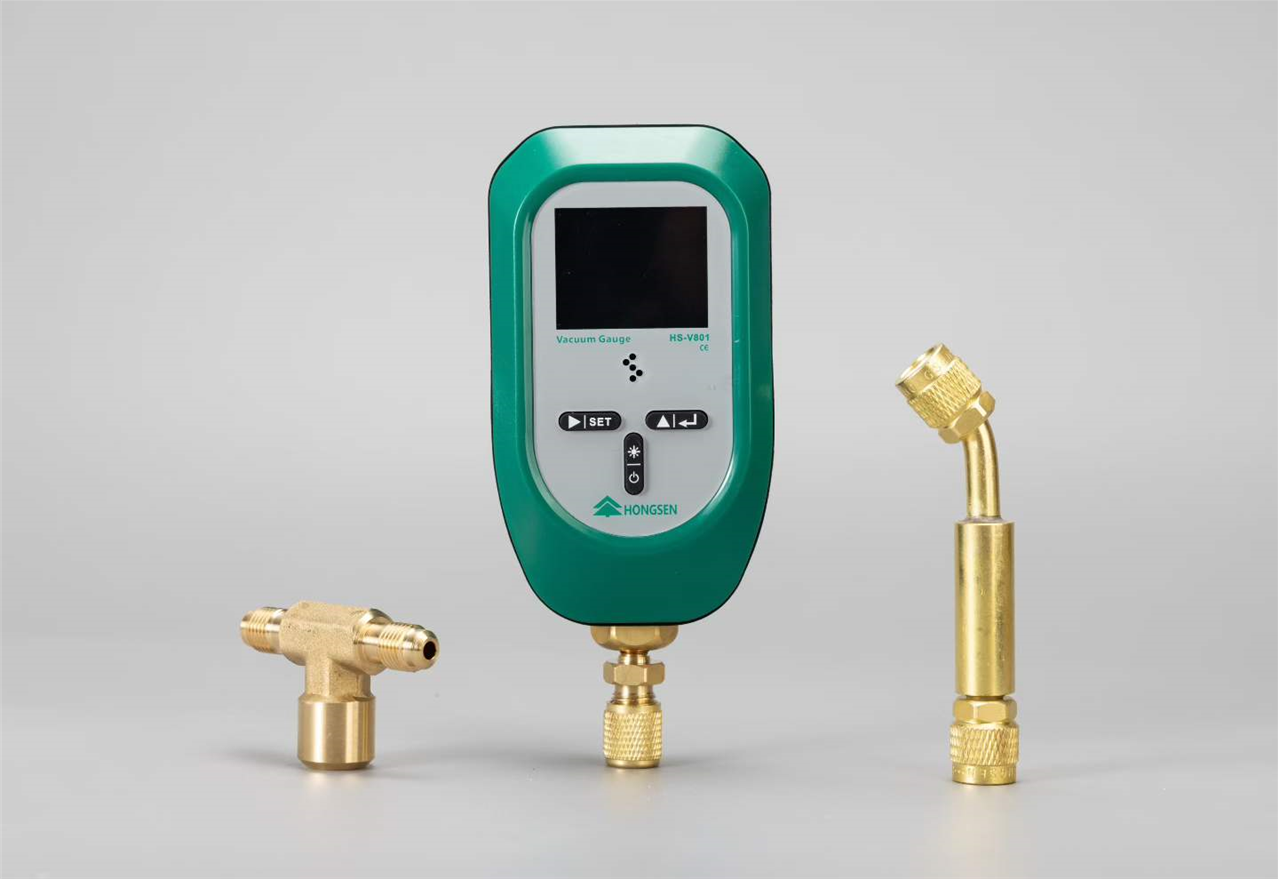
Nobody enjoys a setup process that feels like a second job. That’s why the integration starts with a simple drop-in approach: connect your existing tools once, and the handshake is done. There’s no forced migration, no rebuilding of your workflow from scratch. You keep the folder structures, the naming conventions, and the approval chains you already trust — the tool simply fits around them.
On the rare occasion something does need adjusting, the settings are plain-language, not buried in a maze of technical menus. Most teams are up and running in under an hour, and the only thing they notice is that their old tasks now take fewer clicks. It’s the kind of quiet compatibility that doesn’t ask for a training manual or a dedicated admin.
Built to Survive Your Lab or Factory Floor
We didn't design this for a desk job. The housing is milled from a single block of aluminum, then anodized to shrug off scuffs, chemical splashes, and the occasional tumble off a bench. Sealed ports and a gasketed display keep dust and moisture out, whether you're running samples in a walk-in cooler or troubleshooting a line at 3 a.m.
Every unit gets drop-tested onto concrete from waist height before it leaves the floor. Internal components are mounted on vibration-damping posts so constant rumble from nearby compressors or conveyor motors won't loosen connections. If a cable gets yanked, the reinforced anchor points take the stress instead of the board.
You shouldn't have to think about the instrument's survival. That's our job. But when someone knocks it off a cart or a hose sprays the wrong direction, it keeps logging, keeps reading, and keeps out of the repair queue.
Support That Actually Answers When You Call
When you pick up the phone, you shouldn't have to brace yourself for a maze of automated menus, long hold times, or scripted apologies that lead nowhere. Real support means a real person answers, listens to what's actually going wrong, and stays with you until it's fixed. No transferring you three times. No asking you to repeat your account number to every new voice. Just direct, competent help that treats your time like it matters.
We built our support team around a simple idea: if you're calling, something has already gone sideways. The last thing you need is a chipper robot or a rep who only knows how to read a troubleshooting flowchart. That's why our agents are trained to solve problems, not deflect them. They have the tools and authority to actually change things on your account, issue refunds, or escalate bugs to engineers without making you beg.
You'll notice the difference the first time you call. There's no queue music that loops for twenty minutes. No "your call is very important to us" recited by a machine. Instead, you get a person who introduces themselves by name, asks what's happening, and then works with you until it's resolved. If it can't be fixed in one call, you get a direct line back to the same person. That's not a premium perk. It's just how support should work.
Calibration Cycles That Don't Disrupt Work
Calibration schedules often get pushed into nights or weekends, but that's not the only way to keep instruments accurate without halting production. A growing number of teams use short, targeted checks during natural pauses—shift changes, lunch breaks, or the few minutes between batches—to verify drift on critical sensors. This shifts calibration from a big, disruptive event to a series of small, almost invisible touchpoints.
Instead of waiting for a fixed quarterly shutdown, technicians can carry handheld calibrators or use built-in remote diagnostics to spot-check devices while they're still online. For example, a temperature transmitter can be verified against a reference probe in under ten minutes, and if the deviation stays within tolerance, the next full calibration can be safely postponed. This approach keeps production flowing and catches issues earlier than batch-based schedules.
One food processing plant adopted this method for its pressure sensors. Maintenance staff perform quick loop checks during the 20-minute sanitation window between product runs, using a portable pressure module to confirm readings at two or three test points. The data is logged automatically, and only sensors showing signs of drift are pulled for full bench calibration. The result: no dedicated downtime for calibration, fewer unexpected failures, and a schedule that adapts to actual equipment condition rather than the calendar.
Hidden Costs Beyond the Sticker Price
The figure on the windshield rarely reflects what you'll actually pay over time. Dealerships often add documentation fees, destination charges, and market adjustments that can inflate the final bill by hundreds or even thousands of dollars. Before signing anything, ask for a line-by-line breakdown of every charge beyond the base price.
Ownership costs start climbing the moment you drive off the lot. Insurance premiums, registration renewals, and local taxes vary widely by region and vehicle type. A car that seems affordable on paper might carry higher premiums due to its repair history, safety ratings, or theft frequency in your area.
Maintenance and fuel efficiency are the quiet budget killers. A low sticker price can hide poor gas mileage, expensive replacement parts, or a shorter factory warranty that leaves you covering repairs sooner. Compare estimated annual running costs for the models you're considering, not just the upfront number.
FAQ
Not all digital gauges are built on the same principle. A Pirani sensor behaves differently from a piezo or a cold cathode in dirty processes. Ask the supplier to explain exactly which technology they use and how it performs when exposed to oil vapor, water vapor, or reactive gases. If their answer is vague, that's a red flag—sensor choice directly affects lifetime and accuracy.
Many suppliers advertise a wide measurement range but the accuracy can drop significantly at the extremes. Request a graph of accuracy versus pressure from the actual calibration data. This reveals whether the gauge truly covers your process range or if you'll end up buying two gauges to fill the gaps.
Digital doesn't mean universally compatible. Some gauges offer RS-485 with a proprietary command set, others provide EtherCAT or Profibus. Confirm the protocol, data rate, and whether the supplier provides a documented command list or driver examples. Integration time can balloon if the interface is not well supported.
Most thermal conductivity gauges are calibrated for nitrogen and require correction factors for other gases. A digital display may look precise but still report a wrong pressure if the gas type is not set correctly. Ask if the gauge has built-in gas selection or if you must apply external corrections. For ion gauges, gas type affects sensitivity too.
Some suppliers claim a one-year interval but that's for clean conditions. In reactive or dirty processes, calibration drift can happen much sooner. Ask whether calibration can be done on-site with a reference gauge or if the unit must be shipped back. Also get the cost and typical turnaround time—not just the sticker interval.
Digital gauges are essentially small computers. A bug fix or communication improvement may require a firmware update. Find out if updates are user-installable or if the gauge must go back to the factory. Also ask about the product's expected lifecycle and end-of-life policy. Replacing gauges every few years due to obsolescence is expensive.
A reputable supplier should be able to provide at least one reference where the gauge has run in comparable conditions—not just a clean lab. Speaking directly with that customer often uncovers real-world issues like condensation sensitivity, noise, or mounting constraints that no datasheet will mention.
Conclusion
When you're comparing digital vacuum gauge suppliers, don't stop at the accuracy figure on the datasheet. Ask how that precision holds up under real operating conditions—temperature swings, vibration, or different gas compositions can make a big difference. You'll also want to know how easily the gauge fits into your current setup: check connector types, analog or digital outputs, power requirements, and mounting dimensions before committing. A tiny mismatch here can lead to extra adapters, custom cabling, or hours of troubleshooting that no one budgeted for.
Beyond the spec sheet, look for build quality that matches your environment, whether that's a clean lab or a busy factory floor. A supplier's support matters just as much: when something goes wrong, will you reach a knowledgeable engineer or a voicemail box? Calibration is another sticking point—find out if it can be done in-house, how long turnaround takes, and whether it disrupts your processes. Finally, dig into hidden costs: calibration fees, replacement sensors, software updates, and shipping insurance can easily outweigh a lower sticker price. Asking these questions up front saves money and frustration later.
Contact Us
Contact Person: KOPASS HO
Email: [email protected]
Tel/WhatsApp: 8613606566112
Website: https://www.hongsenref.com/