

Custom Tactile Switches Manufacturer Delivers Unmatched Feedback and Durability for Your Next Project
2026-07-02
Have you ever been frustrated by a switch that feels mushy or fails after a few months? For your next project, you deserve tactile switches that provide crisp feedback and lasting performance. At KEJIAN ELECTRONICS, we specialize in custom solutions that meet your exact specifications, ensuring every press feels just right.
The Feel You Want: Fine-Tuning Tactile Response
Crafting a convincing tactile response goes beyond simply picking a vibration pattern. It’s about understanding the subtle interplay between actuator selection, signal design, and the physical properties of the device. The feel you want often emerges from exploring the full dynamic range of your haptic hardware—playing with amplitude envelopes, frequency sweeps, and even short bursts of silence to create texture and depth. Instead of settling for generic presets, consider how a soft, rounded click can feel more premium than a sharp buzz, or how a gentle pulse can convey confirmation more intuitively than a harsh alert. The key is to prototype iteratively, testing not just the sensation in isolation but how it complements the on-screen action or physical button press.
Tactile differentiation also lives in the moments you might overlook. Think about the crispness of a scroll wheel detent, the satisfying snap of a virtual toggle, or the subtle friction that signals a boundary. These micro-interactions benefit from finely tuned haptic layers—short, precise effects that avoid the “one motor fits all” trap. Borrowing techniques from audio design can help: shaping transients for impact, layering multiple actuator drives for richness, or even using haptic illusions to create sensations that outpace the hardware’s raw capability. The goal is to make the response feel less like an added effect and more like a natural extension of the material you’re touching.
Finally, don’t underestimate the role of context and expectation. A tactile response that feels delightful in a quiet setting can become irritating in a noisy one; a response that mirrors a physical button’s travel may need to adapt when that button is simulated on glass. Fine-tuning means calibrating not just for strength and duration, but for the entire user journey—adjusting feedback across different actions, screen orientations, or even hand positions. When done thoughtfully, these minute adjustments transform tactile feedback from a basic acknowledgement into an expressive, brand-defining language that users feel long after they’ve put the device down.
Materials That Outlast the Competition
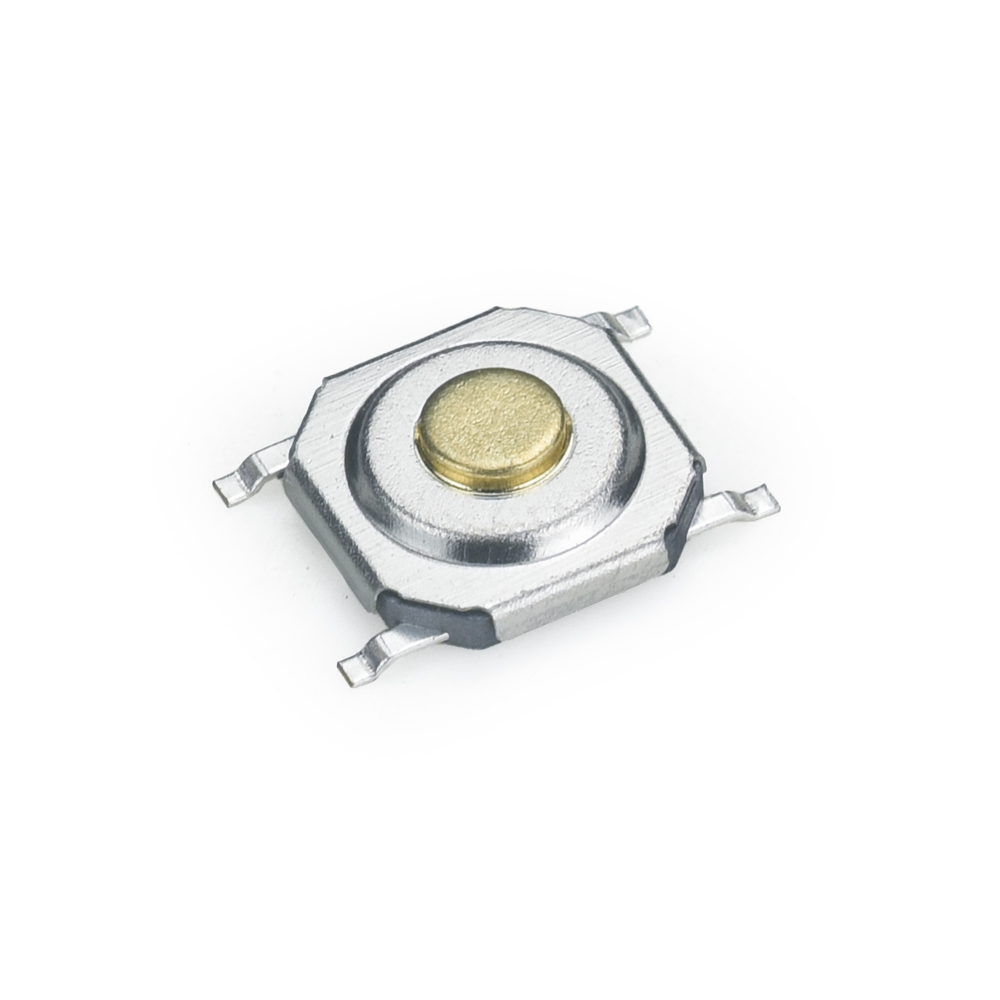
True durability isn’t just about surviving harsh conditions—it’s about maintaining performance when others falter. The materials we rely on undergo rigorous stress testing, from extreme temperatures to corrosive environments, ensuring they emerge unscathed. This isn’t about meeting industry standards; it’s about redefining them, pushing past brittle limitations into a realm of resilient innovation.
What often goes unnoticed is the meticulous selection of raw elements that form the backbone of these enduring materials. By harnessing molecular structures that resist wear and fatigue, we eliminate common failure points. The result? A lifespan that quietly outpaces conventional alternatives, saving both resources and frustration without sacrificing quality.
Consider the real-world impact: components that don’t just endure but thrive, reducing downtime and replacement cycles in ways that competitors can’t match. This longevity isn’t accidental—it’s engineered into every layer, from the initial alloy blend to the final surface treatment. When the environment throws its worst, these materials don’t just survive; they set a new benchmark.
From Sketch to Sample: How We Shape Your Switch
Every switch begins as a rough idea, often scribbled on a napkin or sketched during a late-night brainstorm. We take that initial vision and refine it into a detailed concept, considering not just aesthetics but the tactile experience—how it feels under your fingertips, the sound it makes, and the way it springs back to life after each press.
From there, our engineers collaborate closely with you, turning the design into a functional prototype using a blend of precision machining and hand assembly. We test materials, tweak stem geometry, and adjust spring weights until the switch matches your exact specifications. It’s a process of constant iteration, where even a fraction of a millimeter can redefine the entire typing feel.
Finally, the approved sample lands in your hands—a tangible result of a dialogue between your vision and our craftsmanship. It’s not just about delivering a switch; it’s about creating a component that feels uniquely yours, built from that very first sketch.
Real-World Testing for Real-World Performance
Lab benchmarks can only tell you so much about a device's capabilities. Numbers on a chart might look impressive, but they rarely reflect how a phone or laptop handles the chaos of daily life. That's why we focus on real-world testing—putting gadgets through the same scenarios you encounter every day. From juggling a dozen browser tabs while streaming music to navigating with GPS under a draining sun, we measure performance where it actually matters.
Our testing isn't about running sterile scripts in a controlled environment. We use these devices as our own, pushing them to their limits during commutes, meetings, and downtime. How quickly does that camera app launch when you need to capture a fleeting moment? Does the battery hold up when you're relying on it for turn-by-turn directions in an unfamiliar city? These are the moments that define real performance, and they can't be captured by a synthetic score.
We believe that a smooth experience trumps raw throughput every time. A device that stutters under pressure or overheats during a video call fails the test, no matter how powerful its silicon. By aligning our evaluation with the unpredictability of real life, we help you choose gear that won't let you down when you need it most. Because ultimately, performance isn't about winning a spec war—it's about making your day just a little easier.
Small Batch, Big Impact: Flexible Production Runs
In an era where consumer tastes shift overnight and inventory risks loom large, the ability to pivot production quickly has become a quiet superpower for manufacturers. Small batch runs aren't just about producing less—they're about staying nimble, testing new ideas without committing to massive stockpiles, and responding to real demand rather than forecasts. This approach lets companies sidestep the trap of overproduction, reduce waste, and keep cash flow healthier, all while offering customers a fresher, more curated experience.
Flexibility in production also unlocks deeper creativity and faster iteration. When you're not locked into twelve-month supply chains or enormous minimum order quantities, you can experiment with limited-edition designs, regional variations, or even just-in-time restocks that feel exclusive. It’s a mindset that values speed over scale, treating each small batch as a chance to learn and refine—whether that means adjusting fabrics, flavors, or features based on immediate feedback. The result is a tighter connection between what's made and what's actually wanted.
Of course, small batch production isn't without its hurdles—it often requires rethinking equipment setups, supplier relationships, and even the way teams communicate. But for those who get it right, the payoff is significant: greater resilience in unpredictable markets, less capital tied up in unsold goods, and a brand identity that feels dynamic rather than mass-produced. Ultimately, it’s about turning constraints into advantages, proving that sometimes the most impactful moves are the ones made in modest quantities.
Where Your Design Meets Our Expertise
We don’t just follow your brief—we step into it, inhabiting the nuance of your creative intent until your vision and our craft become one seamless effort. The materials, the joinery, the subtle play of light across a surface: all of it is shaped by an unspoken dialogue between your aesthetic and our hands-on fluency.
What emerges isn’t a compromise but a sharpening—a version of your idea that’s truer because it’s built, not just imagined. Every texture, every proportion carries a quiet confidence that comes from knowing the “how” is as refined as the “what.”
You bring the spark; we provide the alchemy. No rigid formulas, no dull translations. Just a collaboration that elbows past the ordinary and lands somewhere undeniably your own yet elevated by a fluency you can feel but never have to spell out.
FAQ
Tactile switches provide a noticeable physical bump during actuation, giving you clear confirmation that input has been registered without relying on sound alone.
Absolutely. We adjust dome geometry, material thickness, and contact design to achieve precise force curves and travel distances, from ultra-light touches to firm, deliberate presses.
Sealed housings, gold-plated contacts, and robust stainless steel domes protect against dust, moisture, and temperature extremes, maintaining consistent performance through millions of cycles.
Stem shape, button color, LED integration, mounting style, and even haptic profiling can be engineered to match the look, feel, and space constraints of your device.
In high-stakes settings, operators rely on uniform tactile response to avoid double presses or missed inputs, reducing fatigue and error rates over extended use.
Most design iterations are delivered within two weeks, with accelerated timelines available for urgent development phases—fully functional samples, not just 3D-printed mockups.
Yes, we maintain flexible manufacturing cells that accommodate runs as small as a few hundred units, allowing startups and labs to iterate without committing to mass production quantities.
Every batch undergoes force-displacement curve testing, contact resistance measurement, and visual inspection under magnification, with certificates of conformance provided on request.
Conclusion
Finding the perfect tactile switch for your project goes beyond catalog specs — it's about crafting a component that feels right under the finger and holds up under daily abuse. Our process starts with an in-depth look at how you want the switch to respond. From soft, cushioned presses to sharp, clicky feedback, we fine-tune the travel distance, actuation force, and snap point until the sensation is exactly what you need. Behind that feel is a choice of materials selected for resilience rather than cost. We draw from a range of contact platings, high-cycle spring alloys, and reinforced housing polymers that shrug off moisture, dust, and millions of cycles. Before any design reaches your hands, it goes through rapid prototyping where CAD models become physical samples you can test immediately. Every prototype is then pushed through real-world simulations — repeated actuations, temperature swings, vibration — so you know the performance isn’t just theoretical.
But what really sets our service apart is the flexibility to meet you where you are. Whether you're refining a boutique gadget in low volume or scaling up, we adjust production to match your demands, so you’re never stuck with excess inventory or short supply. Our engineers work side by side with your team from sketch to finished switch, infusing your vision with decades of manufacturing know-how. The result is a tactile switch that doesn’t just meet a datasheet — it delivers a distinct, reliable interaction that makes your product memorable.
Contact Us
Contact Person: Anna lin
Email: [email protected]
Tel/WhatsApp: +86 13567768885
Website: https://www.kjele.com/