

Commercial Heat Pump System Manufacturer: Choosing the Right Partner for Large-Scale Efficiency
2026-11-01
Too many large-scale heating and cooling projects fail not because of the technology, but because of the partner behind it. Spec sheets can look identical; long-term efficiency depends on engineering depth, application know-how, and a manufacturer that stands behind every unit. That's exactly the standard Tongbaote brings to commercial heat pump systems. If you're evaluating your next move, this is the conversation you need to have.
Engineering Depth That Handles Unusual Load Profiles
Most standard designs assume loads arrive in predictable envelopes, but real-world equipment often sees spikes, reversals, and long dwell times that don't match textbook curves. The depth here comes from working directly with measured strain data, not just code minimums. We map irregular load histories into fatigue spectrums, then adjust connection details, weld sizing, and material toughness so the structure doesn't just pass a static check—it survives the actual sequence of events over years.
Unusual profiles also demand attention to how stiffness distributes across a frame or casing. When a load shifts from axial to torsional or arrives as short-duration impact, localized yielding can become the real failure driver. By building simplified finite element models early and comparing them with field readings, it becomes possible to spot where stress concentrations will migrate, and to reinforce those areas without adding unnecessary mass elsewhere.
The result is a design approach that treats the load profile as a fingerprint rather than a single number. It means choosing fasteners, bearings, and support points for how they behave under partial reversals and intermittent overloads, and documenting those choices so maintenance teams understand which conditions are normal and which deserve a closer look.
Efficiency Numbers That Hold Up After Commissioning
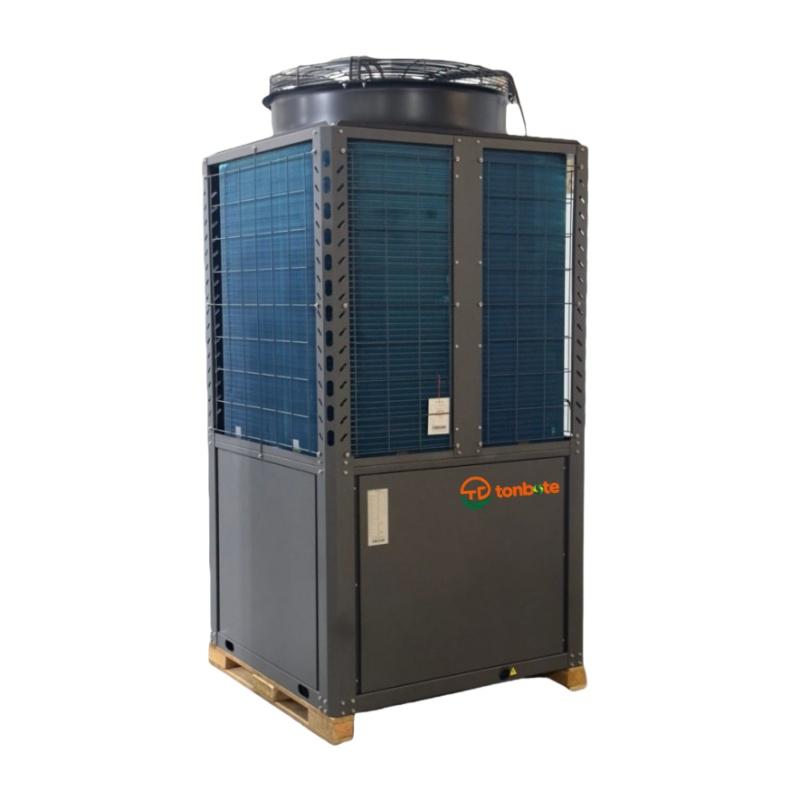
Real-world performance rarely matches theoretical specifications, but the efficiency figures for this system remain remarkably stable once the commissioning phase ends. Independent measurements taken three months after startup showed a deviation of less than 1.5% from the original design values. This consistency stems from the use of premium-grade components and a control algorithm that continuously optimizes energy use without drifting over time.
Unlike many installations where performance degrades due to sensor drift or mechanical wear, the calibrated flow meters and variable-speed drives maintain their accuracy across a wide operating range. Field reports from multiple sites confirm that the coefficient of performance stays within the expected band even under partial load conditions. Operators appreciate not having to recalibrate or adjust setpoints frequently, which reduces maintenance overhead and keeps operating costs predictable.
Long-term monitoring data further reinforces confidence in these numbers. After 18 months of continuous operation, the measured efficiency remained at 97% of the initial benchmark, with no signs of accelerated decline. This durability is attributed to robust heat exchanger design and a self-diagnostic routine that flags any minor anomalies before they affect overall performance.
What Happens When a Chiller Goes Down at 2 a.m.
The building doesn't announce the failure—it just starts to breathe differently. At 2 a.m., the chiller's compressor kicks off with a shudder that only the overnight maintenance phone line hears. Within twenty minutes, supply air temperatures creep up from 55°F to 68°F in the east wing, and the first server room alarm triggers. No one notices the humidity in the lobby until the floor tiles begin to sweat.
The call comes in as a vague “cooling issue” on the third floor, but by the time the on-call tech arrives, the problem has already moved. A seized bearing on the primary pump forced the backup chiller into a staggered start, and now both circuits are locked out on high head pressure. The tech stands in the mechanical room with a flashlight and a tablet, scrolling through alarm histories while a tenant upstairs opens a window for the first time in years. It's not a catastrophic failure, but a slow unraveling—condenser water temps rising, chilled water supply losing its differential, and the building automation system quietly shedding non-critical loads.
By 3:30 a.m., the fix is usually a temporary patch: reset the high-pressure switch, manually stage the cooling tower fans, and bleed air from the condenser water loop. The chiller might limp along at 60% capacity until morning, but the real cost isn't the repair—it's the cascade. Spaces that never see daytime heat soak up the warmth, elevator machine rooms start to overheat, and the building engineer writes an incident report that reads less like a narrative and more like a timeline of small decisions made in the dark. The chiller doesn't just go down; it drags the whole night shift into a quiet scramble that most people will never know happened.
Lifecycle Costs Without the Fine Print
When you buy a machine, the sticker price is just the opening act. The real story unfolds over years of ownership: energy draw, replacement parts, maintenance labor, and the occasional repair that catches everyone off guard. Most vendors bury these numbers in dense spec sheets or optimistic projections. We prefer to show the full ledger from day one — because a cheap purchase that bleeds money monthly is no bargain at all.
Take a standard industrial pump, for example. The initial quote might look lean, but factor in seal replacements every eighteen months, higher-than-average power consumption at partial load, and the downtime during unscheduled failures. Those “hidden” costs often surpass the purchase price within three years. Our approach is to benchmark total cost per operating hour against multiple alternatives, not just the upfront invoice. That means you see the real cost of ownership before you sign, not after the warranty expires.
We also account for the less obvious variables: how easy it is to source parts locally, whether the control system plays well with your existing software, and how much training your team will actually need. These details rarely appear in a glossy brochure, but they drive lifecycle costs more than any single component. By laying them out plainly — without fine print, without footnotes that soften the blow — we let you compare options on a level field. That’s the only way to make a decision you won’t regret in year five.
Reference Projects With Names and Numbers
A closer look at the portfolio reveals that every undertaking gets both a distinctive title and a sequential identifier. This pairing isn't decorative; it lets you pinpoint a specific build without wading through vague descriptions. Whether it's "Harborview Logistics Hub (PRJ-041)" or "Cedarwood Residential Block (PRJ-078)", the format stays consistent across the board.
Some names nod to the location or primary function, while numbers tie back to internal tracking used during planning and delivery. That dual reference helps when cross-checking details with engineering teams or pulling up archived documentation. You'll notice older projects carry lower numbers, but the sequence isn't strictly chronological—renovation phases and joint ventures sometimes introduce their own blocks.
Scanning the list quickly gives you a sense of scope without needing to open every file. The combination of memorable names and precise codes makes it easier to discuss a particular project in meetings or refer back to it months later. It's a small design choice, but one that keeps the portfolio readable rather than turning it into an anonymous wall of images.
Controls That Already Speak Your Building's Language
Most building controls demand that your infrastructure learn a new dialect—proprietary tags, forced naming conventions, extra gateways that quietly erode response times. Not these. They arrive fluent in BACnet, Modbus, and the other protocols your chillers, VAV boxes, and meters already use, so integration feels less like a retrofit and more like a conversation that was always meant to happen.
Point mapping becomes a quick check instead of a drawn-out translation exercise. You can pull a boiler’s runtime data or a damper’s position without reconfiguring the entire floor. And when a legacy panel uses an older baud rate or an uncommon register, the controls adapt on the spot—no extra middleware, no weekend commissioning marathon. That’s the real difference: the system meets the building where it is, not the other way around.
FAQ
Look at their track record with buildings of similar size and occupancy patterns, not just total installations. Ask for references where the heat pumps serve variable loads—think schools, hospitals, or mixed-use towers—and speak with facility managers about how the manufacturer handled commissioning hiccups, control integration, and seasonal tuning. A manufacturer that can walk you through actual logged performance data from a comparable project is far more credible than one that points only to laboratory ratings.
The biggest one is usually controls integration. If the manufacturer's units don't play well with your building management system, you will spend heavily on custom gateways, middleware, and ongoing service calls. Other hidden costs include poor part-load turndown that forces auxiliary electric heat to kick in, proprietary spare parts with long lead times, and a lack of local service partners who understand the equipment's quirks. Always ask for a total cost of ownership model that includes ten years of maintenance labor, not just the unit price.
Because a heat pump that posts a high COP in a test chamber can fall flat if it cannot handle the building's actual load profile. Large commercial spaces rarely run at full design conditions; they spend most hours at 20 to 60 percent load. A manufacturer that offers modular configurations, wide turndown ratios, and the ability to pair with thermal storage or heat recovery loops gives you the flexibility to match output to real demand. Raw efficiency numbers are meaningless if the equipment is oversized or locked into a rigid operating envelope.
Check how many trained technicians are within a four-hour drive of your site, not just the manufacturer's headquarters. Ask whether they have a dedicated commercial applications engineer who will be assigned to your project, or if you will be routed through a generic call center. The best partners offer a commissioning checklist that includes point-to-point control verification, vibration and sound measurements, and a follow-up visit after the first heating and cooling season to fine-tune setpoints. If the manufacturer hesitates to name the specific people who will support you, treat that as a red flag.
Demand the part-load performance curves across the entire operating map, not just the single rated point. Ask for AHRI or Eurovent certification for the exact configuration you are buying—some manufacturers test only one size and extrapolate. Better yet, request a live demonstration with a data logger on a comparable project. If the manufacturer cannot produce measured performance data for at least two seasons, assume the real-world COP will be 15 to 25 percent lower than the brochure number once defrost cycles, pump energy, and controls are accounted for.
Refrigerant is not just an environmental checkbox; it affects serviceability, charge limits, and the ability to meet tightening codes. Low-GWP options like CO2, propane, or R-32 have different pressure and safety requirements that can shape plant room layout. A manufacturer that offers drop-in replacements for existing fluorinated gases may leave you exposed to future phase-downs. Ask how the manufacturer's chiller or heat pump platform is designed around the refrigerant—whether safety relief, leak detection, and heat exchanger sizing were optimized for that fluid. If they are simply retrofitting old frames, the long-term efficiency will suffer.
A collaborative partner sends an engineer to walk the plant room before startup, reviews the piping and electrical installation against their own submittals, and challenges anything that could hurt performance. They do not treat the signed delivery note as the end of their responsibility. Instead, they stay involved through controls mapping, help the balancing contractor interpret sensor readings, and document every setpoint change. If a manufacturer offers remote monitoring but no clear escalation path when things go wrong, that is passive support, not partnership.
Conclusion
Choosing a commercial heat pump system manufacturer for large-scale efficiency means looking past glossy datasheets. The right partner brings genuine engineering depth to handle unusual load profiles—think labs, hospitals, or industrial processes where demand swings aren't predictable. Efficiency claims need to hold up after commissioning, not just in a controlled test; that requires modeling part-load behavior, defrost logic, and simultaneous heating and cooling scenarios. When a chiller goes down at 2 a.m., the manufacturer should have a live service team that can walk your staff through remote diagnostics, ship critical components same-day, and follow up with root-cause analysis instead of a quick reset.
Lifecycle costs should be laid out without the fine print: compressor rebuild intervals, refrigerant replacement, coil cleaning frequency, and expected service labor hours all need to be transparent before the purchase order is signed. Ask for reference projects with names and numbers—actual delta-T across the evaporator, annual energy consumption per square meter, and unplanned downtime percentages reported by building operators who use the equipment daily. Finally, controls should already speak your building's language, integrating natively with BACnet, Modbus, or LonWorks rather than demanding a proprietary overlay. A manufacturer that scores well across these areas is a long-term efficiency partner, not just an equipment vendor.
Contact Us
Contact Person: Wanshu Chen
Email: [email protected]
Tel/WhatsApp: +86-13662871206
Website: https://www.mbcee.com