

Chinese Twin Screw Extruder Innovation: Boosting Efficiency in Plastics Manufacturing
2026-08-06
In the fast-paced world of plastics manufacturing, every second and gram counts. Yet, even with advanced machinery, many producers struggle with inconsistent output and high energy consumption. Enter a new era of twin screw extrusion, where Chinese engineering is rewriting the rulebook. At the forefront is MINGDE, a brand that’s turning bold ideas into powerful, efficiency-boosting solutions. What makes their approach so different? Read on to discover how innovation is reshaping production lines—and bottom lines.
Redefining Plastics Processing with Advanced Twin Screw Technology
The shift toward high-performance twin screw extruders is quietly reshaping how manufacturers approach compounding, devolatilization, and reactive extrusion. Unlike conventional single screw systems, these intermeshing, co-rotating designs offer unprecedented control over residence time distribution and shear history. By strategically configuring screw elements—conveying, kneading, and mixing blocks—engineers can fine-tune material behavior throughout the process. This means faster color changes, gentler handling of shear-sensitive additives, and the ability to process higher loadings of fillers or fibers without sacrificing throughput. The real breakthrough lies in the ability to collapse multiple traditional steps into a single continuous operation, slashing energy use and floor space requirements.
Beyond simple blending, modern twin screw technology unlocks new material possibilities. Enhanced dispersion and distribution mixing enable nanocomposite formulations that were once too difficult to produce consistently. The modular barrel design, often with segmented temperature control zones, allows for precise heat management during processing of heat-sensitive biopolymers or thermally challenging engineering resins. Side feeders and liquid injection points can be placed precisely where needed, preserving volatile components or introducing reactive agents at the optimal point in the sequence. The result is a platform that does more than melt and pump—it becomes a controlled chemical reactor, capable of grafting, coupling, or polymer modification on the fly.
What sets today's advanced twin screw systems apart is the integration of real-time process monitoring and predictive wear prevention. Sensors tracking melt temperature, pressure, and motor torque feed data into algorithms that adjust parameters autonomously, maintaining tight tolerances even during long runs with recycled or variable feedstocks. Barrel and screw materials have evolved too, with powder metallurgy coatings that extend service life when running abrasive compounds like glass-filled nylons. This combination of smart controls and robust metallurgy translates to higher uptime and consistent quality, allowing processors to step confidently into new markets—whether it is high-temperature nylons for automotive, biodegradable packaging films, or medical-grade masterbatches—without the typical pilot-plant headaches.
The Mechanics Behind China’s Extrusion Breakthroughs
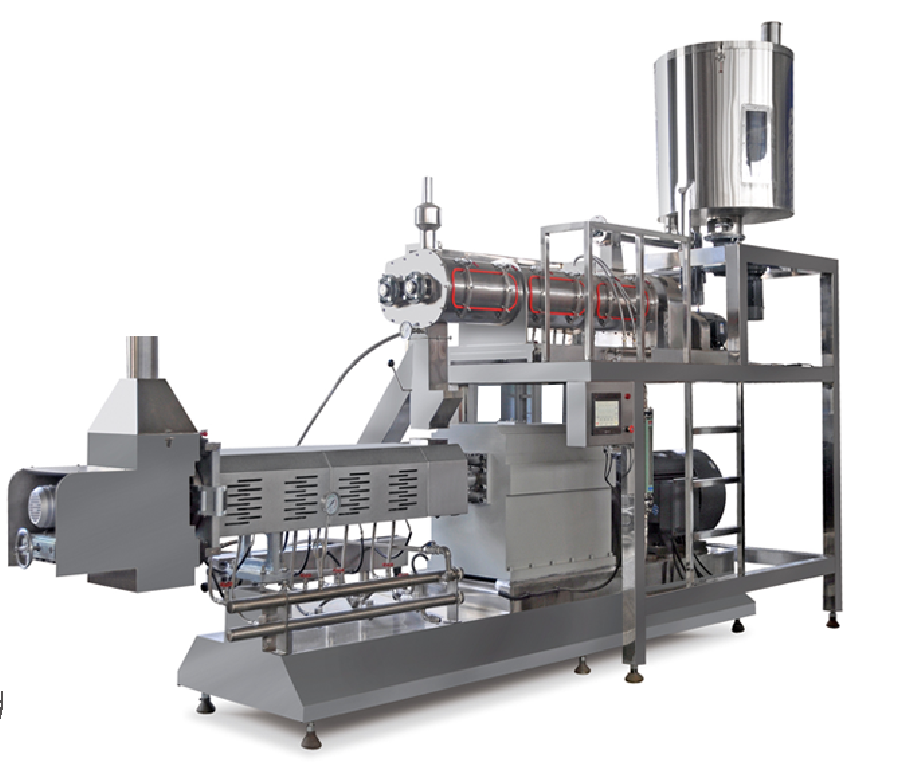
China’s recent leaps in extrusion technology rest heavily on advances in rheology control and die design. By fine-tuning melt flow behavior through proprietary screw geometries and barrel temperature profiling, manufacturers achieve unprecedented material homogeneity even at high throughputs. This precision eliminates common defects like shark-skinning and melt fracture, allowing for tighter tolerances than traditionally possible with commodity polymers.
Another distinguishing factor lies in the integration of real-time adaptive feedback systems. Chinese extrusion lines now commonly employ laser micrometer arrays and hyperspectral sensors that monitor wall thickness and molecular orientation on the fly. The data feeds into self-optimizing algorithms that adjust haul-off speeds and cooling gradients without human intervention, essentially learning from each millimeter of extrudate to stabilize the process against subtle shifts in ambient conditions or raw material batch variations.
Equally critical is the metallurgical sophistication of tooling surfaces. Nanostructured ceramic coatings, developed originally for aerospace turbines, are now applied to extrusion screws and barrels. These coatings reduce friction to near-ideal levels while resisting corrosive outgassing from recycled feedstocks—a key enabler for China’s push toward circular manufacturing. Combined, these mechanical, sensory, and material innovations mark a departure from incremental improvement, creating extrusion systems that are both faster and more forgiving.
How Innovative Screw Designs Cut Energy Use in Polymer Production
The polymer industry has long grappled with the challenge of energy-intensive extrusion processes, where traditional screw geometries often demand excessive motor power to overcome viscous resistance. Recent advancements in screw design are changing this landscape by introducing asymmetric flight geometries that disrupt the melt flow in ways that significantly reduce shear heating. Instead of simply forcing material forward with brute torque, these designs create a rolling, distributive mixing action that naturally lowers the melt temperature, cutting overall energy consumption by as much as 15–20% without sacrificing throughput.
A prime example is the adoption of barrier screws with variable-depth channels that continuously expose polymer to fresh, cooler surfaces, preventing the formation of stagnant hot spots. By precisely balancing the solids conveying and melt accumulation zones, modern designs avoid the common pitfall of over-plastification, where wasted energy turns into unwanted thermal degradation. Some manufacturers have also integrated energy recovery features, such as reverse-flight sections that recapture pressure energy and feed it back into the melting stage, further trimming the carbon footprint of the line.
Beyond the hardware itself, the real breakthrough lies in the marriage of computational fluid dynamics with empirical trials, allowing engineers to model every nuance of melt behavior and tailor screw profiles to specific polymers. This data-driven customization means that a polypropylene processor can now run at lower barrel temperatures while maintaining melt quality, a shift that directly translates to both cost savings and a more sustainable operation. As energy regulations tighten, such innovative screw geometries are quickly becoming a cornerstone of eco-efficient polymer production.
From Lab to Production Line: Scaling Efficiency Gains
Taking a process from the controlled chaos of a lab bench to the structured rhythm of a full production line is where the real test of an innovation lies. It’s not simply about making more units; it’s about redesigning every step so that efficiency isn’t just a lucky break but a repeatable outcome. Early on, we learned that what works beautifully in a flask can become a bottleneck when you’re dealing with thousand-liter reactors. The key was to stop treating the scale-up as a linear progression and instead reimagine it as a fundamentally different beast—one that demands its own set of rules, instrumentation, and quality checks from the ground up.
One of the biggest shifts came from embedding real-time data capture directly into the manufacturing workflow. In the lab, an experiment might run for hours with only a few data points logged by hand. On the production floor, that’s a recipe for waste. We started installing cheap, rugged sensors in places nobody thought to monitor—vibration patterns in mixers, subtle temperature drifts across heat exchangers, even the acoustic signature of a pump. By feeding that constant stream into a control system that could make micro-adjustments on the fly, we turned a batch process that used to lose 8% of its output to inconsistency into one that hovers above 99% yield. It’s a quiet kind of revolution: efficiency gains that don’t come from a single breakthrough but from hundreds of tiny, data-driven nudges that keep the line humming.
Scaling efficiency also meant learning when to let go of the lab’s perfectionism and embrace practical trade-offs. A purification step that gave us 99.9% purity in pilot runs might take 12 hours and require exotic solvents. On the production line, we found that settling for 99.5% and switching to a faster, greener method cut cycle time by 40% and dropped costs by a third—without affecting product performance. That kind of call requires trusting the cross-talk between R&D and operations teams, not just handing off a recipe. Over time, we built a feedback loop where production data shapes lab experiments as much as the other way around, creating a virtuous circle that keeps squeezing out more value long after the first scale-up is complete.
Material Versatility: Handling Complex Compounds with Ease
Few things stall a project faster than discovering your equipment can’t handle the material you need to process. That’s why our system was built from the ground up to accommodate an unusually wide spectrum of chemical and physical profiles—from abrasive slurries and high-viscosity pastes to heat-sensitive biological fluids and corrosive solvents. Instead of forcing you to adapt your workflow to the machine, the hardware adapts to your material, maintaining precise control over temperature, shear rate, and residence time no matter how challenging the compound.
One overlooked advantage is how seamlessly the platform transitions between batch and continuous processing without needing extensive reconfiguration. You can go from emulsifying a delicate vaccine adjuvant to compounding a silica-filled resin in the same day, often with just a quick change of the modular mixing head. The internal coatings and seal materials are selected based on your specific chemical environment, not the other way around, which means fewer compatibility headaches and longer uptime between maintenance cycles.
In practice, this versatility translates into real lab-to-production continuity. Formulations developed on a benchtop unit can be scaled to pilot and full-production volumes with virtually identical shear profiles, removing one of the most common sources of process drift. Operators no longer have to become material-handling experts for a dozen different substances; they simply rely on the system to deliver repeatable results, whether they are working with explosive powders, shear-thinning gels, or anything in between.
Smart Controls and Real-Time Optimization in Modern Extruders
Gone are the days when extrusion relied solely on fixed setpoints and reactive adjustments. Modern extruders now leverage a dense network of sensors—capturing melt temperature, pressure, viscosity, and even inline spectroscopy data—to paint a continuous, high-resolution picture of what’s happening inside the barrel. This sensory stream feeds into advanced control algorithms that don’t just hold a parameter steady but actively shape the process dynamics in real time. Instead of waiting for a deviation to trigger an alarm, the system interprets subtle shifts in material behavior or ambient conditions and makes micro-adjustments to screw speed, barrel heating zones, or feed rate before quality drifts. The result is a process that self-corrects with a precision that manual oversight simply cannot match.
Beneath the hood, these systems often combine model-based predictive control with machine learning layers trained on historical run data. The predictive model simulates how melt flow and thermal profiles will evolve over the next few seconds, enabling the controller to optimize multiple objectives at once: throughput consistency, energy consumption, and dimensional tolerance of the extrudate. Over time, the machine learning component refines its understanding of each material grade’s peculiarities—how a particular regrind blend slightly changes melt elasticity, for instance—and folds that insight into the live control loop. This isn’t automation for automation’s sake; it’s a deliberate narrowing of the gap between what the material needs and what the machine delivers, lifting the entire operation closer to its physical limits without crossing into scrap territory.
What sets this apart is the shift from recipe-bound processing to context-aware operation. Instead of rigid “run this product with these twelve settings,” the extruder reads the real-time fingerprint of the batch and adapts. If moisture content drifts higher in the feedstock, the degassing and temperature profile adjust dynamically rather than relying on an operator to notice and intervene. Similarly, downstream, the control architecture can coordinate with the pelletizer, gauge control, and even the packaging line to maintain harmony. The optimization horizon extends beyond a single screw; it encompasses the entire line, trading off between immediate throughput and total energy per kilogram output. This holistic view turns the extruder into a responsive, learning system that pushes efficiency and quality in tandem, redefining what “steady state” means in a production environment.
FAQ
It integrates a novel screw geometry that optimizes melt mixing and reduces shear heating, allowing plastics to be processed faster without thermal degradation. This directly boosts throughput while maintaining product quality.
The design features a refined barrel heating and cooling system paired with a high-torque direct-drive motor that minimizes energy loss. Processors report up to 20% reduction in energy consumption compared to conventional models, especially during high-volume production runs.
Yes, the advanced screw configuration and venting technology are specifically adapted to manage volatile contaminants and inconsistent melt flow often found in recycled and bio-based materials, ensuring stable output and reducing material waste.
Beyond a lower upfront cost, local manufacturers now offer faster customizations, readily available spare parts, and on-site service support. The latest models also achieve output capacities and mixing performance that rival premium international brands.
An AI-enhanced process control unit continuously monitors parameters like melt pressure and temperature, automatically adjusting screw speed and feeder rates in real time. This closed-loop system slashes product variation and startup scrap.
It excels in masterbatch production, engineering plastics compounding, and PVC processing. Users note significantly better dispersion of fillers and additives, resulting in superior color consistency and mechanical properties.
Many Chinese manufacturers offer modular upgrade kits that include the new screw elements and enhanced barrel sections, making it possible to boost an older line’s output by 30% or more without investing in a completely new machine.
Adoption is surging both in China and emerging markets across Southeast Asia and Africa. Buyers are drawn to the combination of lower total cost of ownership, reliable performance data, and shorter delivery lead times compared to European alternatives.
Conclusion
China's twin screw extruder sector has undergone a quiet revolution, moving far beyond incremental upgrades to fundamentally reshape how polymers are processed. The latest machines integrate deeply optimized screw geometries—often developed through iterative testing and computational simulation—that precisely control shear, mixing, and conveying actions. This attention to mechanical detail allows processors to handle an unusually broad spectrum of materials, from heat-sensitive bioplastics to highly filled compounds, without sacrificing throughput or risking degradation. What sets these designs apart is their ability to maintain tight temperature control and distribute fillers uniformly, reducing reject rates even when switching between formulations. The underlying breakthroughs in metallurgy and machining tolerances also mean these extruders maintain consistent performance over extended runs, lowering maintenance intervals and boosting overall equipment effectiveness.
Efficiency gains are not limited to the screws themselves; smart control systems now adjust barrel temperatures, screw speeds, and feed rates in real time based on melt pressure and viscosity feedback. This closed-loop optimization slashes energy consumption significantly—some installations report double-digit percentage drops after retrofitting with Chinese-engineered drives and control algorithms. Scaling from lab-scale trials to full production lines has also become more predictable thanks to modular barrel and screw configurations that preserve mixing intensity across size transitions. Plant managers are finding that these extruders pair naturally with lean manufacturing practices, as the combination of rapid changeover, material versatility, and predictive diagnostics cuts idle time and material waste. The result is a redefined economics for plastics manufacturing where a single machine line can agilely produce diverse, high-margin products without the historical trade-offs between speed, quality, and energy use.
Contact Us
Contact Person: LILY SUN
Email: [email protected]
Tel/WhatsApp: 0086-13969103791
Website: https://www.snackfoodmachinery.com/