

China's Oil-Free Air Compressor Innovations: Efficiency and Sustainability
2026-08-08
In the race toward cleaner, more efficient industrial operations, China’s latest oil-free air compressor breakthroughs are redefining what’s possible. These innovations slash energy consumption and eliminate oil contamination risks, aligning perfectly with global sustainability goals. But what’s driving this surge in engineering excellence? From advanced rotor profiles to intelligent control systems, the leap forward is as much about precision as it is about eco-consciousness. At the heart of this transformation, companies like Seize Air are pioneering solutions that marry high performance with environmental responsibility. Whether you’re upgrading a manufacturing line or designing a green facility, understanding these cutting-edge developments is key to staying ahead. Let’s dive into the trends, technologies, and real-world impacts reshaping the compressed air landscape.
Redefining Compressor Efficiency with Oil-Free Technology
Oil-free compressor technology is changing the game for industries that demand clean, uninterrupted performance. By eliminating the need for lubricating oil in the compression chamber, these systems sidestep the common pitfalls of traditional designs—oil carryover, filter changes, and contamination risks. The result is a simpler, more reliable core that delivers consistent air or gas quality without the maintenance headaches that eat into uptime. It’s a shift that prioritizes process integrity from the start, not as an afterthought.
When you strip away the oil circuit, you unlock efficiency gains that go beyond just cleaner output. Friction reduction becomes a design challenge solved by precision engineering, advanced coatings, and innovative cooling methods. This pushes compressors to operate at tighter tolerances and lower internal losses, translating directly into better energy performance. For facilities tracking every kilowatt, the absence of oil-related drag and gradual degradation means the machine holds its efficiency curve longer, cutting operational costs in ways that compound over years.
Adopting oil-free technology also reshapes how systems integrate into broader operations. Without oil vapor, downstream drying and filtration demands drop, shrinking the ancillary equipment footprint and its associated energy load. The design encourages more compact, modular layouts that fit into space-constrained plants or mobile setups without compromise. It’s not just about removing a consumable—it’s about rethinking the entire compressor lifecycle around cleanliness, durability, and smarter use of resources, making the technology a quiet workhorse in modern manufacturing and process environments.
Sustainability at the Core: China’s Green Manufacturing Shift
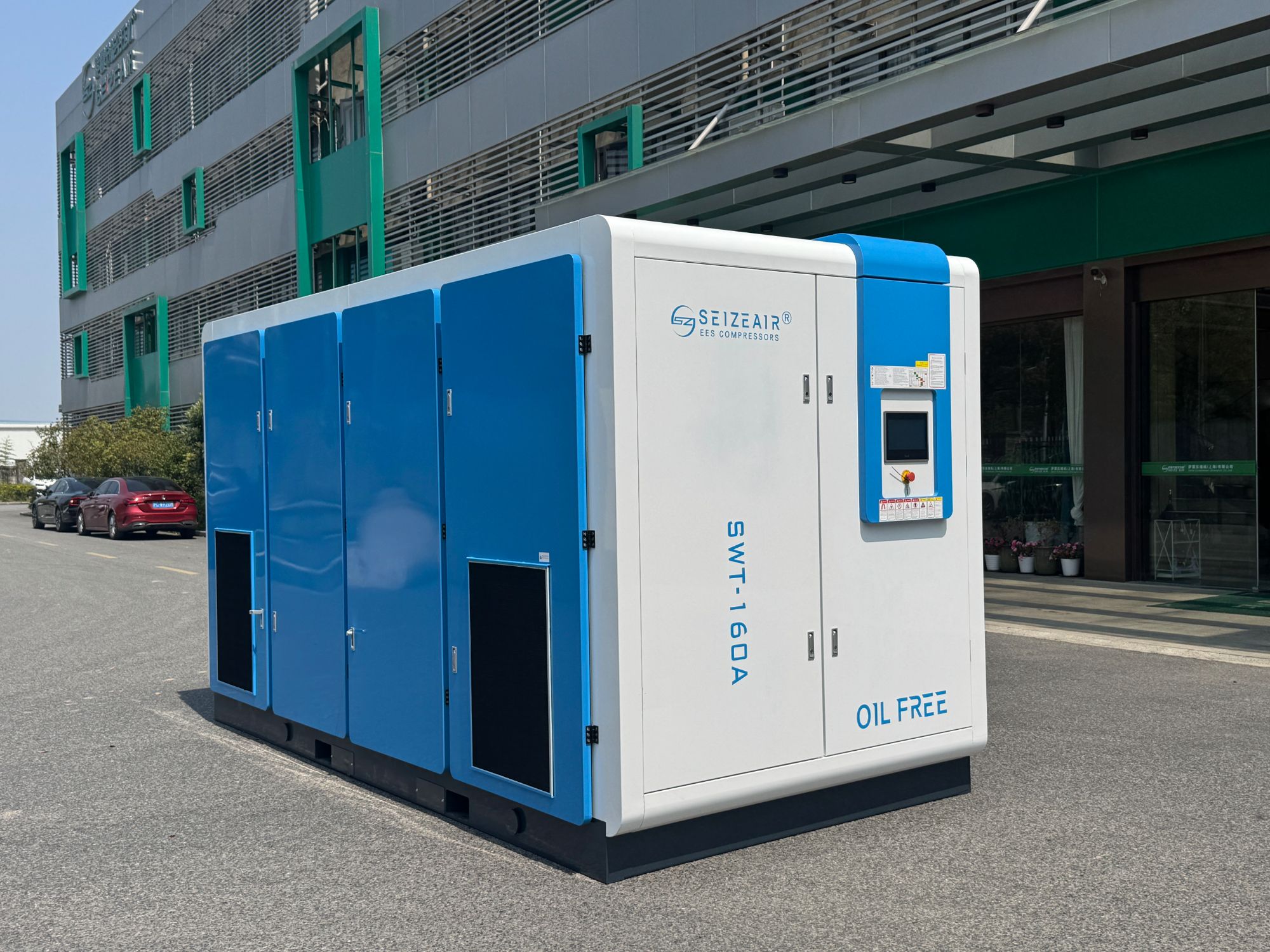
China's manufacturing sector is undergoing a profound transformation, with sustainability shifting from a peripheral concern to a central strategic pillar. Rather than treating environmental compliance as an afterthought, leading factories now embed green principles directly into production workflows. This means rethinking everything—from sourcing low-carbon materials and redesigning products for circular lifecycles to deploying smart energy management systems that cut waste in real time.
The push is not merely regulatory; forward-thinking manufacturers see eco-efficiency as a competitive edge. By slashing resource consumption and emissions, they lower operational costs while meeting the rising demand from global buyers for transparent, low-impact supply chains. In sectors like electronics and automotive, this shift is already visible: solar-powered assembly lines, zero-liquid-discharge plating shops, and closed-loop water systems are becoming industry benchmarks, not outliers.
What sets this green wave apart is its integration with digital tools. Sensors and analytics track energy, water, and material flows across entire plants, enabling predictive adjustments that minimize footprint without sacrificing output. The result is a manufacturing model where economic growth and environmental stewardship reinforce each other, redefining what it means to be a factory of the future.
Breaking Down the Mechanics: How Oil-Free Compressors Work
At the heart of an oil-free compressor lies a carefully engineered compression chamber where air is squeezed without a drop of lubricant. Instead of relying on oil to seal, cool, and reduce friction, these machines use advanced materials like PTFE or carbon-fiber composites for piston rings and cylinder linings. The result is a dry running system that leans on precision machining and specialized coatings to maintain tight clearances, allowing pistons or rotors to move efficiently while keeping air and lubricant completely separate.
In rotary screw models, the magic happens between two interlocking rotors that never actually touch. Timing gears keep them perfectly synchronized, eliminating metal-on-metal contact and the need for oil in the compression zone. Meanwhile, water or air-cooling jackets manage the heat generated during compression, helping the system stay within safe operating limits without the risk of oil carryover. This approach not only preserves air purity but also simplifies maintenance by cutting out oil changes and associated disposal hassles.
The final stage in many oil-free compressors is a multi-step cooling and moisture separation process. Since compressing air naturally raises its temperature and squeezes out humidity, these machines employ intercoolers, aftercoolers, and centrifugal separators to knock down both temperature and water content before the air reaches the outlet. This ensures that the compressed air is not only oil-free but also dry enough for sensitive downstream equipment, making these compressors a go-to for industries like food processing and pharmaceuticals where even trace contamination is off the table.
Industry Applications: From Automotive to Food Processing
The versatility of modern automation and material handling systems has led to their widespread adoption across a remarkable range of industries. In automotive manufacturing, robotic arms perform precision welding and assembly with speed and consistency that human workers simply cannot match. Meanwhile, the same core technologies are being tailored to the unique demands of food processing, where delicate handling, strict hygiene standards, and variable product shapes require a completely different approach. This cross-industry adaptability highlights how flexible automation has become, blurring the lines between sectors once thought to have little in common.
Consider the journey of a simple conveyor system: in an automotive plant, it might carry heavy engine blocks through a harsh, oily environment. But with the right modifications—stainless steel construction, washdown-ready components, and gentler belt materials—that same basic design can transport fresh produce or baked goods safely through a high-pressure sanitation cycle. Sensors and vision systems further refine the application, allowing a robot that once installed windshields to now sort ripe tomatoes by color and size at high speed. It’s not just about transferring hardware from one factory to another; it’s about reimagining the core principles for entirely different objectives.
This cross-pollination goes both ways. Innovations in food-grade robotics, such as grippers that mimic the soft touch of a human hand, are inspiring new solutions in electronics assembly where fragile components demand careful manipulation. Similarly, the traceability and data-tracking systems perfected in pharmaceutical and food production are now enhancing quality control in automotive supply chains. The result is a widening ecosystem where lessons learned in one sector can quickly spark improvements in another, pushing the boundaries of what automated systems can achieve.
China’s Competitive Edge in Oil-Free Compressor Production
China’s oil-free compressor sector has carved out a distinct advantage by fusing deep manufacturing expertise with relentless cost innovation. Unlike many global competitors that rely on legacy supply chains, Chinese producers have built vertically integrated operations that slash lead times and eliminate quality bottlenecks. This control over everything from precision rotors to advanced coatings lets them deliver machines that match the reliability of established brands while undercutting on price—often by 20 to 30 percent.
The real edge, however, lies in how these companies approach design. Rather than simply copying Western models, engineering teams have rethought core components to boost efficiency in high-dust, high-humidity environments common across Asia and Africa. They’ve pioneered hybrid cooling systems and proprietary sealing technologies that extend service intervals far beyond what standard oil-flooded units can achieve in harsh conditions. This isn’t just about making a cheaper product; it’s about making a smarter one for the markets that need it most.
Speed to market further sets Chinese manufacturers apart. While traditional compressor builders might take months to customize a solution, agile workshops in Jiangsu or Guangdong can prototype and deliver compact, fully packaged oil-free systems in weeks. This responsiveness has turned them into go-to partners for industries from food processing to electronics, where even a trace of oil contamination can ruin entire batches. The result is a quiet but decisive shift: more global buyers now see China not as a low-end supplier, but as the first stop for high-performance, application-specific oil-free compression.
The Future of Air Compression: Smart and Eco-Conscious Designs
Air compression technology is undergoing a quiet revolution, moving beyond brute force to intelligence and sustainability. Modern systems now incorporate advanced sensors and adaptive algorithms that continuously monitor demand, adjusting output in real time to avoid energy waste. This shift not only reduces operational costs but also extends equipment lifespan by preventing unnecessary wear.
Eco-conscious design is no longer an afterthought—it’s built into the core of next-generation compressors. Manufacturers are embracing materials with lower environmental footprints, while heat recovery systems capture and repurpose thermal energy that would otherwise dissipate unused. Variable speed drives and magnetic bearings minimize friction and energy loss, making it possible to achieve remarkable efficiency gains without sacrificing performance.
Looking ahead, connectivity will play a pivotal role. Remote monitoring and predictive maintenance, powered by the Industrial Internet of Things, allow operators to foresee issues before they cause downtime. Combined with the push toward oil-free compression for critical applications, the future promises air systems that are not only smarter and greener but also seamlessly integrated into broader sustainable manufacturing ecosystems.
FAQ
Chinese manufacturers have pioneered the use of advanced permanent magnet synchronous motors and innovative rotor profiles, reducing energy consumption by up to 30% compared to traditional designs. They've also introduced intelligent control systems that adjust output in real time, minimizing idle running and significantly lowering operational costs.
By eliminating oil contamination risks, they ensure cleaner air output, which is critical for industries like food processing and pharmaceuticals. Their higher energy efficiency directly reduces carbon emissions, and many models now incorporate eco-friendly materials and designs for easier recycling at end-of-life.
The integration of multi-stage compression with intercooling allows them to achieve isentropic efficiencies exceeding 70%, rivaling top international brands. Additionally, variable speed drive technology enables them to precisely match air demand, avoiding energy waste commonly seen in fixed-speed units.
Yes, Chinese companies have focused on modular designs and standardized components, which lower manufacturing costs and make maintenance simpler. Many units now offer quick ROI due to energy savings, often paying for themselves within two years even for small and medium-sized enterprises.
They use durable ceramic bearings and advanced sealing systems that withstand high temperatures and continuous operation without lubrication. Remote monitoring with IoT sensors predicts failures before they occur, ensuring uptime rates above 99% even in 24/7 manufacturing settings.
AI algorithms analyze usage patterns and ambient conditions to optimize motor speeds and cooling, reducing energy peaks. Machine learning also enables predictive maintenance, alerting operators to replace parts like filters only when necessary, which cuts service costs and extends component life.
Absolutely, they come with OPC UA and MQTT protocols natively supported, allowing seamless data exchange with factory MES and ERP systems. This facilitates real-time energy tracking and automatic adjustment based on production schedules, enhancing overall operational efficiency.
We're likely to see hydrogen compression capabilities for green energy applications, as well as further miniaturization for portable medical devices. Researchers are also exploring magnetic bearings to eliminate all physical contact, pushing maintenance intervals beyond 50,000 hours.
Conclusion
Oil-free air compressors are reshaping China's industrial landscape by merging efficiency with sustainability. The shift away from lubricated systems eliminates oil contamination, delivering cleaner air while cutting maintenance costs and energy consumption. At the heart of these machines lies a refined mechanical design—water-injected cooling and advanced rotor coatings prevent overheating without relying on oil, ensuring consistent performance even under demanding conditions. This technological leap aligns with China’s broader push toward green manufacturing, reducing carbon footprints and meeting stricter environmental regulations. Factories adopting these compressors report not just lower emissions, but also a noticeable drop in operating expenses, making the transition both an ecological and economic win.
Beyond the mechanics, the true impact surfaces in diverse industries—from automotive assembly lines to sensitive food and pharmaceutical processing, where air purity is non-negotiable. China’s manufacturers have carved a competitive edge by scaling production without compromising quality, driving down costs and making oil-free technology accessible worldwide. Meanwhile, the next generation of compressors integrates smart sensors and IoT connectivity, enabling predictive maintenance and real-time energy optimization. These innovations hint at a future where compressed air systems self-adjust to demand, slashing waste. By fusing eco-conscious design with intelligent control, China’s oil-free compressor industry is not just keeping pace—it’s setting the standard for a cleaner, smarter industrial era.
Contact Us
Contact Person: Mia
Email: [email protected]
Tel/WhatsApp: +86 19821985894
Website: https://www.seize-air.com