

China PP Cream Jar Essentials for Skincare Packaging Success
2026-09-02
Choosing the right packaging can make or break a skincare line—and for creams, the humble PP jar is often the unsung hero. Yet not all jars are created equal. From material durability to sealing performance, every detail matters. As brands seek reliable suppliers in China, Zhejiang Haitong Plastic Industry Technology Co., Ltd. stands out as a trusted partner in achieving packaging success.
Why Polypropylene Keeps Winning the Cream Jar Race
To understand why polypropylene keeps pulling ahead, you have to look at how it behaves on the factory floor. It flows easily into thin-walled jars without warping, holds tight tolerances, and fills multi-cavity molds at speeds that would make other resins sweat. That translates into lower scrap rates and faster cycle times—two metrics that cosmetic brands feel directly on the balance sheet.
Chemical resistance is another quiet advantage. Cream formulations often carry oils, acids, or active ingredients that can haze or weaken cheaper plastics. Polypropylene shrugs off most of these without breaking down, and it doesn’t leach unwanted tastes or odors into the product. Add in its natural hinge flexibility for snap-on lids, and you get a jar that stays sealed through shipping, heat, and constant handling.
What really keeps it ahead, though, is the cost-to-performance ratio. Polypropylene delivers enough rigidity, a decent gloss, and easy color matching at a price point that lets brands either protect margins or invest more in the formula inside. Even as sustainability pressures mount, modern PP grades with post-consumer recycled content are closing the loop without sacrificing moldability—so the race isn’t just being won today; it’s being set up for the next lap.
The Underrated Role of Jar Wall Thickness in Product Stability
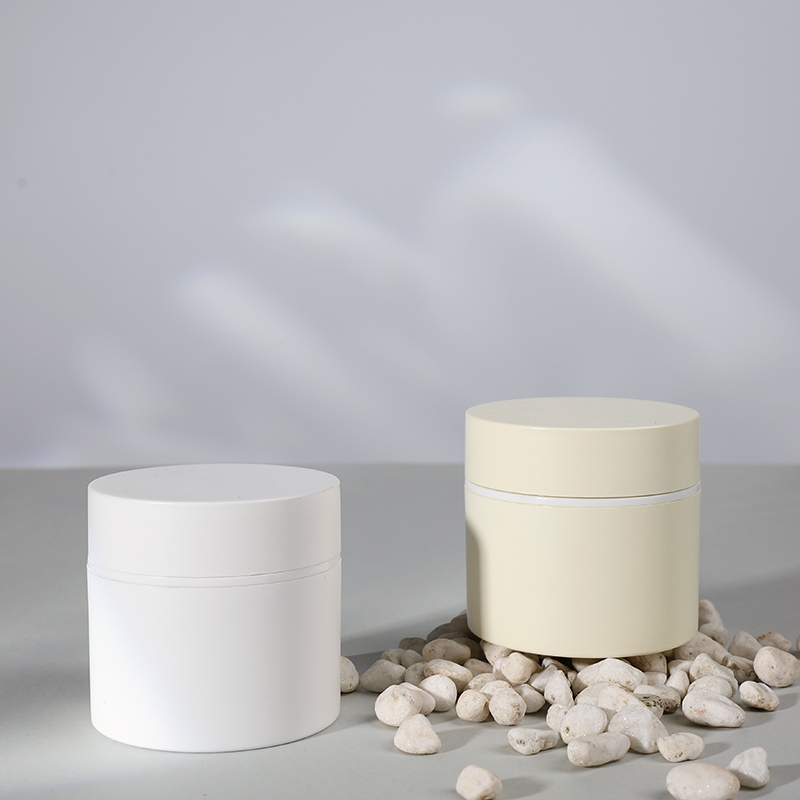
Most packaging discussions focus on lids, seals, or barrier films, but the thickness of the jar wall quietly determines whether a product survives distribution, temperature swings, and everyday handling. A slightly thicker wall isn't just about durability—it changes how the container responds to internal pressure, impacts, and even light exposure. For formulations that are sensitive to oxygen or moisture, the wall becomes a structural barrier that can delay degradation long before the closure is even considered.
Thin walls may cut material costs, but they introduce micro-flexing under load. That repeated, almost invisible movement can stress the neck and shoulder areas, creating hairline cracks that compromise the seal over time. In contrast, a well-calculated wall thickness distributes stress more evenly, reducing the risk of sudden failure during capping or stacking. It's a detail that rarely makes it into spec sheets, yet it often separates products that stay intact from those that develop leaks or clouding after a few months on the shelf.
The interplay between wall thickness and thermal expansion is equally telling. When a jar moves from a cold warehouse to a warm retail environment, uneven wall dimensions can cause warping or distortion that misaligns the closure. By matching the wall profile to the product's viscosity and fill temperature, manufacturers can keep the container dimensionally stable, preserving both appearance and functional integrity. In this way, jar wall thickness becomes an unspoken partner in long-term stability—one that deserves more attention than a quick glance at the bottom of the container.
Seal Integrity Tests That Separate Reliable Suppliers From the Rest
The difference between a supplier who talks about quality and one who proves it often comes down to how seriously they treat seal integrity. Reliable manufacturers run a layered battery of tests, not just a single burst check. They start with dye penetration under vacuum, where even microscopic channels in a seal show up as bright trails across the membrane. Then they move to pressure decay testing, holding a sealed package at a known pressure and measuring the drop over time—this catches slow leaks that a quick visual inspection would never flag.
What separates the best is how they simulate real-world stress before the test even begins. They don't just test a pristine seal straight off the line; they flex the package, expose it to temperature cycling, or submerge it in fluids that mimic the product's actual environment. After that abuse, the seal still has to pass burst strength and creep resistance tests. A supplier that only does a basic seal-strength pull on a flat, room-temperature sample isn't telling you anything useful about what happens in shipping or on a shelf.
Beyond the machines, look for a supplier that documents the full chain of evidence. Reliable partners track seal width, process parameters, and test results for every lot, not just a random sample. They can show you control charts, not a single certificate of conformance. And when something does drift, they have a closed-loop system that triggers re-validation before product leaves the floor. That kind of transparency is the only real way to separate a box-ticker from an engineering partner.
Matte, Glossy, or Soft-Touch: Finishes That Shift Perceived Value
A matte surface tends to read as quiet and deliberate. It removes the glare that often makes products feel mass-produced, letting color and shape carry more of the message. In packaging and product design, this finish can make an everyday item feel considered, even if the material underneath is nothing special.
Glossy finishes do something almost opposite. They reflect light, add depth, and often bring a sense of energy or freshness. That high-shine look can feel celebratory, but it also walks a fine line—too much gloss can tip a design toward cheap or plastic, especially when paired with bold colors or thin materials.
Soft-touch coatings sit somewhere between the two. They invite handling, and that tactile shift changes how people judge quality before they even look closely. The downside is that soft-touch surfaces can pick up fingerprints or scratches over time, so the premium impression depends on how well the finish holds up in real use.
Recycled PP in Skincare Jars: What Actually Works at Scale
You can put recycled PP in a skincare jar and call it done, but the details that matter at scale are rarely visible on a shelf. Consistent sourcing matters more than the recycle percentage printed on the bottom. A stream of washed, sorted polypropylene from bottle caps or industrial offcuts gives predictable flow, while mixed municipal bales bring too much variation in viscosity and color to hold tight tolerances on a high-speed filling line.
The second hurdle is smell. Recycled PP carries trace residues from its previous life, and the heat of injection molding can release faint but unpleasant notes that conflict with unscented formulations. Some molders solve this with vacuum venting, others blend in a small amount of virgin resin, and a few rely on cold washing with stronger surfactants. The approaches that survive cost reviews are the ones that don't add an extra day to the cycle.
What actually scales is design that works with the material's imperfections. Slight gray undertones, tiny melt-flow shifts, and lower gloss are easier to hide in matte jars with tinted walls than in clear or bright white containers. Teams that stop fighting the recycled stream and adapt the jar geometry, wall thickness, and closure style tend to reach higher recycled content without line stoppages.
Questions to Ask a Chinese Manufacturer Before Committing to a Jar Order
Before you wire a deposit, pin down the exact glass composition and wall thickness. Some factories default to soda-lime glass unless you specify borosilicate, and the difference matters for thermal shock and clarity. Request a dimensional drawing with tolerances for the neck finish and thread depth, not just a pretty photo. If your jar has a colored coating or spray finish, ask for a physical color chip against a Pantone or RAL reference and confirm how many coats they apply. Also insist on pre-production samples, not just a stock sample from a previous run, and clarify whether the sample fee gets credited back when you place the bulk order.
Dig into MOQ flexibility and lead time before signing anything. Some manufacturers list a high MOQ but will drop it for a first order if you accept a slightly higher unit price or share a mold with another client—ask directly. Get a written breakdown of lead time: mold making, glass melting and forming, decoration, and freight to the departure port. Clarify payment terms; a common structure is 30% deposit with the balance before shipment, but see if they will accept a third-party inspection before you release the final payment. If you are paying for a new mold, confirm ownership in writing—who keeps the mold, is there a storage fee, and can you move it to another factory later without penalty.
Quality control questions separate serious suppliers from middlemen. Ask what AQL standard they inspect to and what their typical defect rate is for jars of your size and shape. Be specific about defects: bubbles larger than 1 mm, visible mold seams, uneven glass distribution, and scratches on coated surfaces. For food contact jars, request copies of FDA, LFGB, or EU compliance certificates and ask if they test for lead and cadmium migration. Finally, ask how they pack jars for export—individual dividers, foam inserts, or bulk cartons—and whether they perform drop tests or vibration tests on the packed cartons.
FAQ
PP offers better chemical resistance and lighter weight, and it tolerates frequent filling line handling without cracking; acrylic scratches easily and glass is heavier and more fragile for daily skincare use.
A consistent wall thickness around 2-3 mm prevents sink marks and gives the jar a solid feel, while a smooth neck finish with even threads ensures the cap closes flush without cross-threading, which is often the first thing users notice when opening the product.
Request the material data sheet confirming food-grade or cosmetic-grade PP, inspect the mold surface for weld lines or flow marks, and ask about the factory's tolerance standard for roundness and flatness; also confirm whether they use virgin or recycled resin because it affects odor and stress crack resistance.
Yes for premium positioning: the air gap between walls hides internal sink marks and gives a heavier, more luxurious hand feel, plus it improves thermal insulation for formulas sensitive to temperature swings.
Use existing mold bases with interchangeable cavity inserts for different capacities, then differentiate through silk-screen printing, hot stamping, or matte soft-touch coating on the outer surface, which avoids the cost and time of a full custom mold.
Common defects include uneven wall thickness causing stress whitening at the base, sharp parting line flash on the rim, and inconsistent color batch-to-batch; specifying a maximum flash of 0.1 mm, a roundness tolerance of 0.3 mm, and Pantone color matching in the inspection checklist reduces these risks.
Yes, an induction seal or PE foam liner prevents leakage and oxygen ingress, but the liner adhesive must be compatible with the cream's oils; some oils degrade certain foam liners, so test the closure with a filled sample at 45°C for two weeks.
Run drop tests from 1 meter on concrete at 20°C and -10°C to check for cracking, torque the cap 50 times to ensure thread wear doesn't cause loosening, and perform a 24-hour leak test with water-based and oil-based simulants at 40°C.
Conclusion
Polypropylene keeps dominating cream jar production in China for reasons that go beyond simple cost: it handles creams with high oil phases without stress cracking, survives drop tests that would shatter acrylic or SAN, and molds with tight enough tolerances to hold a reliable neck finish. But the real difference between a jar that feels premium and one that leaks or warps often comes down to wall thickness. A 1.2 mm wall on a 50 ml jar can flex under torque, breaking the seal over time, while going to 1.8 mm adds weight and cost without meaningful benefit. Smart buyers ask suppliers for cross-section drawings and thickness distribution data, not just a pretty render. Seal integrity is where many factories cut corners: a reliable supplier will run vacuum decay tests on every production batch, measure torque retention after 24 hours, and simulate shipping vibration before approving a lot. The cheapest quote rarely includes that level of verification.
Finish selection shifts perceived value more than most brands realize. Matte soft-touch coatings feel great in hand but scuff easily and show oil from fingertips, so they work for high-end lines with careful retail handling; glossy PP looks like a generic mass-market cosmetic unless paired with a distinctive cap or liner. Recycled PP at scale is no longer a myth, but it demands discipline: post-consumer resin needs consistent melt flow, low odor, and color sorting to avoid grey or yellow cast, and even then you might be limited to 30-50% PCR in a dark or opaque jar. Before committing to an order, ask a Chinese manufacturer for mold flow analysis of your specific jar geometry, their seal test protocol with pass/fail thresholds, the exact percentage and source of recycled resin, and whether they have run a production trial with your chosen finish. If they hesitate on any of these, keep looking.
Contact Us
Contact Person: Kara Yang
Email: [email protected]
Tel/WhatsApp: 8618857568397
Website: https://www.haitongplastic.com/