

China Maize Grinding Machine: A Complete Guide to Efficient Corn Milling
2026-06-15
Corn milling plays a vital role in food production worldwide, and China has become a hub for advanced maize grinding technology. Whether you're running a small mill or a large-scale processing plant, achieving consistent, high-quality flour depends on the right equipment. PINGLE has been at the heart of this innovation, delivering machines that combine robust engineering with smart design. This guide unpacks the essentials of efficient corn milling—helping you navigate key considerations, avoid common pitfalls, and get the most out of your investment.
The Rise of Chinese Maize Grinding Technology
The evolution of maize grinding in China went far beyond simple mechanization—it reshaped entire supply chains and dietary habits. Smaller, decentralized mills began appearing in rural markets, allowing farmers to process their harvests locally rather than relying on distant industrial facilities. This shift not only cut transportation costs but also preserved the freshness and nutritional quality of the flour, fostering a renewed appreciation for stone-ground textures and regional corn varieties.
As demand for customized grinding services grew, equipment manufacturers started developing machines that could handle diverse moisture levels and kernel hardness without compromising throughput. Innovations in roller spacing and abrasive materials enabled millers to produce everything from coarse grits for traditional porridges to ultra-fine flour suitable for blending with wheat in baked goods. The technology’s adaptability became a quiet driver behind the proliferation of niche maize products in urban specialty stores and e-commerce platforms.
Today, Chinese maize grinding technology stands at a crossroads between heritage and precision engineering. Some workshops have revived antique grinding stones coupled with electric motors for artisanal markets, while others deploy sensor-laden systems that adjust pressure and speed in real time. This duality reflects a broader cultural movement—bridging the efficiency expectations of modern agribusiness with a deeply rooted culinary identity that refuses to treat maize as a simple commodity.
Key Features That Set These Machines Apart
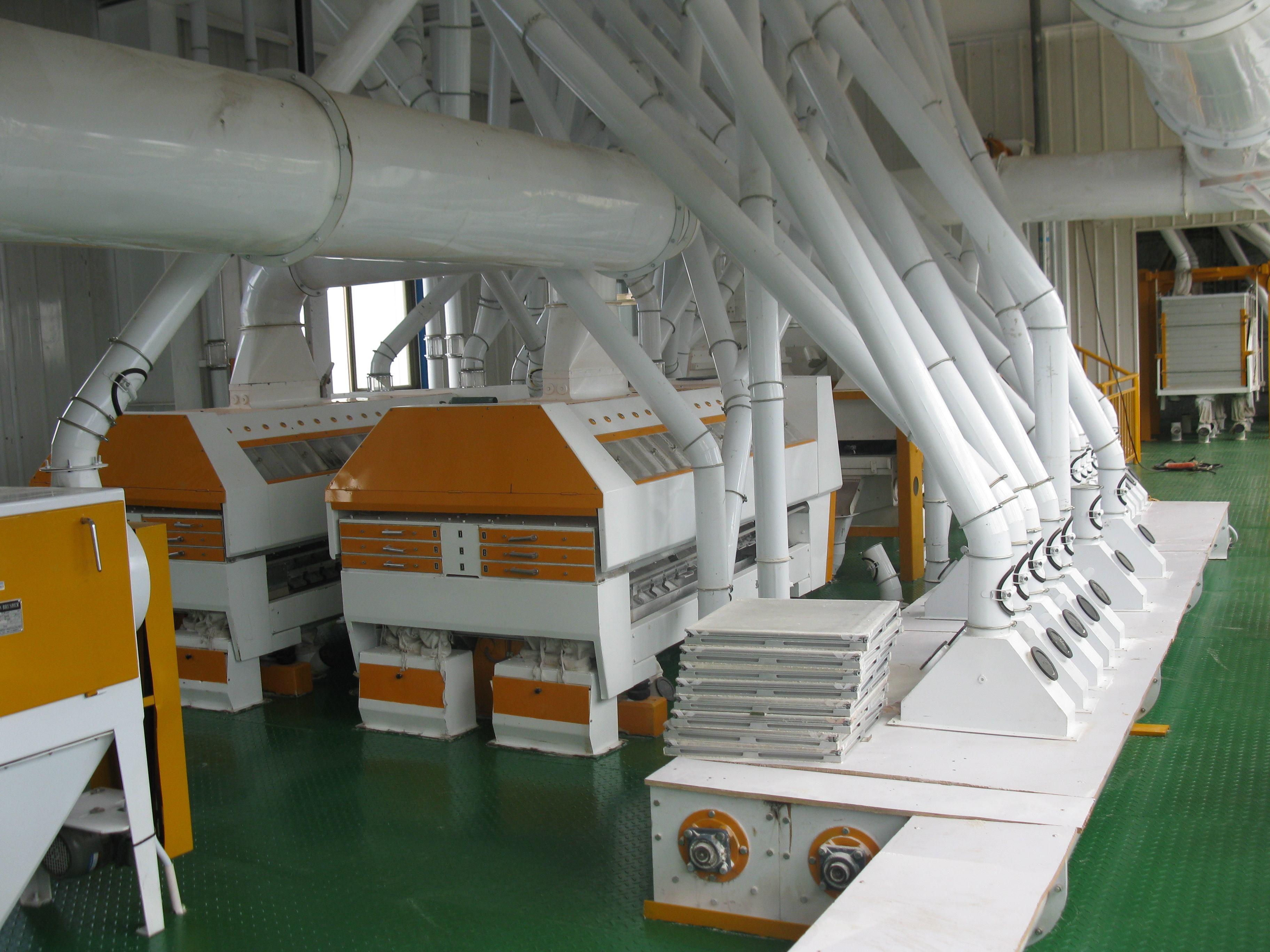
Instead of relying on generic build quality claims, these units incorporate frame reinforcements typically reserved for industrial equipment, drastically reducing vibration even at peak RPM. The material selection favors cast iron assemblies where competitors cut corners with stamped steel, creating a natural dampening effect that extends both tooling life and work accuracy.
What genuinely distinguishes them is the adaptive control interface. Rather than burying critical adjustments in digital menus, the controls maintain physical dials for speed and feed rate while seamlessly integrating user-defined presets. This hybrid approach lets seasoned operators make micro-adjustments without breaking workflow, yet newcomers can lock in proven parameters for repeatable results.
Dust management goes beyond simple port attachments. The shrouding channels airflow across the cutting surface in a calculated pattern, directing debris into a high-efficiency cyclone separator that prevents the fine particulate buildup most machines suffer from. Even during extended runs, the internal pathways stay clear, preserving motor cooling efficiency and reducing the cleanup downtime that quietly eats into productivity.
How to Match Grinder Type to Your Milling Needs
Choosing the right grinder isn’t just about budget—it’s about understanding what your daily brew demands. Blade grinders, though common, chop beans into uneven fragments that can muddle extraction. If you’re after a clean, balanced cup, a burr grinder is the real starting point. The consistent particle size it delivers ensures water flows evenly through the coffee bed, pulling out flavors without the harshness that comes from over-extracted dust or under-extracted boulders.
Within burr grinders, conical and flat burrs each have their own character. Conical burrs tend to produce a bimodal particle distribution, meaning some fines mix with larger pieces—this can add body and texture, often preferred for espresso’s thick mouthfeel. Flat burrs, on the other hand, slice beans into more uniform pieces, giving you clarity and definition in pour-overs or drip coffee. If you switch between brew methods often, a grinder with stepless adjustment will let you dial in precisely without preset steps holding you back.
Don’t overlook grind capacity and heat buildup either. Home brewers who make a pot or two each day won’t need the churning power of a commercial flat-burr beast, but a hand grinder might frustrate if you’re caffeinating a crowd. Motor speed matters too: slower RPMs keep the grind chamber cooler, preserving delicate aromatics that can vanish with friction heat. Match the grinder’s throughput and thermal design to your real-world volume, and you’ll avoid warm, stale-tasting grounds before the water even hits.
Maximizing Output: Operational Tips from the Pros
You don’t need a bigger team to get more done—you need a sharper system. The pros know that maximizing output starts with killing bottlenecks before they kill your momentum. One of the simplest yet most overlooked moves? Audit your recurring tasks every quarter. What was essential six months ago might now be a silent drag on your team’s bandwidth. Strip it out, and watch how fast the real priorities start moving.
Another counterintuitive tactic: build “decision-free” time blocks into your day. High performers protect stretches of uninterrupted focus like they’re guarding a vault. During those hours, no email, no Slack, no “quick syncs.” The mental cost of context switching is far steeper than most teams account for, and eliminating it often yields a 20-30% jump in meaningful output without adding a single extra hour.
Finally, steal a page from manufacturing playbooks and implement a “stop-doing” list. Identify the meetings, reports, or approvals that exist purely out of habit. If it doesn’t directly feed a key result, deprecate it ruthlessly. The pros don’t just optimize what they do—they aggressively remove what they shouldn’t be doing in the first place. That’s where the real capacity hides.
Maintenance Practices That Extend Machine Life
Treating your equipment to a regular, thorough cleaning does more than keep it looking decent—it knocks out the grit and gunk that gradually chew through seals and moving parts. Skipping this step invites abrasive particles into every nook, raising friction and accelerating wear long before any warning light comes on.
Lubrication isn’t just about applying grease or oil on schedule; it’s about using the right type in the right amount and checking its condition often. Over-lubricating can be as destructive as neglect, trapping heat or forcing contaminants deeper into bearings. A quick feel or clean wipe can tell you more than a generic calendar reminder ever could.
Aligning and balancing rotating components might seem obsessive, but even minor misalignments punish bearings and shafts day after day. Pair that with consistent monitoring of operating temperatures and unusual vibrations, and you’ll catch trouble before it forces a shutdown. Small adjustments made early almost always cost less than a major repair later.
What Global Buyers Should Know About Chinese Mills
When dealing with Chinese mills, one of the first things to understand is the sheer scale and diversity of production. The landscape isn’t monolithic—it spans massive state-influenced giants to nimble private operations, each with different specialties, minimum order quantities, and approaches to quality control. Some mills focus on commodity-grade steel while others excel in high-value alloys or precision components, so mapping your needs to the right type of partner is crucial. Relationships often matter as much as contracts here, and personal connections can unlock flexibility in pricing or lead times that a transactional approach won't.
Another key point is navigating the rhythm of China’s industrial calendar. Production schedules are heavily shaped by domestic holidays, environmental inspections, and policy shifts. For instance, output can slow dramatically around Lunar New Year, or when government-mandated curbs hit certain regions to reduce smog. Smart buyers build buffers into their timelines and maintain open channels with multiple mills to avoid getting caught off guard. It’s also worth keeping an eye on shifting trade flows—tariffs and geopolitical tensions have led some mills to route goods through third countries, a layer of complexity that can affect both pricing and delivery terms if you’re not aware of it.
Finally, quality assurance demands a hands-on approach. While many Chinese mills have reached world-class standards, consistency can still vary, especially among smaller players. Third-party inspections and a clearly defined spec sheet are non-negotiable. Many buyers find it pays off to visit the facility, walk the production floor, and build a direct rapport with the technical team. Digital tools like video tours and real-time tracking have made remote verification easier, but nothing fully replaces the insights gained from seeing how a mill handles a defect or rushes a priority order. It’s these practical realities—not just the price per ton—that determine whether a partnership thrives.
FAQ
You’ll mostly find three types: hammer mills, disc mills, and roller mills. Hammer mills use high-speed hammers to shatter the corn, while disc mills crush it between abrasive plates. Roller mills are more precise and often used for larger-scale flour production. China produces a wide range of models in each category, from small farm units to industrial setups.
It comes down to your final product and capacity needs. Hammer mills are great for producing coarse meal and can handle high moisture corn, but they create more dust and noise. Disc mills give you a finer, more consistent flour and are usually cheaper to maintain for small-batch work. If you’re making animal feed, a hammer mill might be the way to go; for human food flour, a disc mill often wins.
Pay attention to the motor power, throughput rate, and the materials used for grinding parts. Stainless steel or high-carbon steel components last longer and don’t contaminate the flour. Also check the availability of spare parts and after-sales support—some factories offer better warranty terms than others. Noise level and energy efficiency are worth asking about too, especially if you’re running it for hours daily.
It depends on the machine design. Most dry mills aren’t built for wet processing—you’ll end up with a sticky mess and could damage the motor. However, there are wet-type maize grinding machines specifically designed for making foods like ‘ogi’ or masa. If you need both capabilities, look for a multifunctional unit that clearly states it handles wet and dry corn. Always check the manufacturer’s recommendations.
Routine cleaning after every batch prevents buildup and rust. Lubricate bearings and moving parts according to the manual—usually every few days in heavy use. Check the grinding plates or hammers for wear and replace them before they get too dull. Belt tension and motor ventilation also matter; overheating is a common killer. Keeping a spare set of screens and hammers on hand saves painful downtime.
The price-to-performance ratio is hard to beat. Chinese machines often deliver solid durability at a fraction of the cost of European or American equivalents. Plus, there’s a huge variety—you can find compact 5 horsepower units for village mills and 50 horsepower beasts for commercial lines. Many factories now offer customization and online technical help, which used to be a weak point. For small and medium businesses, it’s a practical choice.
Always disconnect power before opening the grinding chamber. Use guards and never bypass safety switches. Flying debris is a real hazard, so wear eye protection and avoid loose clothing. If the machine jams, don’t stick your hand in—use a stick or tool to clear it. Also, keep the area dry to prevent electrical shocks and make sure the emergency stop button is within easy reach.
Conclusion
The evolution of maize grinding equipment in China has quietly transformed how small and large mills operate, fusing rugged build quality with clever engineering. Rather than chasing fleeting trends, manufacturers focused on durability and consistent particle size — critical for everything from breakfast cereals to industrial starch. A standout trait is the adaptability of grinding discs and screen plates, which let a single machine shift between coarse grits and fine flour without retooling. This flexibility stems from decades of feedback from millers who demanded less downtime, and it shows in features like quick-release mechanisms and over‑engineered bearings that run cool even under continuous loads. For anyone buying a mill, the real skill lies in matching the motor power and chamber geometry to the specific corn variety and desired output, not just price lists.
Operators who coax the most out of these machines tend to share a few habits: they monitor moisture content closely, feed grain steadily rather than dumping it in bursts, and listen to the subtle changes in sound that hint at wear. Maintenance, too, veers away from complex schedules — a daily brush‑down of sieves and a weekly check of belt tension often keep a mill running smoothly for years. Many international buyers are surprised by the sheer scalability, as the same core design can power a village‑scale operation or plug neatly into a semi‑automated plant. What often seals the decision is the availability of compatible spare parts and the growing network of overseas support, which turns a one‑time purchase into a long‑term partnership. In practice, the Chinese maize grinder has become less about a single machine and more about a practical ecosystem that keeps corn flowing efficiently from hopper to bag.
Contact Us
Contact Person: Jiakuo Wu
Email: [email protected]
Tel/WhatsApp: +86-13011566087
Website: https://www.pinglemachine.com