

China Color Changing Cup Sourcing: A Comprehensive Guide for Importers
2026-07-25
Sourcing color changing cups from China can be exciting, but navigating the market is tricky. You want products that truly amaze—cups that transform with heat or cold, not just gimmicks. As an importer, finding reliable suppliers who deliver consistent quality and wow-factor designs is your biggest challenge. That’s where APEXAL changes the game. With years of hands-on sourcing experience and insider industry know-how, we’ve seen the pitfalls and discovered the hidden gems. This guide strips away the guesswork, giving you the real-world tactics to source color changing cups that won’t disappoint your customers.
The Science That Makes Cups Change Color (And Why It Matters for Your Orders)
The magic behind color-changing cups lies in a special type of ink known as thermochromic ink. This ink contains molecules that rearrange their structure when the temperature changes. At lower temperatures, the molecules are arranged in a way that allows them to absorb and reflect certain wavelengths of light, giving the cup its color. When you pour a hot drink, the heat causes these molecules to align differently, becoming essentially transparent. This reveals any underlying design or message printed on the cup, creating that captivating reveal effect.
Thermochromic inks can be formulated to react at specific temperature thresholds, which is why some cups change color with cold liquids instead of hot. This flexibility allows brands to create interactive experiences—like a cup that transforms to show a hidden logo when filled with chilled soda. Unlike regular paints, these inks don't just fade; they undergo a physical transformation that can be engineered for repeatable use, though the transition might degrade slightly over many cycles if not properly manufactured.
For business owners, understanding the technology helps in selecting durable, food-safe products that maintain the “wow” factor for customers. High-quality thermochromic cups use microencapsulated dyes that resist scratching and are sealed to prevent contact with beverages. This matters because a cup that stops changing color after a few washes can disappoint customers, while well-made ones turn an ordinary drink into a memorable moment, subtly reinforcing brand identity each time the color shifts.
Finding Factories That Specialize in Custom Heat-Sensitive Drinkware
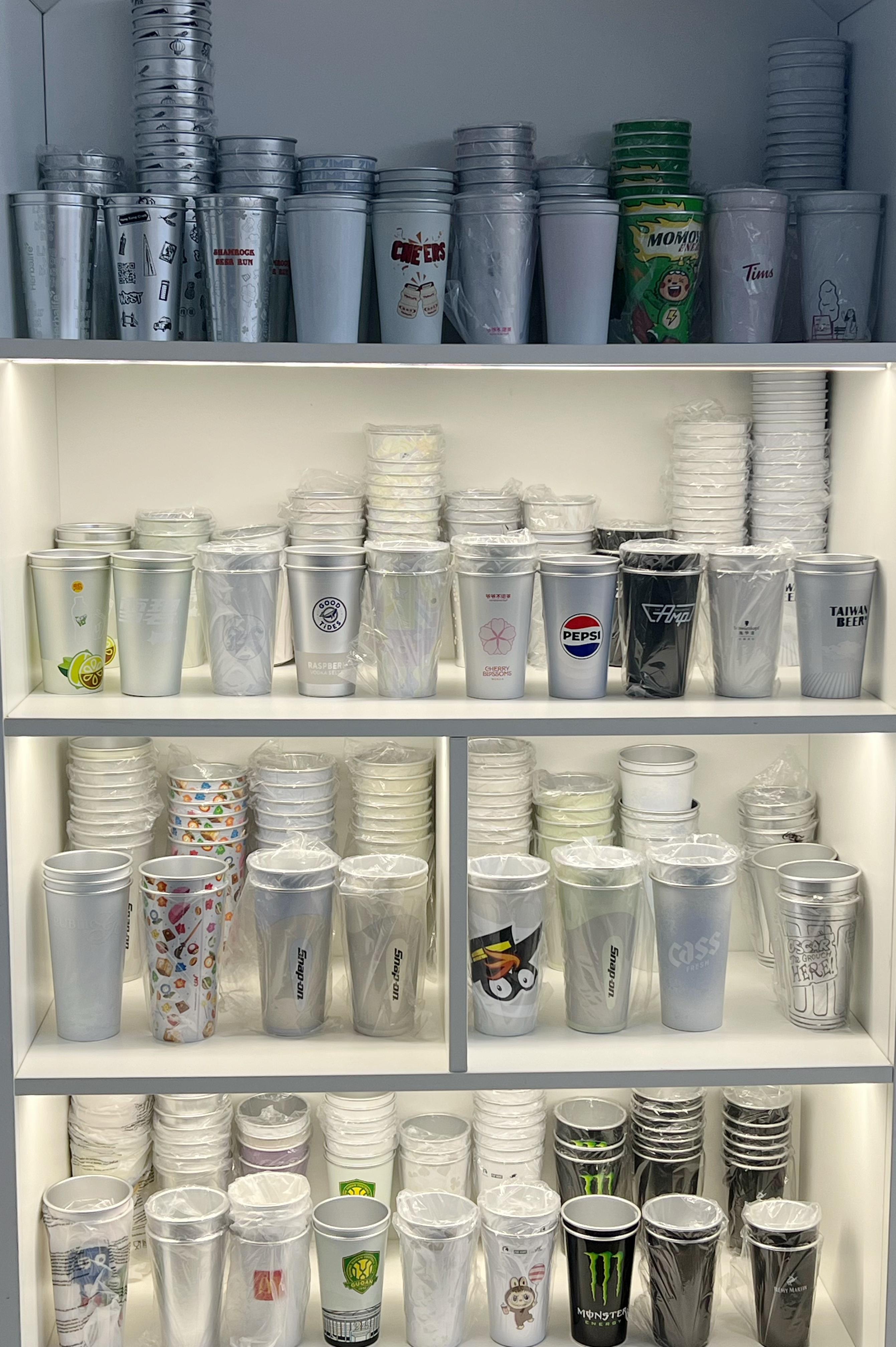
Sourcing a factory for custom color-changing cups isn’t just about sending an inquiry to the first supplier you find. The tricky part is that heat-sensitive coatings require a precise chemical balance—too much pigment or the wrong resin, and your design stays stubbornly at one shade or fades after a few washes. Look for manufacturers who openly share their lab testing setups, not just finished product photos. A quick video walkthrough of their mixing and curing area tells you far more than a glossy catalog. Pay attention to whether they’re blending the leuco dyes in-house or relying on pre-mixed pastes, because in-house blending usually means they can dial in the exact activation temperature you need, whether it’s 15°C for iced coffee tumblers or 45°C for hot tea mugs.
Dig into the coating application method too—it’s where craftsmanship quietly separates the reliable from the risky. Screen printing on curved surfaces demands experienced hands; uneven pressure leaves thin spots where the magic fails. Some factories use robotic arms for consistency, but even then, the real skill is in adjusting the viscosity of the ink for each shape. Ask to see samples that have been through at least 50 dishwasher cycles—the color transition should stay crisp, with no pinhole cracking. A factory that hesitates to provide aged samples is often hiding adhesion problems you’d only discover after stocking your shelves.
Finally, consider how the factory handles the design conversation. The best partners don’t just nod at your artwork; they push back if a gradient will turn muddy or a black-to-white shift needs a different base coat. They’ll suggest placing the transition zone a bit higher on the mug so it activates with a normal hand grip, not just when you pour boiling water. This kind of back-and-forth isn’t friction—it’s the sign of a team that’s solved the same riddle a hundred times before.
Negotiating MOQs and Lead Times Without Sacrificing Quality
Finding the right balance between order volume, delivery speed, and product integrity can feel like walking a tightrope. Suppliers often push for higher minimum order quantities and extended lead times to streamline their production, but that doesn't mean you have to accept terms that don't fit your business. Approaching negotiations with a clear understanding of your own constraints and a willingness to explore creative compromises—such as phased deliveries, shared inventory risk, or slightly adjusted packaging—can shift the conversation from a hard bargain to a problem-solving session.
It's easy to assume that pushing for lower MOQs or tighter deadlines will force a compromise on materials or workmanship, but experienced buyers know that quality hinges on consistency and trust, not just specs. By investing time in building a real relationship with your supplier—visiting their facility when possible, communicating transparently about your quality benchmarks, and recognizing their own production pressures—you create a foundation where both sides are motivated to protect standards. This rapport can open doors to flexible terms that canned email requests rarely achieve.
Practical concessions can safeguard quality while easing MOQ and lead time constraints. For instance, accepting a slightly higher unit cost for smaller batches, or agreeing to use standard components rather than custom finishes, can keep production runs efficient without compromising the core function of the product. Pairing these trade-offs with a phased quality inspection process ensures that even rushed orders meet your expectations. Ultimately, successful negotiation isn't about winning on every point—it's about designing a working agreement that respects the realities of manufacturing while still delivering the quality your customers count on.
Hidden Costs in Color-Changing Cup Imports (And How to Avoid Them)
Importing color-changing cups might look like a straightforward way to add novelty to your inventory, but the price tag on the invoice rarely tells the whole story. Beyond the per-unit cost, you’ll often face a tangle of fees: customs duties that shift depending on the cup’s material classification, unexpected warehousing charges if shipments get held for inspection, and even design fees if you need minor adjustments to the thermochromic coating. Many first-time buyers overlook how fragile the heat-sensitive layer can be—replacing damaged stock wipes out any initial savings.
Then there’s the often-ignored cost of getting the color-change effect right. Factories might promise vibrant transformations, but if the activation temperature isn’t dialed in correctly for your market, you’ll end up with cups that barely change in cold drinks or turn murky in hot ones. Sampling and prototyping eat into budgets fast, especially if you cycle through multiple batches to nail the perfect shade shift. Add in the expense of compliance testing—color-changing pigments can sometimes run afoul of food-contact regulations—and the true landed cost can double before the container even reaches your door.
To sidestep these pitfalls, treat transparency as your baseline. Request a detailed cost breakdown that separates unit price, tooling, coating customization, and testing fees. Build a cushion for regulatory delays by asking suppliers to pre-certify the pigment with FDA or EU standards in advance. And never skip a third-party quality check focused specifically on the thermochromic layer’s durability and activation accuracy—things like dishwasher safety and fade time. A little due diligence on the front end stops a bargain import from becoming a costly lesson.
Testing Durability: What Most Importers Overlook Until It’s Too Late
Too many importers treat durability testing as a checkbox exercise, running a few standard cycles and assuming the product will hold up in real-world use. The flaw isn’t always in the testing itself, but in the conditions that are ignored: true wear and tear comes from inconsistent use, variable environments, and user habits that no lab can fully replicate. When failures surface months after distribution, the recall costs and reputational damage can dwarf any savings from skipping deeper analysis.
Another blind spot is material fatigue under combined stressors—UV exposure, humidity, and temperature swings are often tested in isolation. Yet products like outdoor gear or auto parts rarely face one factor at a time. Without layered stress testing, importers only discover weaknesses once customers complain, and by then the supply chain is saturated with faulty units.
Relying solely on supplier’s certifications is a gamble that rarely pays off. Internal audits might be outdated, or the sample batch doesn’t match mass production quality. Smart importers build their own durability benchmarks, random-test shipments, and track field returns aggressively. Waiting for a crisis to reshape your quality checks almost guarantees you’ll learn the lesson the hard way.
Design Tips That Make Your Custom Cups Stand Out in Any Market
A truly unforgettable cup begins with a shape that feels intentional. Instead of defaulting to a standard cylinder, consider a slight taper that fits more naturally in the hand, or a subtle ergonomic ridge that guides the grip. These tactile details quietly elevate the drinking experience, making your custom cups feel less like disposable containers and more like personal accessories. Even a small variation in profile can spark curiosity and make people want to pick them up.
Color is your silent ambassador. Go beyond a simple logo by wrapping the entire surface in a gradient that evokes a mood, or use unexpected color blocking to create optical illusions. Matte finishes can exude subtle luxury, while a tactile soft-touch coat begs to be held. Think about how the cup looks in different lighting—bold neons thrive at festivals, while muted, earthy tones resonate at farmers' markets. The right finish doesn't just decorate; it communicates your brand's personality without a single word.
Typography and imagery should feel woven into the cup rather than printed on. Layer a faint, oversized pattern behind your main message to add depth, or let hand-drawn illustrations wrap around the curvature, revealing new details as the cup turns. Break the rules: vertical text running from base to rim, or a design that cleverly integrates the seam as a design element. When every angle offers a discovery, your cups become miniature canvases that people remember and share.
FAQ
Color changing cups are drinkware items that shift their appearance when exposed to temperature variations. Most commonly, they use a heat-sensitive coating that reacts to hot or cold liquids. For instance, a plain black mug might reveal a hidden design when filled with hot coffee, or a blue cup might turn white when chilled. The magic comes from thermochromic pigments embedded in a special ink layer that becomes transparent once a certain temperature is reached, unveiling the image or color beneath.
China has a mature ecosystem for manufacturing novelty drinkware, so you get a blend of cost-effectiveness and technical know-how that's hard to match elsewhere. Many factories in Guangdong and Zhejiang have been refining these products for over a decade, meaning they can handle complex designs right from the start. You also have access to a wide range of materials—from basic plastic to high-grade ceramic—and the supply chain for related components like silicone lids or packaging is extremely streamlined.
First, look beyond the glossy catalog photos—request unedited video tours of their production line to gauge real capabilities. Focus on specialization: some workshops are wizards with plastic, others excel at ceramic or glass. Verify their experience with thermochromic applications specifically, because uneven coating is a common headache. Check MOQs and lead times with a careful eye—a supplier promising ultra-low minimums might be a trading company marking up a factory’s price. Also, confirm who handles the color separation and printing; ideally they have in-house graphic technicians.
Insist on a tailored pre-production sample that exactly matches your specifications, not a generic lookalike. Then put the sample through real-world use: cycle it between hot and cold many times to watch for fading or peeling, run it through a dishwasher repeatedly if you claim it's dishwasher-safe, and test the cup's grip and lip feel for comfort. For larger quantities, hire a third-party inspection service to randomly check units during production and before shipment—this catches things like inconsistent color shifts or misaligned prints early.
Beyond simply slapping a logo on, you can pick the trigger temperature—some designs activate at 45°C for warm drinks, others at 15°C for cold ones. The cup body shape goes from classic mugs to trendy stemless wine glasses, and the material itself can be stainless steel, borosilicate glass, or food-grade plastic. Printing techniques vary too: full-wrap dye sublimation gives a seamless look, while spot UV areas create a subtle contrast. You can even combine color-change areas with standard print for a two-layered surprise, like a hidden message that appears only when heated.
One major issue is poor communication about the exact color shift effect—sometimes the desired 'bright red' ends up as a dull orange when hot. Provide Pantone codes and approve a physical swatch first. Another pitfall is underestimating shipping damage; flimsy bulk packaging can lead to scratched coatings or broken rims. Work with your supplier to design protective inserts and consider requesting a reinforced master carton. Finally, watch out for inconsistent thermochromic pigment batches; a tiny variation in the ink mixture can cause patches that don't change uniformly. Building a clear quality benchmark with boundary samples helps flag this before you ship.
Conclusion
Sourcing color-changing cups from China isn't just about finding a supplier—it's about understanding the thermochromic tech that makes them shift hues when filled with hot or cold liquids. The science behind the pigment microencapsulation directly affects durability and color accuracy, so skip factories that treat it like a gimmick and partner with ones running in-house coating labs. These specialists know how to dial in activation temperatures, resist fading from UV exposure, and maintain vibrancy through hundreds of cycles. When vetting potential partners, push past vague promises and ask for accelerated aging test reports upfront; most importers only discover peeling or patchy prints after inventory lands. Equally critical is the design phase: gradients, hidden reveals, and spot-color transitions can elevate a basic promo item into a retail-ready product, but only if the factory's printing setup aligns with your vision. Overcomplicating artwork without sampling leads to costly reworks and blown deadlines.
Negotiating terms requires a careful balance between minimum order quantities, lead times, and unit cost. Smaller runs often get sidelined during peak production seasons, so flexibility on colors or packaging can unlock better scheduling without squeezing your margins. Watch for stealth charges—mold fees for non-standard shapes, rush shipment surcharges, and customs delays due to incomplete paperwork—that erode profitability. A smarter play is to have a quality control checklist that goes beyond the initial color test: run dishwashing cycles on samples, check adhesion after microwave use, and confirm food-safety certifications like FDA or LFGB for your target market. Realistic durability baselines, paired with smart graphic choices like darker base colors that make fading less noticeable, help avoid post-launch disappointment. The importers who win are the ones treating these cups as a engineered product, not just another customizable freebie, and selecting suppliers who share that mindset.
Contact Us
Contact Person: Milo
Email: [email protected]
Tel/WhatsApp: +86 18621923991
Website: https://www.dgbaide.com