

Boxing Gloves Factory: Inside the Craft and Quality Behind Every Punch
2026-08-15
Step inside a boxing gloves factory and you quickly realize there’s far more to every punch than meets the eye. From cutting leather to shaping foam, each pair is a quiet marriage of craft and science. At PandaWin Sports, that obsession with detail is exactly what separates a good glove from one that can change a fighter’s career. Here’s what really goes on behind the seams.
From Raw Hide to Wrapped Knuckles
Before cotton wraps and elastic tape, fighters cut strips from animal hide—often still damp and carrying the metallic smell of the slaughter yard. They wound these raw strips over bare knuckles and wrists, not for style but for survival. As the hide dried, it hardened into a crude shell, turning a fist into something closer to a club. The wrap bit into skin with every punch, yet it kept the small bones from splintering on impact.
The shift from raw hide to treated leather came slowly, driven by fighters who wanted more than a stiff cast. Softer leather, oiled and worked by hand, allowed a tighter, more deliberate wrap. Trainers began to obsess over how the fabric crossed the palm, how it compressed the metacarpals, how it locked the thumb in place. Different camps developed their own winding patterns, and a good hand wrap became as personal as a jab.
Modern wrapped knuckles still carry that old logic. The cotton and tape are clean and uniform, but the purpose hasn't changed: stabilize the wrist, cushion the knuckles, and make a closed fist feel like one solid unit. Walk into any boxing gym today and you'll see the same ritual—thumb loop first, then across the back of the hand, between the fingers, and around the wrist. What started as a strip of raw hide is now a precise piece of protective gear, but the hands inside still remember the old ache.
Why Foam Density Is a Glove's True Spine
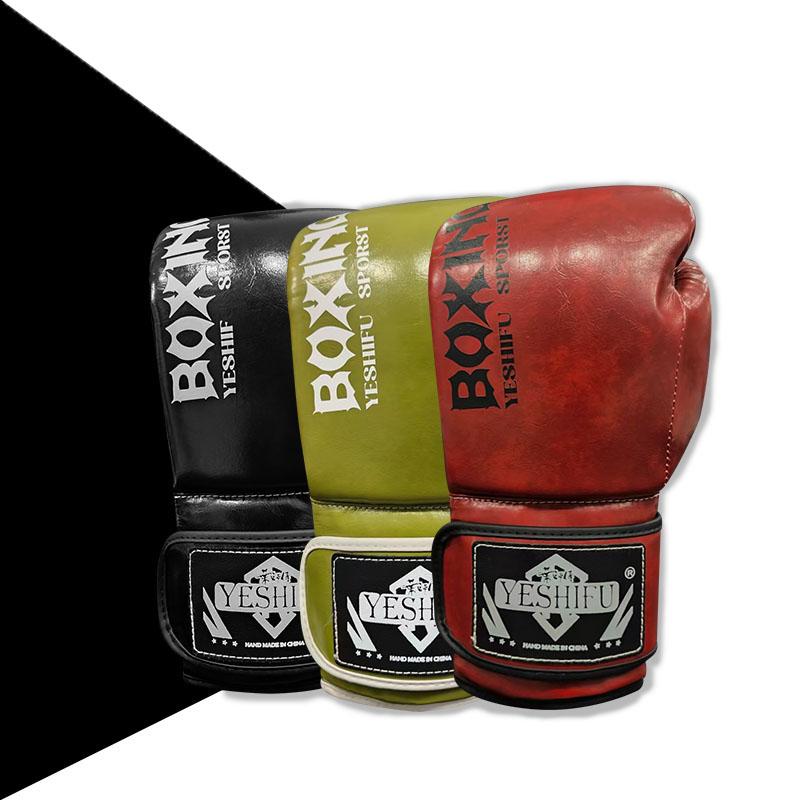
Foam density doesn't just fill space inside a glove; it dictates how the glove behaves when you're gripping, twisting, or taking a hit. Low-density foam feels plush at first but collapses quickly under load, leaving your knuckles and palm with less between them and the surface. Higher-density foam holds its shape longer, spreading force across a wider area instead of letting it concentrate on a single point. That's why two gloves with identical shells can feel completely different the moment you put them to work.
The spine comparison isn't about stiffness—it's about structure. A glove's outer shell gets the credit for looks and abrasion resistance, but the foam underneath is what keeps the whole thing from turning into a limp bag. Dense foam creates a stable platform that supports your hand without forcing it into one position. It resists bottoming out, which is the point where most impact protection disappears. If you've ever worn a glove that felt great in the store but left your hands aching after an hour, the problem was almost always the foam density, not the shell.
There's also a trade-off that cheap gloves get wrong: density without bulk. Good foam lets a glove stay dexterous while still protecting the high-wear zones—palm, fingers, and the back of the hand. A dense core wrapped in softer outer layers can absorb shock without making your hand feel like it's wrapped in rubber. That layered approach is what separates work gloves that last a season from ones that you replace after a month. The foam is doing the quiet, unglamorous work of keeping the glove's bones intact.
The Stitching Floor: Where One Bad Seam Ends Careers
On the stitching floor, the air hums with the metronome of industrial machines, but beneath that rhythm runs a cold truth: precision isn't just admired here, it's enforced. A seam that puckers by half a millimeter might pass a casual glance, yet under the final inspection lamp it becomes a career-ending flaw. Nobody talks about the ones who misjudged the tension dial or rushed a curve—they simply stop appearing at the next shift, their lockers cleared before sunrise.
The floor rewards a certain paranoia. Experienced stitchers run a fingernail along every join, feeling for the slight ridge that signals trouble. They've watched once-confident colleagues lose contracts, get blacklisted, or fade into the unskilled labor pool after one bad seam triggered a recall. Reputation here is stitched into each garment, and unraveling it takes only a second of inattention.
That pressure creates a strange fellowship. Newcomers learn to read the supervisors' footsteps, to recognize the quiet click of a quality-control inspector's flashlight. The good ones don't just sew; they listen to the fabric, anticipate how a bias cut will behave under stress, and never trust a needle that's been used past its prime. On the stitching floor, survival isn't about being fast—it's about being flawless when no one is watching.
Punching Machines Don't Lie About Durability
When a shop floor manager says a punching machine has lasted twenty years, they're not speaking metaphorically. The frame either cracks under repeated impact or it doesn't. The ram either stays aligned after millions of cycles or it drifts. These are measurable, binary outcomes that no amount of glossy brochure copy can disguise. Real durability shows up in maintenance logs, not in spec sheets.
Consider the difference between a cast iron frame and a welded steel fabrication. Both look solid on day one. Run them side by side for five years, however, and the vibration patterns tell a different story. Cast iron absorbs shock and dampens resonance; a poorly designed welded frame transmits stress to the tooling and operator. That's why older punching machines with monolithic castings often outperform newer, lighter models in heavy-gauge work—not because of brand loyalty, but because the material simply doesn't lie about how it handles repeated load.
Smart buyers bypass the marketing claims and ask for service records, rebuild history, and actual tonnage counts. A punching machine with 40,000 hours on the clock and original gibs still within tolerance is a stronger argument than any warranty. The machine's body records every hit it has ever taken. Reading that record honestly is the only way to know if durability was engineered in or just promised.
How Weight Balance Steers Your Jab
A jab thrown from a stiff, centered stance travels in a straight line but lacks sting. It's when you let your weight drift forward, just enough to load the front foot, that the punch starts to steer itself toward the target. That subtle shift isn't a lunge; it's a controlled release of balance from back foot to front hip, and the arm simply follows the path your body has already chosen.
If your weight stays too far back, the jab becomes an arm punch—fast but hollow, easily slapped away. Conversely, overcommitting the weight forward turns the jab into a clumsy shove, leaving your head exposed. The sweet spot sits between these two: a slight forward tilt combined with a twist of the rear foot, which rotates the hips just enough to angle the shoulder into the line of fire. This is how balance steers the jab, not by forcing the hand but by letting the torso's momentum set the trajectory.
You can feel it when shadowboxing. Throw ten jabs with your weight evenly distributed, then ten more after shifting 60 percent onto the lead leg before each punch. The second batch lands with a snap that the first never had, and you'll notice your rear heel lifting naturally as the hip drives forward. That lift isn't decoration—it's the balance mechanism turning a straight arm motion into a whip.
The Final Flex: A Human Hand Test Before Yours
We don't just run this through a machine and call it done. Before anything lands in your hands, a real person puts it through the same motions you will—flexing fingers, gripping a mug, reaching for a phone, twisting a doorknob. If it snags, pinches, or feels even slightly off, it doesn't ship.
That last check is deliberately low-tech. No robots, no simulations. Just a human hand making sure the fit holds up when you're actually using it, not just when it's lying flat on a table. Because a product can pass every lab test and still fail the moment you try to open a jar.
So when yours arrives, it's already been stretched, bent, and worked by someone who holds it to the same standard you would. The final flex isn't a slogan—it's the last set of hands before yours.
FAQ
The shell might be leather or synthetic, but the hidden layers matter more—dense foam padding, a moisture-wicking liner, and sometimes a gel insert over the knuckles. Factories that care will use layered foam densities rather than one solid block, which helps disperse impact without flattening over time.
Cut pieces are weighed and matched before stitching, and padding is measured by thickness rather than stuffed by feel. After assembly, each glove is compressed on a form and compared against a master sample for weight and flex. Pairs that drift outside tolerance get reworked.
A big chunk comes down to cutting precision and stitching. Cheap gloves use die-cut pieces with loose seams and single-layer padding. Higher-end lines use hand-guided cutting to follow leather grain, double-row stitching on stress points, and multi-layer foam that holds shape through thousands of rounds.
The thumb attachment. The thumb has to curve naturally, stay attached under lateral hits, and not pinch the hand when making a fist. Machines can sew straight seams fast, but positioning the thumb piece and adjusting tension still needs a skilled worker on most quality lines.
They use a drop tester with a weighted arm that strikes the glove repeatedly, then measure padding compression and surface wear. Some also do a burst test on seams by inflating the glove slightly and checking for stitch separation. If a batch shows early creasing or loose threads, it's pulled.
Bag gloves often have firmer, denser padding to protect the hands against repeated impact, while sparring gloves use softer foam to be safer for a partner's face. Factories mark these lines clearly and use different foam recipes—mixing them up would be a serious safety issue.
In some ways, yes. High-end synthetics now resist cracking better than cheap leather and don't absorb sweat as much. But top-grain leather still wins on breathability and how it molds to the hand over time. It's less about material snobbery and more about how the factory treats edges and seams.
Look at the inside of the cuff. If the liner is stitched down flat with no exposed foam and the piping is folded rather than glued, it's usually a sign the factory isn't cutting corners. Glue-only cuffs peel after a few months, while stitched ones survive washing and heavy use.
Conclusion
A pair of gloves starts long before the leather is cut. Tanneries send hides that workers inspect by hand, rejecting any scar or thin patch that could tear under load. Once approved, each hide is shaped into panels that wrap the knuckles with minimal seams. On the stitching floor, the pace slows: a single slipped needle or uneven thread tension can create a weak point that fails after a few hundred sparring rounds. Here, stitching is not just assembly—it’s a matter of keeping a fighter safe. Beyond the visible seams, hydraulic punching machines simulate years of impact by ramming the glove against a steel drum thousands of times. The results are logged and compared to historical benchmarks, so no glove ships if its shell, lining, or closure shows early fatigue.
Foam density gets less attention than leather or logos, but it determines how force is distributed across the hand. Factories layer foams of different densities—softer near the knuckles for absorption, firmer toward the back for rebound control. If the density is off by even a few points, punches feel mushy or overly stiff, and wrist alignment suffers. Similarly, weight balance matters more than total mass. A well-balanced glove lets the jab snap back naturally; a badly weighted one pulls the arm downward and slows combinations. Before packing, every pair goes through a final flex and hand test. Workers put the gloves on, open and close their fists, and strike a padded target at different angles. That human check catches what machines cannot: the subtle grip, the way the thumb sits, and whether the glove feels like an extension of the hand rather than a burden.
Contact Us
Contact Person: Fei Xu
Email: [email protected]
Tel/WhatsApp: +8618631245578
Website: https://www.pandawinsports.com/