

Boron Carbide Powder Vendor Guide for Quality Sourcing
2026-10-29
Finding a boron carbide powder supplier is easy. Finding one that won't derail your production schedule with inconsistent particle sizes or off-spec chemistry? That's where sourcing gets tricky. Buyers quickly learn that a polished website and a cheap quote mean little when the material arrives and fails to meet your furnace's requirements. This guide strips away the guesswork by walking through the quality indicators that actually matter—purity levels, grain structure, and reliable batch documentation. And when you need a vendor that treats consistency as a baseline rather than a bonus, HUAYI TECH shows what's possible when quality sourcing is done right.
Vendor Claims Worth Testing Before You Commit
It is easy to get swept up in a vendor's polished demo, but the real test is whether their claims hold up under your actual workload. Before signing anything, push them on specifics: ask for a live trial on your own data, not a curated sandbox. Check how the tool performs when the data is messy, volumes spike, or a key integration point stalls. A vendor that can't show you a realistic failure scenario and a clear recovery path probably hasn't thought through the details.
Also pay attention to the softer promises that tend to fall apart after purchase. Support response times, onboarding depth, and the availability of documentation are often worse than advertised. Ask for references from companies similar to yours, and don't settle for a salesperson's word on custom features. If a claim can't be demonstrated or written into the agreement, treat it as a hope rather than a plan.
Why Particle Size Distribution Changes Everything
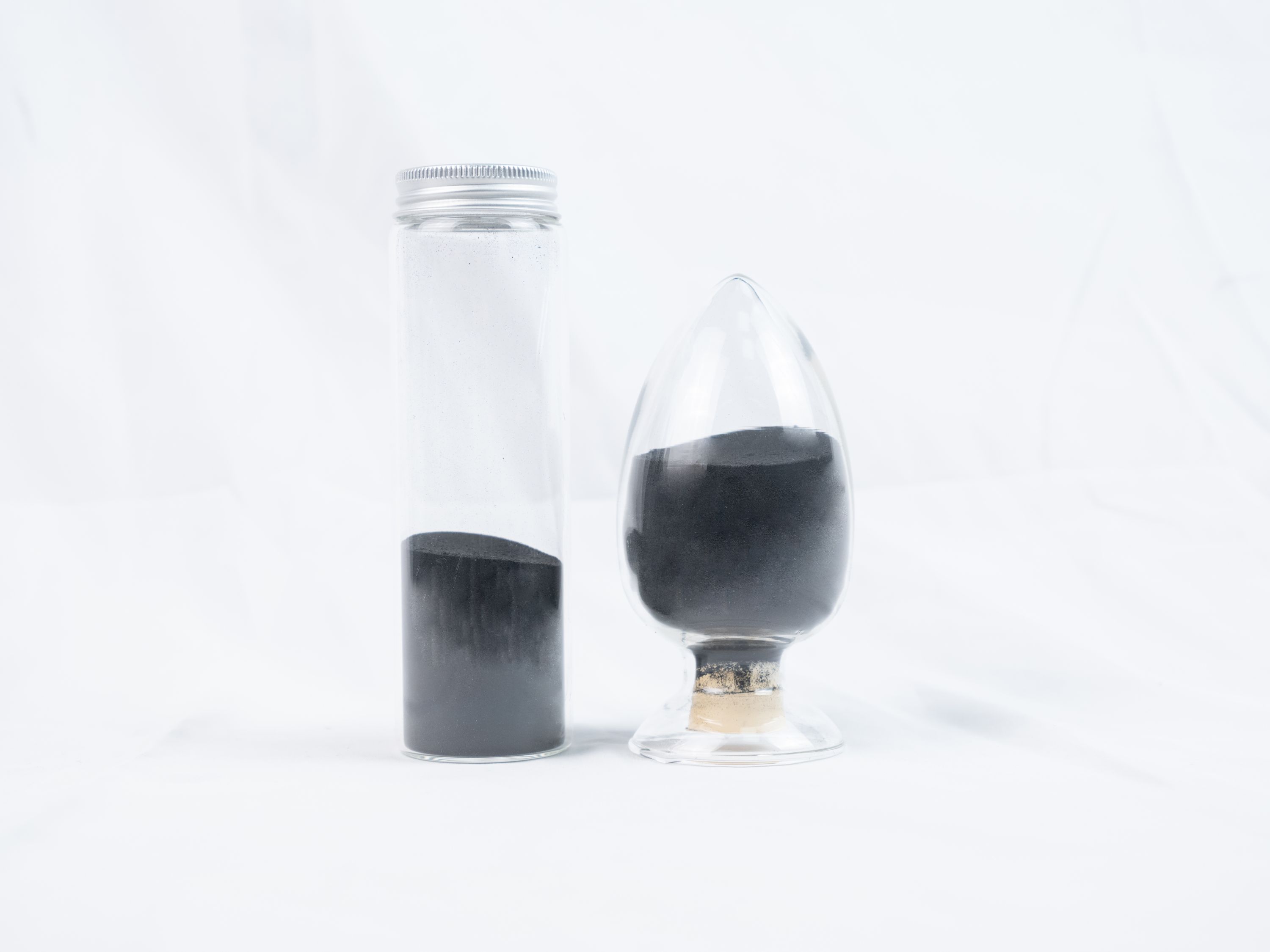
Particle size distribution is rarely the first thing people think about when evaluating a material, yet it quietly dictates how that material behaves in real-world conditions. Two powders with identical chemical compositions can flow, compress, dissolve, or react in strikingly different ways simply because their particle populations are arranged differently. The distribution reveals not just the average size, but the full spread, the presence of fines, and the occasional oversized outlier that can sabotage a process. Ignoring this nuance often leads to batch inconsistencies that surface only after a formulation has already scaled up, turning a promising prototype into a troubleshooting nightmare.
A narrow distribution tends to behave predictably: particles pack together with fewer voids, flow more uniformly, and respond to processing conditions in a consistent manner. A broad distribution, on the other hand, brings complexity. Fine particles can fill gaps between larger ones, altering density and surface area, while a long tail of coarse material can create segregation during mixing or transport. This becomes particularly critical in applications like pharmaceutical tableting, where slight shifts in particle size distribution can change dissolution rates, or in additive manufacturing, where powder spreading uniformity is tightly coupled to the spread of sizes present.
Practical experience shows that controlling the distribution is often more important than controlling the mean. Two samples with the same median diameter can perform completely differently if one has a small amount of dust-like fines that absorb moisture or cause agglomeration. Smart formulators learn to read the entire curve, not just a single number, and they adjust milling, classification, or blending steps to shape that curve intentionally. In the end, particle size distribution is not just a measurement—it is a design lever that changes everything from flowability to final product performance.
The Hidden Cost of 'Almost' Pure Boron Carbide
When a supplier stamps "almost pure" on a batch of boron carbide powder, the word "almost" does a lot of quiet work. A nominal 98% or 99% purity often leaves room for free carbon, boron oxide, and trace metal carbides that never show up on a cheerful certificate of analysis. These leftovers are not inert passengers—they seed weak grain boundaries, lower the sintered density, and drag down the very properties that made boron carbide attractive in the first place.
The real cost shows up later, far from the purchase order. Armor tiles that should stop a rifle round may crack prematurely because porosity from burned-off impurities created stress risers. Sandblasting nozzles wear unevenly when hard inclusions form local stress points. A manufacturer then compensates with thicker sections, extra finishing steps, or a higher scrap rate—none of which appeared in the initial per-kilogram price comparison.
There is also a quieter financial trap: paying for purity you never actually receive. Buyers often assume that "almost pure" means the impurities are harmless, but without a detailed elemental assay, you may be financing someone else's process shortcuts. In critical applications, the hidden cost is not the extra money spent on a truly pure grade; it is the cost of discovering too late that "almost" was not close enough.
Questions That Reveal a Supplier's Real Capability
Instead of asking whether they can meet specifications, dig into how they handle the last-minute change requests that always surface mid-production. A capable supplier will walk you through their change control process with specific examples—not vague promises about flexibility. Ask what happened the last time a technical drawing was updated after tooling had already started. Their answer, including the friction and cost they absorbed or passed on, tells you more than any certificate.
Ask about their least impressive project. It sounds counterintuitive, but a supplier who can candidly discuss a job that went sideways—and what they learned from it—is more trustworthy than one who only presents polished case studies. The details matter: did they catch the mistake themselves, or did the customer? How long did it take to resolve? If they blame the customer entirely without acknowledging their own process gaps, that’s a red flag.
Finally, ask them to explain a technical decision they disagreed with a customer on. The way a supplier describes that moment reveals whether they think for themselves or simply execute orders. You want a partner who pushed back with data, proposed alternatives, and ultimately found a middle ground that protected the end product. That’s the difference between a vendor and a genuine manufacturing ally.
Lot-to-Lot Consistency: The Metric Buyers Overlook
When sourcing components, most purchasing teams focus on specs, price, and lead time. But there's a quieter factor that shows up months later on the production line: lot-to-lot consistency. Two batches of the same part number can behave differently—slight shifts in viscosity, subtle changes in surface finish, or variations in cure time. These aren't defects by the datasheet's standards, yet they force engineers to tweak processes, slow down lines, or accept higher scrap rates. Buyers rarely ask for it, but seasoned manufacturers know that consistency between lots is what separates a reliable supply chain from a constant firefight.
The challenge is that lot-to-lot consistency isn't captured by a single test or certificate. A CofA might show everything within spec, while the real variation hides in the interactions—how a coating flows, how an adhesive wets, how a resin shrinks after cooling. That's why some buyers are starting to request process capability data, not just finished-product results. They ask suppliers for control charts of key parameters across multiple production runs, or they visit the plant to see how raw material lots are managed. Without that, you're buying a promise that every batch will behave like the last, and that promise breaks quietly.
For companies that get this right, the payoff is real: fewer line stoppages, more predictable yields, and far less time spent re-qualifying suppliers. It's a metric that doesn't appear on a purchase order, but shows up in the cost of quality every quarter. Next time you evaluate a new vendor, ask for their lot-to-lot variability data—not the average, but the spread. If they can't produce it, or if they don't understand why it matters, that's a signal worth more than a thousand spec sheets.
From Lab Sample to Production Run: Closing the Gap
Scaling a bench-top reaction often feels like translating a poem—literal word-for-word misses the rhythm. What worked in a 250 mL flask can stall in a 10,000 L reactor because mixing times, heat transfer, and even impurity profiles shift once geometry changes. Teams that close this gap early tend to run small-scale stress tests: deliberately varying stir rates, hold times, and cooling ramps to map where the chemistry stays robust and where it gets finicky.
A useful bridge is the pilot batch, but not as a mere larger repeat. Instead, treat it as a probe for the unknown unknowns—sampling at odd intervals, watching for byproduct drift, and comparing not just yield but crystal habit or particle size. Those details rarely appear in lab notebooks yet often decide whether downstream filtration or drying becomes a bottleneck. Documenting what stayed the same matters less than understanding what changed and why.
Closing the gap also means bringing production realities back into the lab. If a plant will use recycled solvent or a different grade of catalyst, test with those from the start. Otherwise, the lab sample becomes a beautiful artifact rather than a blueprint. The goal is not to make the lab mimic production perfectly, but to know the edges of the process well enough to adjust without panic.
FAQ
Beyond the obvious B4C percentage, pay attention to total boron plus carbon content, oxygen and nitrogen impurities, and the particle size distribution curve rather than just a single average number. A narrow distribution usually performs better in sintering and armor applications. Also ask for the XRD pattern if you can; it reveals free carbon or boron oxide that vendors sometimes don't mention.
Request a recent third-party certificate of analysis from an independent lab, not just an in-house report. Cross-check the lot number against the shipment. If the vendor hesitates to provide raw data or only gives rounded numbers, treat that as a warning sign. You can also send a small sample to a lab you trust for glow discharge mass spectrometry or ICP-OES.
Boron carbide made through electric arc furnace smelting tends to have different impurity profiles than powder produced by carbothermal reduction or chemical vapor deposition. Each route affects grain shape, surface area, and the presence of trace metals. For high-end ceramics or nuclear shielding, the synthesis method can be just as important as the chemical composition.
Yes. Measure tap density and compare it to the vendor's stated value; a big mismatch often indicates irregular particle shape or moisture. Mix a small batch with your standard binder or sintering aid and process it exactly as you would in production. Watch for unexpected viscosity changes, settling, or discoloration. If possible, press a few test pellets and check green strength and fired density.
Boron carbide powder is abrasive and hygroscopic enough to degrade if stored poorly. Look for vacuum-sealed, moisture-barrier bags inside sturdy drums or pails. Ask whether the vendor purges with inert gas during packing. If they ship in generic plastic bags without desiccants, you may end up paying for material that has already picked up moisture or clumped.
Extremely low prices often come from broader particle size distributions, lower actual boron content, or recycled powder that has been re-milled. Ask for a breakdown: is the price based on FSSS average, specific surface area, or a true laser diffraction range? Also confirm whether the quote includes sieving or classification to your target size. A supplier that cannot tell you how they control particle size is likely cutting corners.
Ask for data from at least three recent production lots, not just their best sample. Look for tight standard deviations in particle size, total boron, and oxygen content. A vendor that openly shares lot-to-lot variation is usually more reliable than one that only shows a single idealized certificate. You can also request a reference from a customer who has been buying the same grade for a year or more.
Ask how their boron carbide performs in your specific process, such as hot pressing, pressureless sintering, or reaction bonding. A knowledgeable supplier will discuss green density, shrinkage behavior, or the effect of free carbon on sintering. If they only repeat generic marketing phrases and can't explain what happens when you change sintering temperature by 50 degrees, keep looking.
Conclusion
Sourcing boron carbide powder isn't a checkbox exercise—it's a test of how well you read between the lines of a vendor's data sheet. Before committing to any supplier, push beyond the polished claims. Ask for particle size distribution curves, not just a single average number, because the spread directly affects packing density, sintering behavior, and final ceramic hardness. A vendor who hesitates to share full histograms or only touts 99% purity without specifying the main contaminants (like free carbon, iron, or silica) is hiding the real cost. Almost pure boron carbide can quietly degrade wear resistance or introduce unexpected reactions in demanding applications.
The sharper questions separate capable producers from resellers: how do they control oxygen pickup during milling? Do they track lot-to-lot variation on key parameters like surface area and tap density, or do they just ship whatever the mill produced that week? Ask to see data from three consecutive production lots, not a single lab sample. A trustworthy supplier will also walk you through the scale-up path—what changes between a 500-gram lab batch and a 500-kilogram production run, and how they maintain the same particle morphology when moving from pilot to full-scale equipment. Consistency is the metric that keeps your production line stable, and it only shows up after you demand evidence, not anecdotes.
Contact Us
Contact Person: Junting Leo
Email: [email protected]
Tel/WhatsApp: +86 18615009766
Website: https://www.huayimaterial-china.com/