

Best Stainless Steel Carriage Bolt Options for Strong, Corrosion-Resistant Connections
2026-10-15
When a bolted connection has to survive moisture, salt spray, or harsh weather, ordinary carbon steel carriage bolts are often the first point of failure. That’s where stainless steel carriage bolts earn their keep—combining a smooth rounded head, square neck, and superior rust resistance for assemblies that need to stay tight and clean for years. In this guide, we’ll look at the strongest, most corrosion-resistant options worth considering, including several standout products from Wanluo that balance marine-grade durability with dependable load performance.
What Happens When a Carriage Bolt Meets Salt Air
A carriage bolt starts out shiny and smooth, but the moment salt air drifts in from the coast, that clean surface begins to change. Tiny orange-brown specks appear around the head and along the threaded end, often within days if the humidity is high. The square neck that once locked firmly into wood now collects a fine, gritty crust that feels rough under your fingertips. It is not an instant failure—more like a slow, creeping stain that spreads with every damp breeze.
Over time, the corrosion works deeper than the surface. The bolt's shank thins in places where salt and moisture linger, especially where it passes through treated lumber or sits against a damp bracket. You might notice the nut no longer turns easily, or the head starts to deform when you try to tighten it. In coastal carpentry, a carriage bolt exposed to salt air for a few seasons can lose enough steel to snap under ordinary load, leaving a rusty stump behind. The damage often hides inside the joint, so the first visible clue is a sagging board or a wobbly rail rather than the bolt itself.
The practical takeaway is that salt air turns a carriage bolt into a maintenance item, not a set-and-forget fastener. Swap in hot-dipped galvanized or stainless versions before the first winter storm, and inspect older bolts each spring for flaking rust or pitting around the head. If you catch the rust early, a wire brush and a coat of cold galvanizing spray can buy another year or two, but once the shank shows deep pitting, replacement is the only honest fix.
The Real Difference Between 18-8 and 316 Stainless
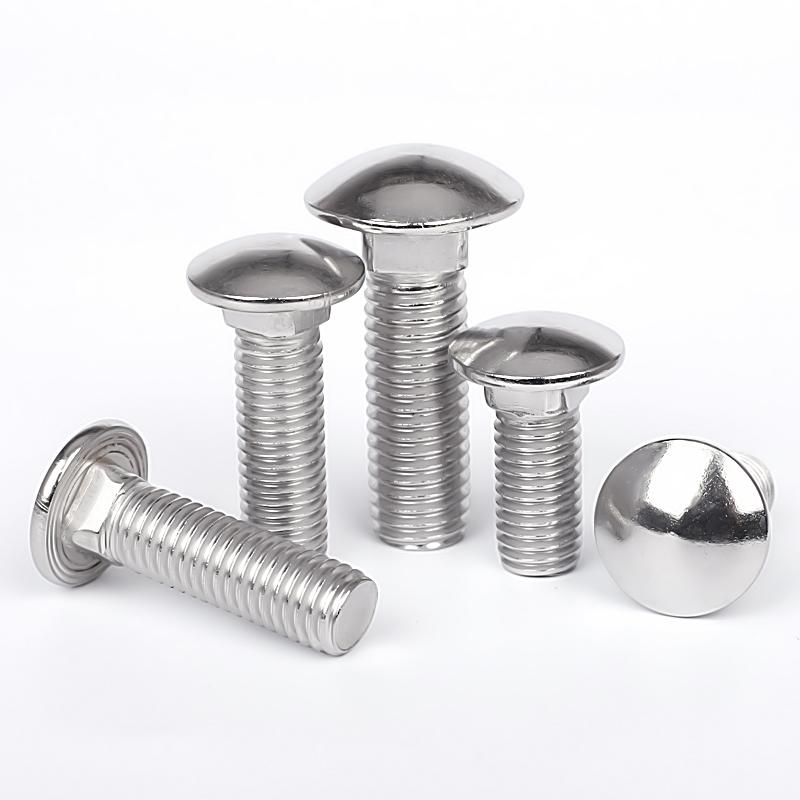
A lot of folks assume 18-8 and 316 stainless are nearly identical, but the real difference comes down to one element: molybdenum. 18-8, also known as 304, contains roughly 18% chromium and 8% nickel, while 316 drops the chromium slightly but adds 2-3% molybdenum. That small addition changes how the alloy behaves in harsh environments, especially anything involving salt or chlorides.
When it comes to corrosion resistance, 18-8 holds up fine in kitchens, indoor fixtures, and mild outdoor settings. But expose it to coastal air, road salt, or industrial chemicals, and you'll start seeing pitting or rust spots. 316, on the other hand, shrugs off those attacks because the molybdenum strengthens its passive layer, making it far less likely to develop crevice corrosion or pitting in marine or high-chloride conditions.
Of course, that extra protection comes at a price. 316 typically costs 20-30% more than 18-8, which can make it overkill for a simple handrail or indoor appliance. But if the part will face saltwater, bleach solutions, or repeated cleaning with harsh disinfectants, the long-term durability of 316 easily justifies the upfront cost. Ultimately, it's about matching the material to the actual environment you're dealing with.
Square Necks, Hidden Grip, and Why They Refuse to Spin
The square neck isn't just a design choice—it's a quiet rebellion against roundness. Where circular openings invite rotation and slippage, the squared profile locks into the hand's natural geometry. The edges anchor against the base of the fingers, transferring torque without demanding a death grip. Even when wet or oily, the flat faces resist rolling, so the tool stays put while your wrist does the work.
Beneath that angular silhouette sits a hidden grip texture that never looks aggressive. It's not knurling you can see from across the room; it's a micro-pattern pressed into the metal, just enough to grab skin without chewing through gloves. Run a thumb over it and you'll feel a faint bite, like fine sandpaper that never wears smooth. That's why these fasteners don't spin under light pressure—the texture catches the ridges of your fingertips and holds on.
So they refuse to spin because the system is redundant. The square neck prevents rotation inside a matching square hole or slot. The hidden grip stops the shaft from turning between your fingers. Together, they mean you can drive from one side and hold from the other without needing a second tool. It's not over-engineering; it's just the kind of detail that separates a fastener you curse from one you forget is even there.
Picking a Head Shape That Stays Flush and Trouble-Free
Flush mounting rarely comes down to luck. A shallow socket cap or countersunk screw can sit neatly into a recess, but only if the hole is spot-on and the material is thick enough to hide the head without weakening the surrounding edge. If you're working with thin sheet metal, a pan head with a low profile often beats a countersunk option because it doesn't demand a beveled lip that can tear or deform under load.
The real trouble usually starts with drive style. Button heads look clean, but their smaller hex sockets are quick to strip if your bit is even slightly worn or off-angle. A flanged hex can stay put without chewing into soft surfaces, and it gives you a larger bearing area that resists loosening over time. Match the head to the driver you'll actually use on site, not the one that looks best in a rendering.
Finally, think about removal. If the head sits perfectly flush today but seizes after a season of weather, you'll wish you had left a bit of shoulder to grab. Slightly raised heads or those with torx recesses tend to come out cleaner than fully embedded flatheads. Choose a shape that balances a tidy finish with the reality of future maintenance.
Getting the Thread Length Right Without Guessing
Most thread-length mishaps start with pulling an arbitrary strand and hoping for the best. A quick body-based measurement removes that gamble. For everyday hand sewing, hold the thread end between your thumb and forefinger, stretch it to the crook of your elbow, and cut there. That gives you roughly 45–60 cm (18–24 inches), which is long enough to make real progress but short enough to avoid frequent tangles. If the project calls for basting or gathering, go from fingertip to opposite shoulder across your chest—about double the standard length.
When you need more precision, let the seam itself guide you. Measure the length you plan to stitch, then multiply by three. A simple running stitch on medium-weight fabric consumes close to three times the seam length, while backstitch can nudge closer to three and a half. Add an extra 10–15 cm for starting and ending tails. For buttons, cut a fixed 60 cm strand per button; that handles four-hole styles with enough leftover to anchor the thread cleanly.
Fabric thickness and thread weight shift these numbers, so if you are switching to denim or upholstery, cut a test strand, sew ten stitches, then measure what you used. Multiply that per-stitch figure by your total stitch count. It sounds fussy but takes under a minute and spares you from either running short mid-seam or dragging a metre of excess thread through every hole.
Torque, Wood, and the Quiet Work of a Strong Connection
Most of the drama in a solid joint happens before the screw ever meets the wood. You line the pieces up, feel the grain resist, and then ease off just enough to let the threads bite instead of tear. Torque here isn’t about muscle; it’s about reading what the material is telling you through the drill and your palm.
Wood carries a memory of pressure. A board that has been driven too hard will crack at the edge or split along a line you didn’t notice in the rough stock. But when the torque matches the density—slower in maple, a touch more confident in pine—the fastener sinks in with a faint creak and the two faces pull tight without complaint.
That quiet moment, when the last turn stops and nothing moves, is the whole reward. No wobble, no gap, no second-guessing. The connection isn’t loud or clever. It just holds, and keeps holding, long after the noise of the work has faded.
FAQ
Stainless steel holds up far better in wet conditions and won't rust like zinc plating eventually will. If the connection is exposed to rain, humidity, or soil, stainless is worth the extra cost for the peace of mind.
Both resist rust well, but 316 contains molybdenum, which gives it a clear edge in salty or chemical-heavy environments. For regular outdoor use, 304 is usually enough; for docks or coastal builds, spend a little more on 316.
Yes, you should drill a hole slightly smaller than the bolt diameter. The square neck under the head grips into the wood when you tighten the nut, but without a proper pilot hole the wood can split or the head won't seat flush.
You can, but modern pressure-treated wood often contains copper-based preservatives that can react with some metals. Stainless steel is more resistant to this than standard steel, though 316 is the safer choice if the wood stays wet or is rated for ground contact.
Use a nylon insert lock nut or a split lock washer along with a flat washer. Since stainless steel can gall or seize under high friction, tightening slowly and adding a small amount of anti-seize on the threads helps prevent the nut from locking up.
For most deck boards and framing, 5/16 inch or 3/8 inch diameter bolts with lengths between 2 and 4 inches are common. The length depends on the total thickness of the materials being joined plus room for a washer and nut.
Salt spray and constant moisture demand 316 stainless steel rather than 304. Also avoid pairing stainless bolts with galvanized hardware, as the two metals can cause galvanic corrosion. Rinse the bolts occasionally with fresh water if the structure is regularly splashed.
Local marine supply stores often stock durable 316 bolts, though hardware stores geared toward contractors may offer bulk pricing on 304. Comparing the actual grade marking on the bolt head and buying exactly the length you need instead of oversized assortments keeps costs down.
Conclusion
When you're bolting together a dock, trailer, or outdoor structure, the first real test arrives the moment salt air touches the metal. Most people grab an 18-8 stainless carriage bolt and assume it is fully immune, but that is only true until chlorides get involved. 316 stainless earns its keep in marine settings because the added molybdenum disrupts pitting corrosion that would quietly eat through a standard 18-8 bolt within a season or two. The difference is not theoretical: I have pulled apart 18-8 hardware after one winter on a boat lift and found tiny rust blooms creeping out from under the head. If the budget allows, 316 is the only sound choice for anything within sight of saltwater. For purely inland or freshwater exposure, a well-made 18-8 bolt still performs fine, but you need to check the alloy markings rather than trusting a vague stainless label.
Mechanical design matters just as much as alloy. A square neck under the dome head is what stops a carriage bolt from spinning when you tighten the nut, but only if the hole is sized so the square shoulders actually bite into the wood or metal. Hidden grip starts there. Head style also determines whether the finished surface sits flush: a button head leaves a slight dome, while a flat-head carriage bolt can be countersunk so it disappears entirely. For thread length, measure the total material stack plus the nut and washer, then add at least two full threads beyond the nut to avoid bottoming out. When driving into wood, torque should be firm but never aggressive—the bolt's holding power comes from clamping friction, not from crushing fibers. A properly chosen stainless carriage bolt holds tight without drama for decades.
Contact Us
Contact Person: Shane
Email: [email protected]
Tel/WhatsApp: 8613357785029
Website: https://www.wanluohardware.com