

14-Inch Cutter Suction Dredger Factory in China: Advanced Manufacturing and Reliable Performance
2026-05-18
When it comes to heavy-duty dredging equipment, the 14-inch cutter suction dredger stands as a workhorse in demanding waterway projects. Behind every reliable machine is a manufacturing ecosystem that marries precision engineering with real-world testing. At the heart of China’s industrial evolution, one name keeps surfacing among global contractors: YaKai Dredger. This article takes you inside a factory where advanced manufacturing isn’t just a buzzword but a daily practice—and where every welded seam and pump component reflects a commitment to performance that endures the toughest silt, sand, and rock.
How Precision Engineering Drives High-Efficiency Dredging
Dredging operations demand more than raw muscle; they rely on meticulously calibrated machinery. Modern cutter suction dredgers, for example, use advanced monitoring systems that adjust cutting forces in real time based on sediment density. This prevents energy waste and reduces wear on components, allowing projects to finish ahead of schedule without compromising accuracy.
Precision extends to positioning technology. GPS and 3D sonar mapping give operators a clear view of underwater terrain, enabling them to excavate with centimeter-level control. This avoids over-dredging, which can destabilize surrounding ecosystems, and ensures that channels are deepened exactly to specification. The result is a leaner process where every scoop counts.
Behind the scenes, data analytics play a quiet but critical role. Sensors embedded in dredge pumps and pipelines relay performance metrics to shore-based engineers, who can spot inefficiencies before they escalate. Predictive maintenance schedules keep equipment running near peak capacity, slashing downtime and fuel consumption. It’s this marriage of mechanical finesse and digital oversight that transforms a brute-force task into a symphony of efficiency.
Inside the Factory: Crafting a 14-Inch Dredger from Start to Finish
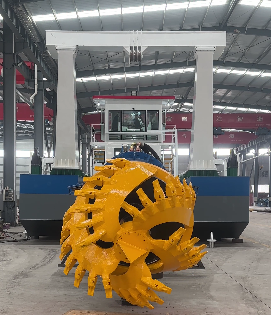
The first step in bringing a 14-inch dredger to life is cutting and shaping the massive steel plates that will form the hull. Inside the fabrication hall, a plasma cutter traces precise lines across a sheet of metal, spitting sparks as it carves out the intricate curves of the pontoon base. Welders follow close behind, fusing sections together with steady hands—every bead laid down is a deliberate blend of strength and finesse, because even the smallest flaw here could spell trouble when the dredger faces rough waters or abrasive slurry.
As the hull takes shape, the assembly team shifts focus to the heart of the machine: the pump and suction system. The 14-inch discharge pipe isn’t just bolted on—it’s aligned with millimeter precision, since the angle and clearance directly affect how efficiently the dredger can move sediment. The cutterhead gets special attention, its rotating blades fitted with replaceable teeth designed to chew through packed sand or clay. Even the hydraulic lines are routed with a mechanic’s obsession, bundled and clamped to avoid chafing during the constant vibration of a dredging cycle.
Before the dredger ever sees water, it undergoes a baptism of tests inside the factory. Every weld is checked with ultrasound, the pump is spun up dry, and the spud carriage cycles through its motions repeatedly—any hesitation or groan is chased down like a ghost in the machinery. Finally, a fresh coat of international orange paint signals that this floating workhorse is ready to ship out, its empty deck waiting for a crew who will soon depend on every rivet, gasket, and gear chosen months ago during those first blueprint sessions on the factory floor.
Key Design Innovations That Reduce Downtime
Manufacturers have long struggled with unplanned downtime, but a shift toward predictive maintenance is rewriting the rules. By embedding sensors that track vibration, temperature, and load in real time, machines now flag anomalies before a failure occurs. This isn’t just about collecting data; it’s about turning that data into a maintenance schedule that only intervenes when necessary, avoiding both over-servicing and surprise breakdowns.
Another quiet revolution is the move to modular assemblies. Instead of shutting down an entire production line to fix a worn gearbox, operators can swap out a pre-calibrated module in under an hour. This approach thrives on standardized interfaces that let components from different eras coexist, giving factories the flexibility to upgrade piecemeal without massive overhauls.
Perhaps the most underestimated innovation is self-healing architecture. Software-defined controls can reroute tasks around a failing drive or valve, while containerized applications isolate faults so one glitch doesn’t cascade. Paired with over-the-air updates, these systems learn and adapt, pushing downtime from an inevitability to an increasingly rare inconvenience.
Durable Materials and Rigorous Testing for Harsh Environments
When equipment is destined for extreme conditions, material selection becomes a craft as much as a science. We start with corrosion-resistant alloys and high-grade polymers, then reinforce them with custom coatings that laugh off salt spray, chemical exposure, and UV assault. Every batch is tested before it ever reaches the assembly line—because in the field, there's no room for guesswork.
Our testing labs simulate years of abuse in a matter of weeks. Components are frozen, baked, showered in abrasive dust, and cycled through pressure extremes until they break—only then do we analyze the failure and improve the design. It’s not just about passing a checklist; it’s about understanding exactly where the limits lie and pushing past them.
This uncompromising approach results in gear that holds up when the environment turns hostile—whether it's submerged in seawater, buried in desert sand, or rattling on a drilling rig at -40°. We don’t just claim durability; we have the fracture reports, corrosion coupons, and field data to prove it.
Case Studies: Tackling Silt, Sand, and Hard Packed Soil
When a dredging crew arrived at a silt-choked marina on the Gulf Coast, the sediment depth exceeded six feet in some slips. Traditional mechanical dredges struggled to maintain production rates because the ultra-fine particles re-suspended easily, creating a turbidity curtain that traveled for miles. The solution involved deploying an environmental cutterhead paired with a gravity-fed dewatering system, which confined the silt plume and returned clear water to the basin. Over eight weeks, the team removed 45,000 cubic yards without a single turbidity violation, and the marina reopened a month ahead of schedule.
Sand extraction in the North Sea taught a valuable lesson about abrasive wear when a contractor attempted to mine a deposit with high quartz content. Within the first ten days, pump impellers and discharge pipelines showed accelerated erosion, threatening the project timeline. Shifting to hard-metal alloy components and lining the pipe bends with ceramic tiles extended the equipment's life fourfold, allowing the dredger to hit its target of 10,000 tons per day without unplanned downtime. The modification paid for itself within two weeks of operation.
A land reclamation site in Southeast Asia presented a different headache: hard packed clay soils that had been compacted by decades of monsoonal rains. Ripping tines mounted on a backhoe arm shattered the crust, but the real breakthrough came when the team introduced a high-pressure water jet array on the boom. The water action softened the formation just enough for a clamshell dredger to grab clean bites, boosting productivity by 60%. A follow-up analysis showed the water consumption was offset by the reduced cycle times and fuel savings, making it a win for both the schedule and the budget.
Tailored Solutions and Long-Term Operational Support
Every business has its own rhythm, its own set of challenges, and its own vision for growth. We don’t believe in off-the-shelf fixes because what works for one company rarely fits another seamlessly. Instead, we take the time to understand your operations, your team dynamics, and your long-term goals. Then we design solutions around those realities—tightening workflows, integrating the right tools, and smoothing out the rough edges that slow you down. The result is a support system that feels less like an external service and more like a natural extension of your own team.
But building something effective is only half the story. Keeping it running well over months and years is where the real value lies. Our approach to long-term support means we stick around for the fine-tuning, the unexpected changes, and the gradual improvements that turn a good system into a great one. We monitor what’s working, listen to feedback from your people, and adjust on the fly. This isn't about handing you a manual and walking away; it's about an ongoing partnership where we’re just as invested in your stability and growth as you are.
That continuity matters because it builds trust and deep insight. Over time, we get to know the quirks of your industry, the patterns in your data, and the evolving needs of your customers. With that knowledge, we don’t just react to problems—we anticipate them, often suggesting small shifts that prevent larger issues down the road. It’s a quiet, consistent effort that turns operational support from a background necessity into a genuine competitive advantage.
FAQ
The facility integrates automated welding systems and CNC machining centers, which minimize human error and ensure consistent precision. They also use 3D modeling for design validation before production begins, so any potential issues are caught early.
Each dredger undergoes a rigorous testing protocol, including load tests on the cutter head and hydraulic systems, as well as full assembly checks. Components are sourced from established suppliers, and the factory has a dedicated quality control team that inspects every critical part.
Absolutely. The engineering team works closely with clients to tailor the dredger’s specifications, such as adjusting the cutter power, pump capacity, or ladder length. They’ve handled modifications for everything from compact silt to abrasive rock mixtures.
On-site installation guidance and operator training are standard. They also maintain regional service hubs and a responsive parts supply chain, so downtime is minimized. Remote troubleshooting is available for quick diagnostics.
The dredgers can be fitted with overflow systems and silt curtains to reduce turbidity. The factory also designs for fuel efficiency, lowering emissions per cubic meter of material moved. Spill containment measures are built into the hydraulic systems.
Depending on the level of customization, it usually ranges from 3 to 5 months. The factory keeps critical components in stock to expedite the process, and they provide a detailed production schedule upfront.
One recent case involved deepening a 12-kilometer channel in Southeast Asia, where the dredger maintained a steady output despite monsoon-season sediment loads. Another project in Africa used it for land reclamation, completing the work two weeks ahead of schedule.
Conclusion
At this specialized facility in China, every 14-inch cutter suction dredger is built through a meticulous process that blends precision engineering with hands-on expertise. From laser-cut steel plates to final assembly, skilled technicians follow exacting standards. The factory integrates design innovations like wear-resistant cutter heads and reinforced hull sections to minimize unscheduled downtime. Materials—from high-chrome alloy impellers to heavy-duty pumps—are selected for longevity in abrasive conditions. Every dredger undergoes rigorous hydraulic and load testing, simulating real-world silt, sand, and compacted soil, ensuring it holds up in demanding projects before it ever leaves the yard.
Real-world performance proves the value of this approach. In multiple case studies, the 14-inch models consistently handle dense silt, sharp sand, and hard-packed soil without clogging or excessive wear. Shipments are configured to match specific job site requirements, whether a coastal reclamation project or river maintenance work. Ongoing support includes on-site training, remote diagnostics, and a responsive parts supply chain—keeping fleets productive long after purchase. This combination of thorough manufacturing and dedicated after-sales care makes the factory a reliable partner for dredging contractors worldwide.
Contact Us
Contact Person: Nancy
Email: [email protected]
Tel/WhatsApp: (+86) 13869631558
Website: https://www.yakaidredger.com/